November 23, 2026•14 min read
12 AI Prompts for Editorial and Lifestyle Fashion Photos (Copy and Paste)
Twelve copy-and-paste AI prompts for editorial and lifestyle fashion photos, five shown with the image they produced, plus the seven-part structure behind them.
Picture of 12 AI Prompts for Editorial and Lifestyle Fashion Photos article
Good AI prompts for editorial fashion photos read like a photographer's brief: who is in the frame, what they wear, where they are, how the light falls and what lens it was shot on. Leave one of those out and the model fills the gap with its most average guess, which is why so many AI fashion images look like the same stock photo.
This post gives you 12 copy-and-paste prompts, six for editorial looks and six for lifestyle scenes, plus the structure behind them so you can write your own. Five of the prompts are shown with the image they produced. Every example image here was generated from the exact prompt printed above it, plus one reference photo of the model so the same person appears in all five, with no retouching.
If you need plain product shots, flat lays or ghost mannequin conversions, start with our AI prompts for clothing product photos. This post picks up where that one stops: scenes, mood and story.
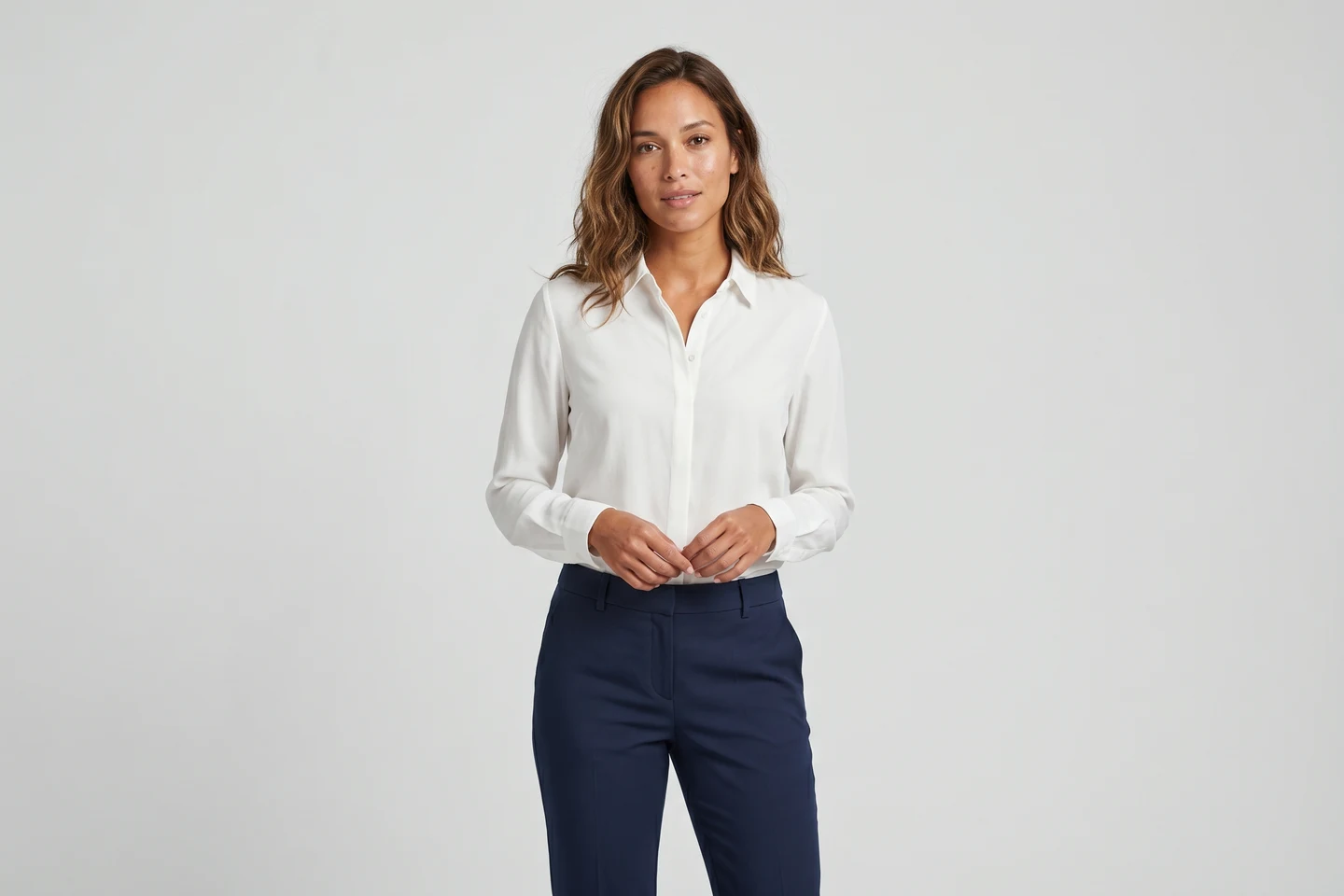
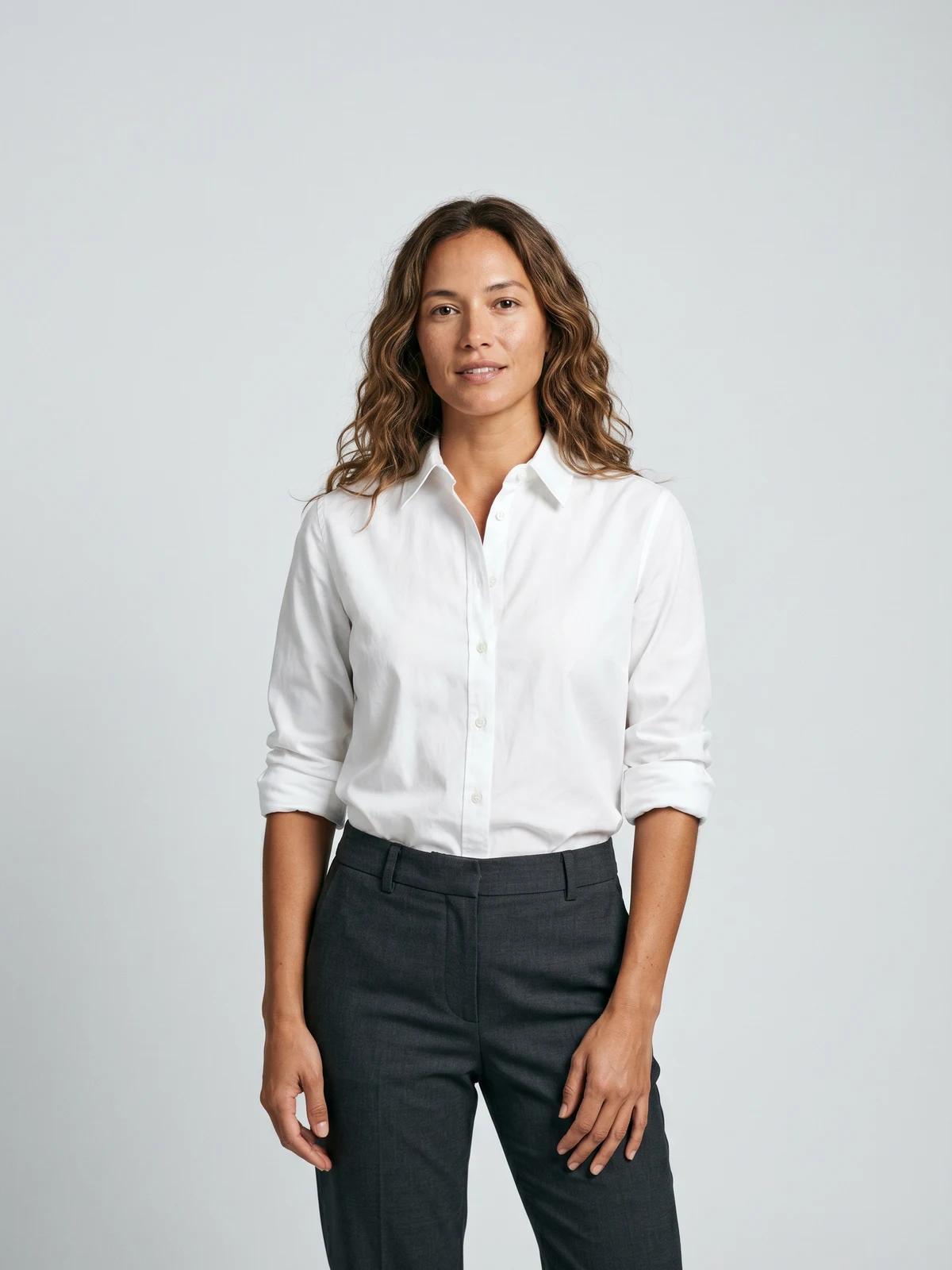
Turn flat-lays into on-model photos
Drop in a flat-lay or product shot and get professional on-model photography ready for your store.
How to write an AI prompt for an editorial fashion photo
Every prompt in this post follows the same seven-part order. Keep the order and change the contents.
| Part | What to write | Example |
|---|---|---|
| 1. Shot type | Editorial or lifestyle, and where it will run | "Editorial fashion photograph for a magazine spread" |
| 2. Subject | Who, in two or three traits | "A model with slicked-back dark hair" |
| 3. Garment | Piece, colour, fabric, fit | "an oversized tomato-red tailored suit" |
| 4. Pose or action | What the body is doing | "one shoulder dropped", "mid-stride" |
| 5. Place | Setting and what is behind the subject | "against a seamless red backdrop" |
| 6. Light and camera | Light source, direction, lens, aperture | "single hard key light from high camera-left, 80mm lens" |
| 7. Finish and exclusions | Grade, texture, what to leave out | "natural skin texture. No text, no logos" |
Two rules matter more than any single word:
- Be specific about the garment. "A dress" gives you any dress. "A floor-length black satin slip dress" gives you that one
- Describe light as a photographer would. Source, direction and quality ("soft window light from the left") change an image more than adjectives like "stunning" or "high quality"
The difference between the two families is mostly pose and light. Editorial prompts direct the model and control the light. Lifestyle prompts describe a moment and let the light look found.
Editorial fashion photo prompts
1. Colour-blocked studio, hard light
Editorial fashion photograph for a magazine spread. A model with slicked-back dark hair wearing an oversized tomato-red tailored suit over a plain white tank top, standing in a strong asymmetric pose with one shoulder dropped, against a seamless red backdrop the same colour as the suit. Single hard key light from high camera-left casting a sharp shadow on the backdrop, deep contrast, glossy skin with real texture, full-length frame, shot on a medium format camera with an 80mm lens. No text, no logos, no watermark.
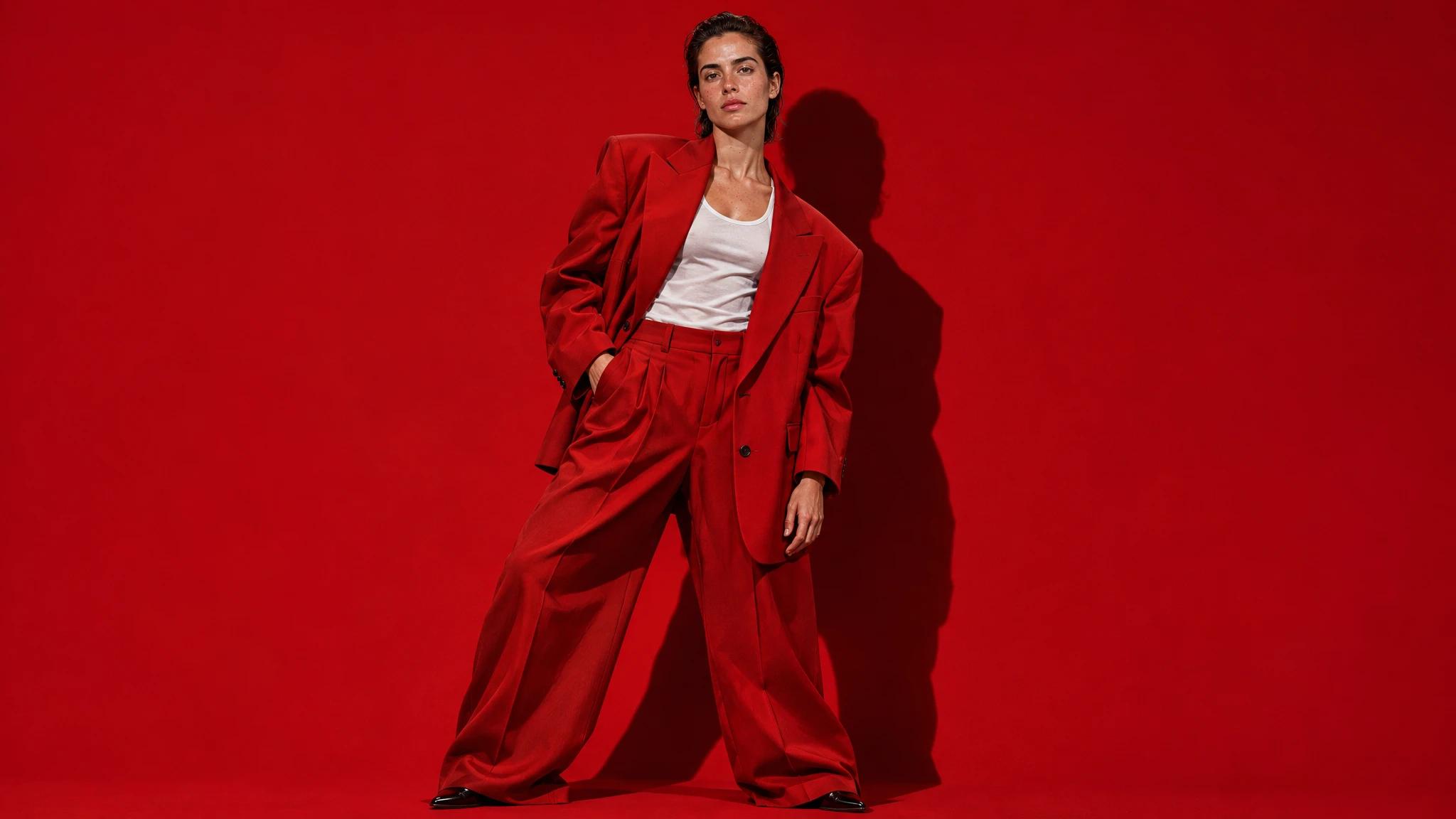
Editorial fashion photo from an AI prompt: a red tailored suit against a red studio backdrop in hard light
Why it works: matching the backdrop to the garment removes everything but shape, and one hard light gives the sharp shadow that reads as "magazine".
2. Rooftop at blue hour
Editorial fashion photograph. A woman wearing a floor-length black satin slip dress and a cropped leather jacket, standing on a city rooftop at dusk, wind lifting the hem of the dress, looking straight into the camera with a calm expression. Blue hour sky with the last orange light on the horizon, out-of-focus city lights behind her, soft fill from a reflector on her face, 50mm lens at f/2, slight film grain, natural skin texture. No text, no logos, no watermark.
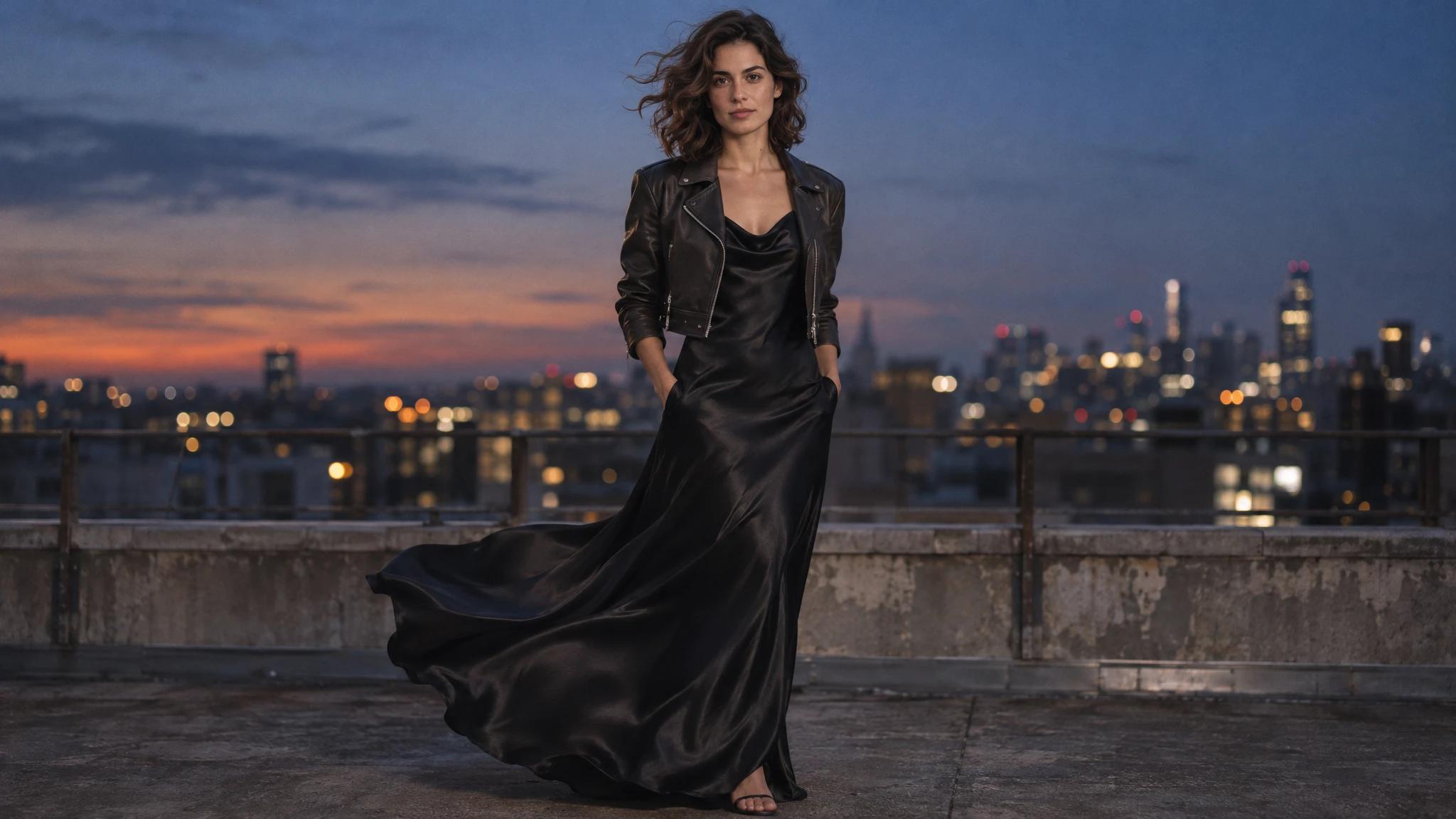
Editorial fashion photo from an AI prompt: a satin slip dress and leather jacket on a rooftop at dusk
Why it works: naming the time of day ("blue hour", "last orange light") sets the whole palette, and the reflector line keeps the face readable against a dark sky.
3. Small figure, big architecture
Editorial fashion photograph. A tall model wearing a long charcoal wool overcoat, white turtleneck and wide grey trousers, standing small in the frame at the foot of a monumental brutalist concrete staircase, strong geometric lines and repeating shadows, overcast flat light, desaturated cool colour palette, wide 24mm lens, the figure placed off-centre on the lower third. Real fabric texture, natural skin. No text, no logos, no watermark.
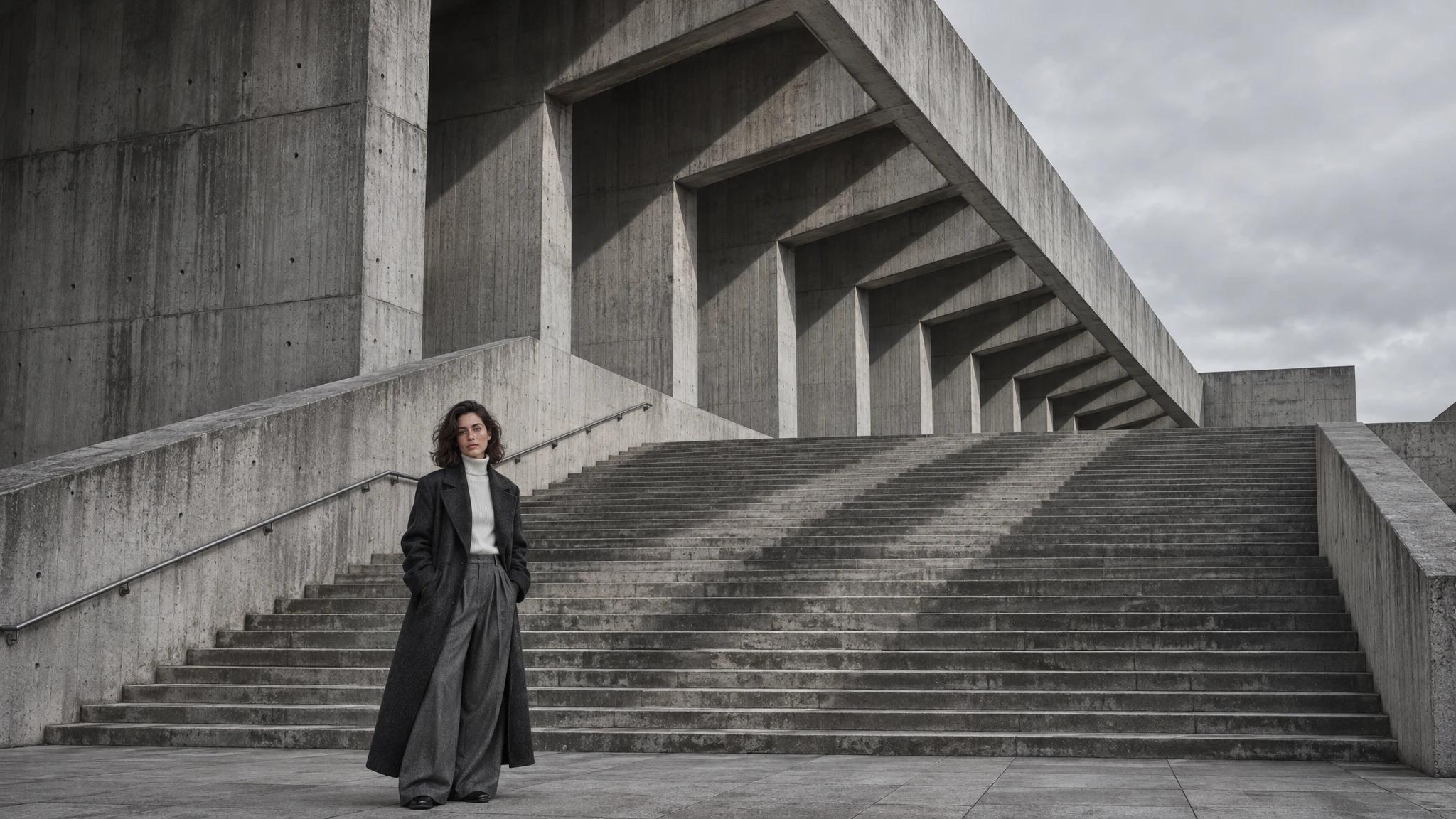
Editorial fashion photo from an AI prompt: a model in a long overcoat at the foot of a brutalist concrete staircase
Why it works: the prompt gives composition instructions ("small in the frame", "lower third"), which most prompts leave out.
4. Fabric in the wind
Editorial fashion photograph on location. A model wearing a flowing rust-orange silk gown walking through tall dry grass on a windswept coastal dune, the fabric trailing and catching the wind behind her, face turned in profile. Overcast dramatic sky, muted earthy palette, shot from a low angle with a 35mm lens, motion in the fabric, cinematic composition with the figure on the left third. Natural skin texture. No text, no logos, no watermark.
5. One colour, head to toe
Editorial fashion photograph built on a single colour. A model wearing a cobalt blue oversized knit, cobalt blue pleated trousers and cobalt blue gloves, seated sideways on a cobalt blue painted wooden chair in front of a cobalt blue wall, chin lifted, hands resting on the chair back. Soft directional light from the left with a gentle shadow on the wall, minimal styling, medium format look with an 80mm lens, real fabric and skin texture. No text, no logos, no watermark.
6. Desert road campaign frame
Wide cinematic fashion campaign photograph. A male model with short dark hair wearing a relaxed sand-coloured linen suit and a white open-collar shirt, standing in the middle of an empty desert road at golden hour, jacket moving slightly in the wind, hands in pockets, looking into the distance. Low warm sun behind him creating a rim light, long shadow on the asphalt, red rock formations on the horizon, large negative space of sky on the right for a headline. Shot on a 35mm lens, film-like grain, natural skin texture. No text, no logos, no watermark.
If the same model needs to appear across a whole series, a prompt alone will not hold the face. Use a tool that stores the model's identity, as our guide to keeping one AI model consistent across a catalog explains, or the series will look like six different people.
Lifestyle fashion photo prompts
7. Farmers market, open shade
Lifestyle fashion photograph. A woman in her late twenties wearing a butter-yellow cotton sundress and a woven straw bag over her shoulder, choosing peaches at a farmers market stall, laughing with her eyes on the fruit, not the camera. Bright open shade under a striped awning, crates of fruit and other shoppers softly blurred, candid documentary feel, 35mm lens at f/2.8, warm natural colour, natural skin texture with visible pores. No text, no logos, no watermark.
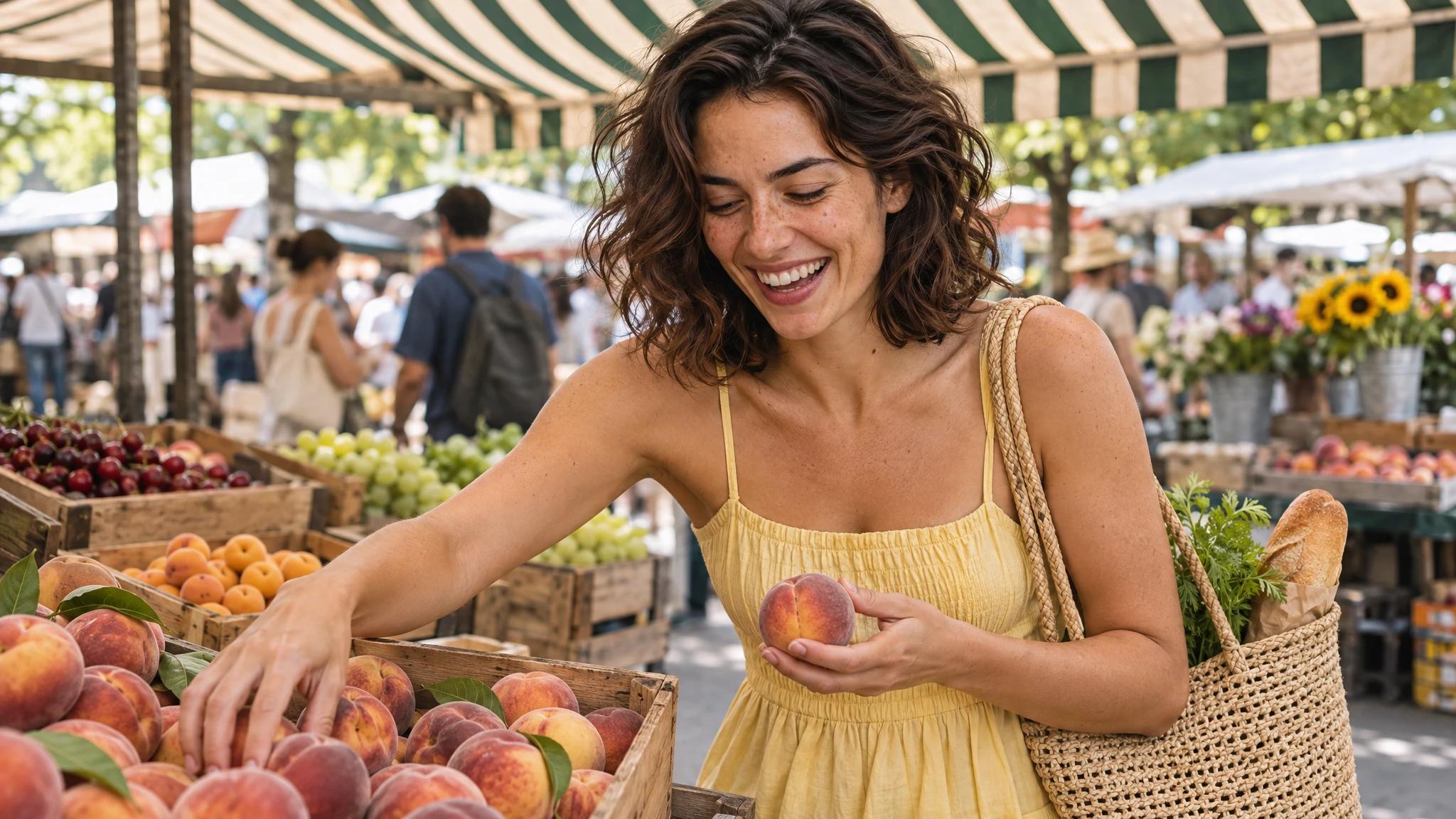
Lifestyle fashion photo from an AI prompt: a woman in a yellow sundress choosing fruit at a farmers market
Why it works: "eyes on the fruit, not the camera" is the single phrase that turns a posed portrait into a lifestyle shot.
8. Night, direct flash
Lifestyle fashion photograph with direct on-camera flash at night. A young man wearing a vintage black leather bomber jacket, white ribbed tank and loose faded jeans, leaning against a tiled wall outside a late-night noodle bar, holding a takeaway box and grinning at the camera. Harsh flash on the subject with a dark background, neon signs glowing out of focus, slight motion blur in the background, snapshot aesthetic, 28mm lens, natural skin texture. No text, no logos, no watermark.
Why it works: naming the flash and the "snapshot aesthetic" tells the model to make the image less polished on purpose.
9. Café morning
Lifestyle fashion photograph for a clothing brand's product page. A woman in her late twenties wearing an oatmeal ribbed knit cardigan over a white tee and straight-leg blue jeans, sitting at a small marble table outside a Paris cafe, one hand around a coffee cup, looking off to the side and laughing. Soft overcast morning light, shallow depth of field, the cardigan's texture clearly visible, natural skin with visible pores, candid and unposed. Shot on a 50mm lens at f/2.2, muted warm colour grade. No text, no logos, no watermark.
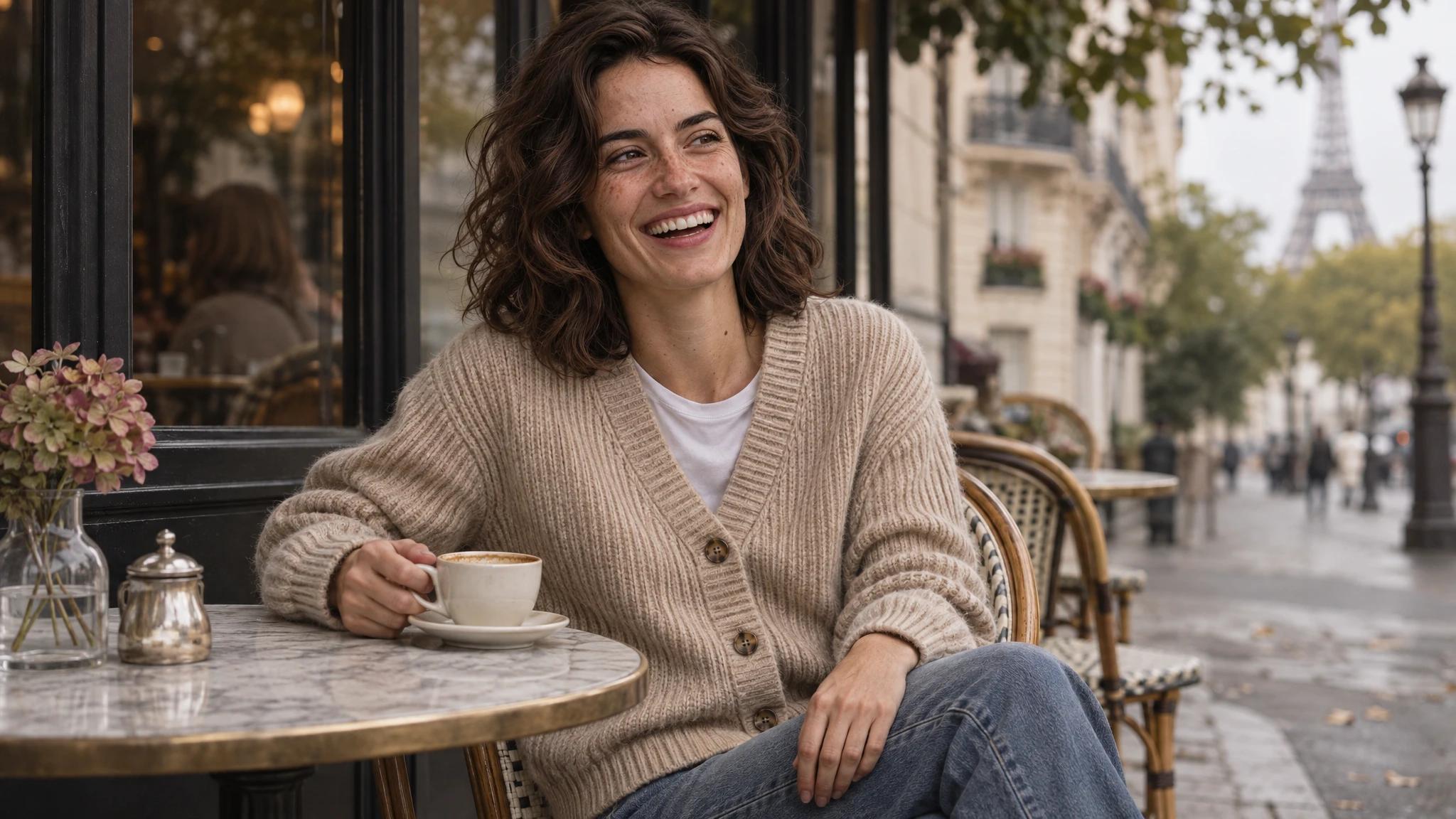
Lifestyle fashion photo from an AI prompt: a woman in a knit cardigan laughing at a Paris café table
Why it works: the garment's texture is named as something that must stay visible, so the scene does not swallow the product.
10. At home, window light
Lifestyle fashion photograph for a menswear brand. A man in his thirties wearing a chunky cream cable-knit sweater and dark chinos, pouring coffee from a pour-over kettle in a bright kitchen, soft smile, looking down at the cup. Morning sun through a large window, plants and open wooden shelves in the background, steam visible, candid at-home moment, 50mm lens at f/2, natural skin texture. No text, no logos, no watermark.
11. Activewear at sunrise
Lifestyle fashion photograph for an activewear brand. A woman wearing a sage green sports bra and matching high-waist leggings with white running shoes, tying her shoelace on the edge of a city park running track at sunrise, a water bottle beside her. Low warm sun flaring behind her, long shadows, trees and skyline softly out of focus, natural candid moment, 85mm lens, realistic skin texture. No text, no logos, no watermark.
12. Beach at golden hour
Lifestyle fashion photograph for a resort wear brand. A woman wearing a white linen shirt left open over a rust-coloured linen co-ord of shorts and a cropped top, walking along the waterline of a quiet beach at golden hour, holding her sandals in one hand, hair blown by the wind, looking out to sea. Warm backlight, soft waves, footprints in wet sand, wide 35mm frame, natural skin texture. No text, no logos, no watermark.
Light and mood phrases you can swap in
Change one line of a prompt and you change the whole image. These phrases are the ones that move the result most.
| You want | Add this phrase |
|---|---|
| Soft, flattering daylight | "soft window light from the left", "bright open shade" |
| Warm, romantic | "golden hour backlight, warm rim light on the hair" |
| Cool, cinematic | "blue hour, city lights out of focus" |
| High-fashion drama | "single hard key light, sharp shadow on the backdrop" |
| Raw, youthful | "direct on-camera flash, dark background, snapshot aesthetic" |
| Quiet luxury | "overcast flat light, desaturated palette, minimal styling" |
| Film look | "slight film grain, muted colour grade, 35mm lens" |
| Room for a headline | "large negative space of sky on the right" |
Using these prompts with your own garment
A text prompt invents the clothes. That is fine for a mood board and useless for a product page, because the dress in the picture is not the dress you sell.
To get editorial or lifestyle photos of a real product, the garment has to come from a photo, and the prompt should describe only the scene. In WearView, the Editorial Photos studio works that way: you upload a flat lay, hanger or mannequin photo of up to four pieces, choose a model, then describe the place, pose and light in your own words. Parts 4 to 6 of the table above (pose, place, light) are the part you write. Parts 2 and 3 come from your photo and your model.
A scene note for prompt 2 would be as short as this:
Standing on a city rooftop at dusk, wind lifting the hem, looking straight into the camera. Blue hour sky, city lights out of focus behind her, soft fill light on her face.
For a whole series in one sitting, an AI fashion photoshoot keeps the model and outfit fixed while you change the scene. If you have no model yet, you can generate AI fashion models to cast the shoot first.
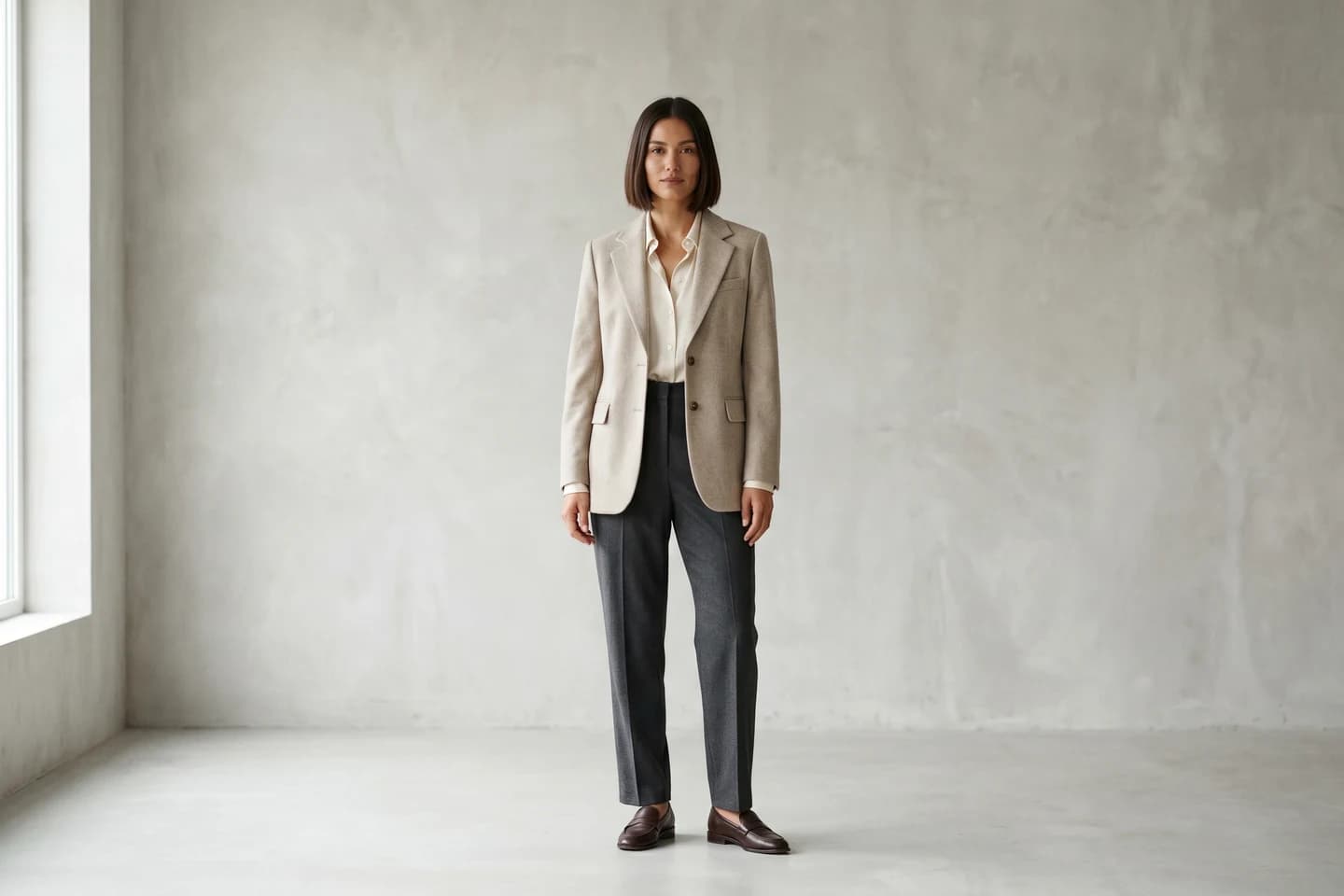
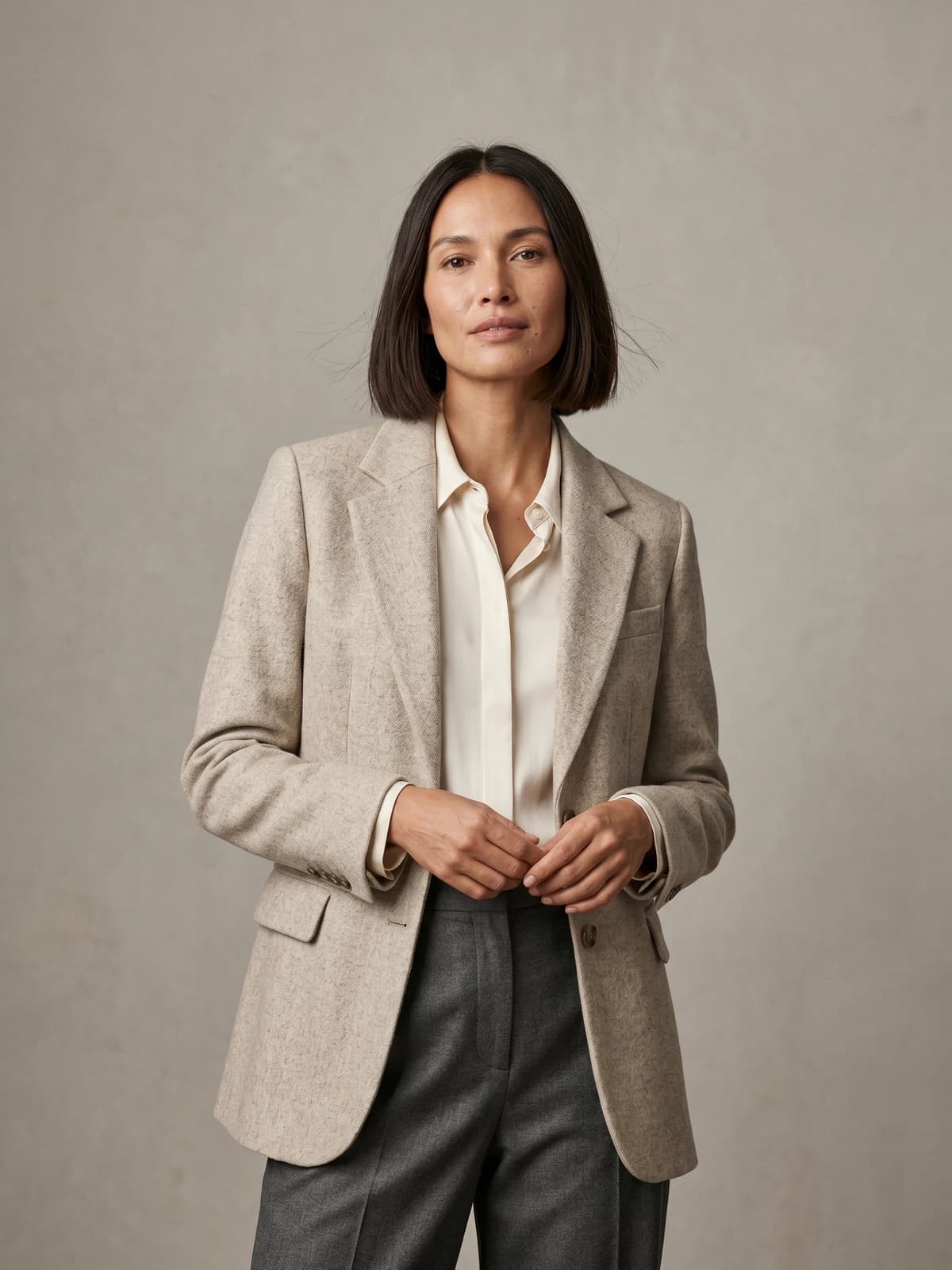
The same model across your whole catalog
Keep one signature model consistent across every product, pose, and collection.
Prompt mistakes that flatten editorial and lifestyle images
- Adjective stacking. "Stunning, beautiful, ultra-realistic, 8K" adds nothing a camera could act on. Replace it with a light source and a lens
- No action. A model "standing in a street" gives you a catalogue pose outdoors. Give the body something to do
- Looking at the camera in a lifestyle shot. Say where the eyes go
- Too many ideas. Rooftop, neon, rain, flowers and a vintage car in one prompt produce noise. One place, one light, one action
- No skin instruction. Without "natural skin texture", faces drift toward plastic. Our guide on fixing waxy AI skin texture goes deeper
- Forgetting the crop. If the image is for a banner, ask for negative space. If it is for a story, ask for a vertical frame
Once you have a set you like, the planning side is covered in our guide to planning an editorial photoshoot from concept to shot list.
Key takeaways
- Write in seven parts. Shot type, subject, garment, pose, place, light and camera, finish
- Light is the lever. Changing the light line changes the image more than any adjective
- Editorial directs, lifestyle observes. Pose and eye line are the difference
- Text prompts invent clothes. For real products, start from a garment photo and prompt only the scene
- Keep one model per series. Use a consistent-model tool, not luck
FAQ
What is a good AI prompt for an editorial fashion photo? A good prompt names the shot type, the subject, the exact garment, the pose, the place, the light and the lens, and ends with what to leave out. For example: an editorial fashion photograph of a model in a red tailored suit against a red backdrop, one hard key light from high left, 80mm lens, natural skin texture.
What is the difference between an editorial prompt and a lifestyle prompt? An editorial prompt directs the model and controls the light, so it includes a deliberate pose, a composed frame and a specific light setup. A lifestyle prompt describes a candid moment, with the subject doing something and usually not looking at the camera.
Which AI image generator works best with these prompts? The prompts are written in plain photographic language, so they work in any current image model. The example images in this post were generated on GPT Image 2.6. Results vary by model, so run each prompt two or three times and keep the best frame.
Can I use these prompts with my own clothing? Not as text alone, because a text prompt invents the garment. Upload a photo of your product to a garment-in tool and use only the scene part of the prompt: pose, place and light.
How do I keep the same model in every image? A prompt cannot reliably repeat a face. Use a tool that stores a model identity and reuses it across images, then change only the scene and outfit between generations.
Why do my AI fashion photos look fake? The usual causes are missing light direction, no action for the body, and no instruction for skin. Add a real light source, give the subject something to do, and include "natural skin texture with visible pores".
Can I use AI-generated editorial photos commercially? It depends on the tool's terms. Check the licence of the generator you use. WearView includes commercial usage rights on its paid plans.
WearView Team
WearView Content & Research Team
WearView Team is a group of fashion technology specialists focused on AI fashion models, virtual try-on, and AI product photography for e-commerce brands. We publish in-depth guides, case studies, and practical insights to help fashion businesses improve conversion rates and scale faster using AI.