June 26, 2026•12 min read
Brands Using AI Fashion Models: Real Examples (2026)
Mango, H&M, Zalando, Guess and more have already put AI fashion models in real campaigns. Here are the sourced examples, what each brand actually did, and what it signals for how fashion produces imagery next.
Picture of Brands Using AI Fashion Models: Real Examples (2026) article
In Q4 2024, roughly 70% of Zalando's editorial campaign images were made with generative AI, not cameras. That single number tells you how fast the question has shifted. The conversation is no longer "will brands using AI fashion models become normal?" It already happened, quietly, inside some of the largest fashion companies in the world.
This is not a tool roundup. It is a record of who actually did it: the named brands that have publicly used AI fashion models or AI-generated campaign imagery, what they shipped, why they did it, and how the public reacted. Every example here is sourced to a primary announcement or major trade outlet.
If you run a fashion brand or an ecommerce store, this matters because the early adopters have already exposed the playbook, the cost math, and the reputational landmines. You can learn from their wins and their backlash without repeating either.
The short answer: yes, major brands already use AI fashion models
AI-generated models moved from novelty to operational tool in roughly two years. The pattern is consistent across the named examples below: brands started with a pilot, framed it around speed or diversity or cost, and either scaled it or pulled back depending on how the audience responded.
Here is the landscape at a glance.
| Brand | What they did | When | Public reaction |
|---|---|---|---|
| Mango | First fully AI-generated campaign (Mango Teen, Sunset Dream) | July 2024 | Mostly positive, low backlash |
| H&M | AI "digital twins" of 30 real models for social and marketing | 2025 | Mixed, watermarked, model-consented |
| Zalando | ~70% of Q4 2024 editorial imagery generated with AI | 2024 | Operational, framed as augmentation |
| Levi's | Pilot with Lalaland.ai to add model diversity | March 2023 | Heavy backlash, walked back |
| Guess | AI model in a Vogue print ad (via Seraphinne Vallora) | August 2025 | Viral backlash over disclosure |
| Revolve | First AI-generated billboard campaign (with Maison Meta) | April 2023 | Curiosity, early experiment |
The split is the story. Brands that framed AI as a production tool (Mango, Zalando) or that compensated and watermarked (H&M) fared better than brands that tied it to diversity (Levi's) or buried the disclosure (Guess).
Mango: the first fully AI-generated fashion campaign
In July 2024, Mango launched what it called its first campaign generated entirely by artificial intelligence, for the Sunset Dream collection under its Mango Teen line. According to Mango's own announcement, the campaign ran across 95 markets.
What makes the Mango case instructive is the workflow, not just the output. Mango photographed each real garment, then used those images to train a generative model that placed the actual clothing on AI-generated models. The images read like a real shoot in the Medina of Marrakech. The garments were real; the model and the location were synthetic.
This is the same logic behind product to model generation: start from a real product photo, keep the garment accurate, and synthesize the human and the scene around it.
Mango tied the move to the "Earn" lever of its 2024-2026 strategic plan, positioning AI as a value-creation tool rather than a cost cut. The framing mattered. By presenting it as innovation for a teen sub-brand rather than a replacement for its main campaigns, Mango avoided most of the backlash that hit earlier adopters.
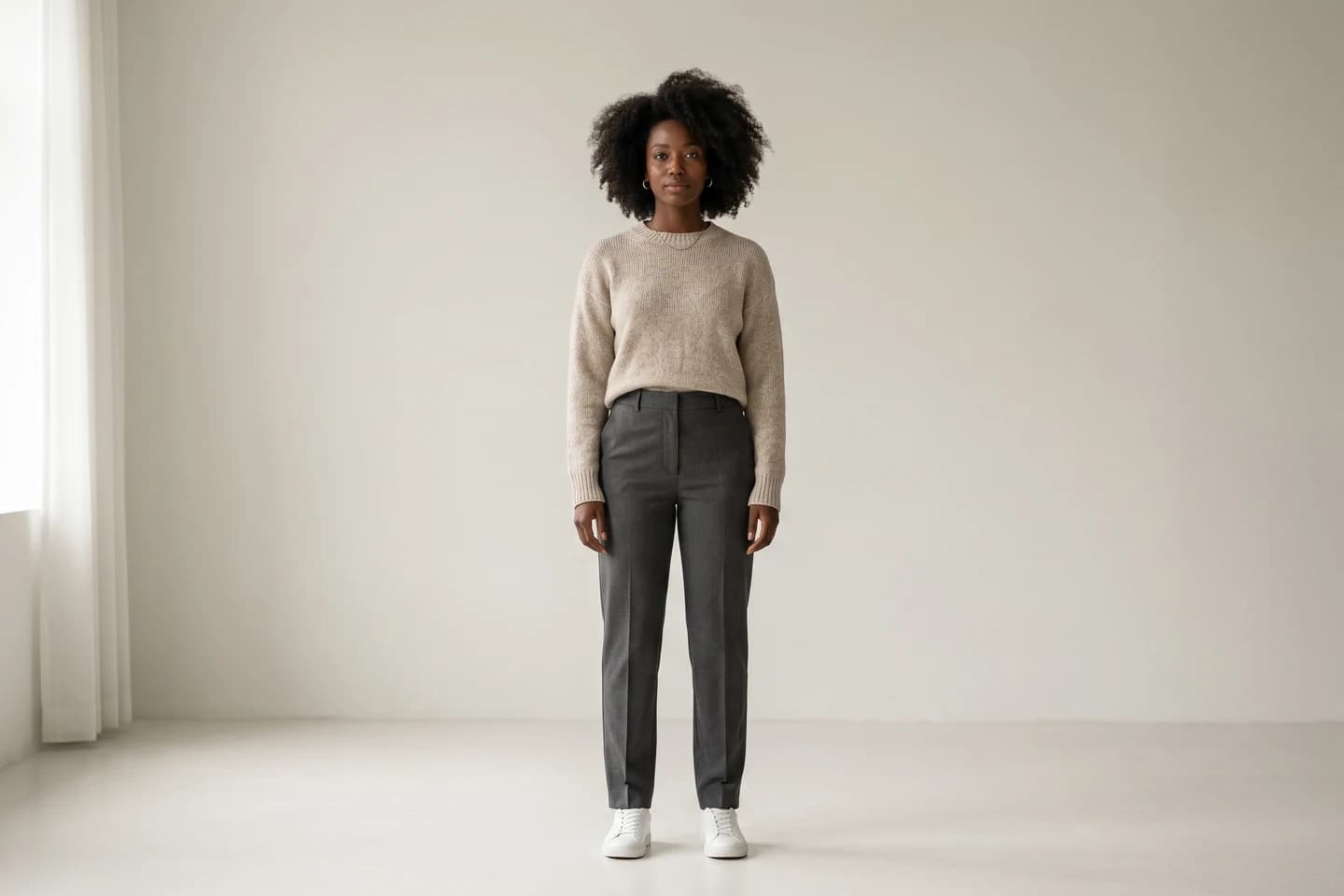
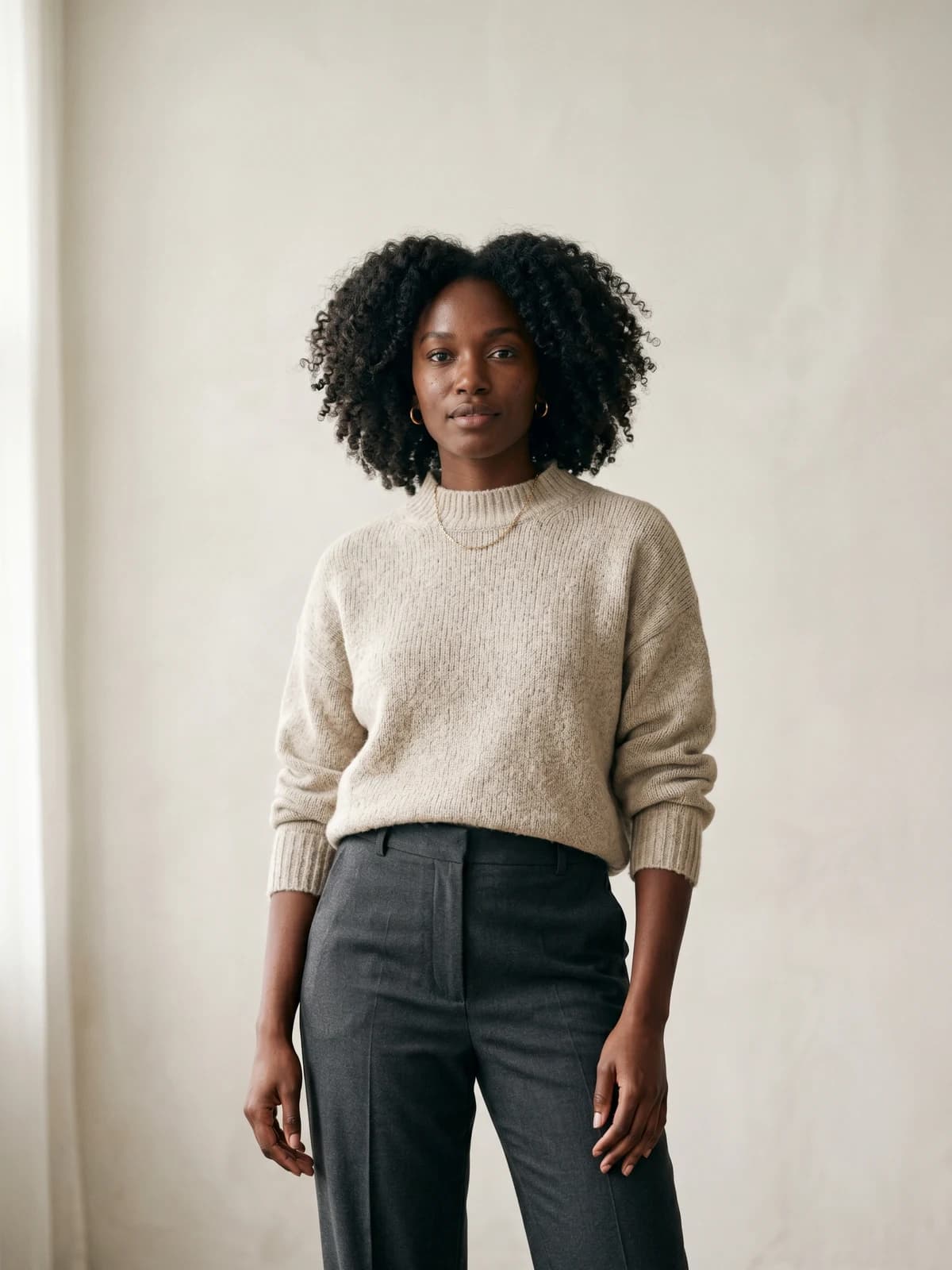
Create your own AI fashion models
Generate diverse, brand-consistent models from a simple prompt and reuse them across every campaign.
H&M: AI digital twins of real, consenting models
H&M took a different route. In early 2025 the retailer announced plans to create AI "digital twins" of 30 real models, and in July 2025 it released its first campaign featuring those twins, shot against backdrops of global fashion capitals to showcase denim.
The technical method is worth understanding because it is becoming a template. According to coverage from Business of Fashion and others, each model is photographed from many angles under varied lighting, and that data trains a machine-learning model that can reproduce the person's likeness. H&M built the twins in partnership with Swedish tech firm Uncut.
Three governance choices set H&M's approach apart:
- Consent and ownership. Models retain full rights to their digital twins.
- Compensation. Pay matches classic image-use arrangements negotiated by the models' agencies.
- Disclosure. AI-generated content carries prominent watermarks.
Not everyone was satisfied. CNN and others reported concern from creative professionals about displaced work for photographers, stylists, and crews. But by paying the models and labeling the output, H&M neutralized the strongest ethical objection, that brands were taking someone's image without consent or payment.
Zalando: AI imagery at industrial scale
If Mango is the headline campaign and H&M is the governance case study, Zalando is the scale story. In Q4 2024, about 70% of Zalando's editorial campaign images were generated with AI, per Business of Fashion.
The numbers Zalando cited are the ones every operator quotes now:
- Cost reduction of up to 90% on relevant imagery, according to its VP of Content Solutions.
- Production time cut from six to eight weeks down to three to four days.
Speed turned out to be the real prize. When the "brat summer" trend exploded mid-2024, Zalando could produce on-trend campaign imagery within days and capture attention while interest peaked. Traditional production cycles simply cannot move that fast.
Zalando was also careful to say the technology augmented its teams rather than replacing them, reporting that its human creatives were busier than ever. Whether you take that at face value or not, the strategic claim is clear: AI imagery is about producing more, faster, not necessarily about cutting headcount.
The same compounding advantage applies to a 200-SKU catalog as much as a global campaign. The bottleneck in ecommerce has always been turning new products into on-model photos quickly, which is exactly what virtual try on clothes workflows are built to solve.
Levi's: the cautionary tale of framing
Levi Strauss & Co. offers the clearest lesson in how not to introduce AI models. In March 2023, Levi's announced a partnership with Amsterdam studio Lalaland.ai to test AI-generated models that could supplement human models across more body types, ages, sizes, and skin tones.
The intent, "increase diversity," became the problem. Critics argued the brand was cheapening diversity by generating it synthetically instead of hiring and paying a more diverse roster of real models. The backlash was immediate and loud.
By March 28, Levi's issued a clarification: the pilot was not a substitute for real diversity work, it would not scale back live shoots or its commitment to diverse human models, and authentic human storytelling remained core to the brand.
The takeaway is not "don't use AI models." It is "don't position a cost-and-speed tool as a social good." When AI is framed as standing in for human representation, audiences hear a brand outsourcing a values commitment to software.
Guess and Vogue: the disclosure backlash
In August 2025, Guess ran a two-page Vogue ad featuring an AI-generated model, produced by AI studio Seraphinne Vallora. The same model appeared in two settings, a blue floral romper at a cafe and a chevron dress outside a boutique. A small line of fine print noted the campaign was "produced by Seraphinne Vallora on AI."
That fine print is the whole controversy. A TikTok video flagging the disclosure amassed over two million views, and criticism poured onto both Guess and Vogue for sidelining real models and for how quietly the AI origin was disclosed.
The Guess case pairs neatly with H&M's. Both used AI models in 2024-2025, but H&M watermarked prominently and paid the humans behind the twins, while the Guess ad's disclosure was small enough that most readers missed it. Transparency, it turns out, is not a legal checkbox. It is a trust mechanism, and the size and placement of the disclosure shapes the reaction more than the AI itself.
Revolve and the virtual-influencer wave
Revolve was an early experimenter. In April 2023 it ran what it billed as the first AI-generated billboard campaign, "Best Trip," created with AI studio Maison Meta and displayed along the route to Palm Springs. Revolve later turned the campaign visuals into a limited capsule collection.
Beyond single campaigns, a parallel track has been the rise of fully synthetic AI influencers used by mainstream brands. Aitana López, an AI-generated model from Spain, has worked with brands including Nike and reportedly earns significant monthly income, while Japan's Imma has appeared in work for names like Valentino and Nike. These are not digital twins of real people; they are wholly invented personas with their own social followings.
The virtual-influencer model raises its own questions about authenticity and labeling, but it confirms the broader signal: brands are comfortable putting non-existent humans at the center of marketing when the engagement and control are good enough.
What this signals for the industry
Read across all of these examples and a few clear patterns emerge.
- AI imagery is now an operating decision, not an experiment. Zalando's 70% figure means this is line-item infrastructure for at least one major retailer, not a one-off stunt.
- Speed beats cost as the headline benefit. The most cited Zalando outcome was six-to-eight weeks collapsing to three-to-four days. Reacting to trends in real time is worth more than the savings alone.
- Framing determines the reaction. "Faster production" (Mango, Zalando) lands well. "Synthetic diversity" (Levi's) does not.
- Transparency is a trust feature. H&M's prominent watermarks and model pay drew far less heat than Guess's buried fine print.
- Two distinct uses are converging. Digital twins of real, paid models (H&M) and fully invented models (Mango, AI influencers) are both viable, with different ethics and different costs.
For smaller brands, the most important signal is access. The capability that required a corporate AI team and a studio partner in 2024 is now available off the shelf. You can generate on-model imagery, keep a consistent AI model across an entire catalog, and produce variations without booking a shoot. Platforms like WearView put the same product-to-model and AI model generation workflow used by enterprise teams into a self-serve tool.
What this means for you
- Start with a contained pilot, like the brands above. Mango chose a sub-brand; you can choose one product category or one collection drop before going wider.
- Frame it as production speed, not as a values substitute. Promise faster, more varied imagery, not synthetic diversity. Levi's learned this the hard way.
- Be transparent on purpose. If you use AI imagery in ads, disclose it clearly and visibly rather than in tiny fine print.
- Keep your garments real and accurate. The Mango and Zalando approach starts from real product photos, which is the difference between believable imagery and obvious fakes. Tools like product photography with AI models preserve the actual garment while generating the model.
- Keep the model realistic, not just the garment. Plastic, over-smoothed skin is the quickest tell that an image is AI; our guide to fixing AI skin texture covers the prompt and output settings that bring back real skin.
- Measure the cycle time, not just the cost. The competitive edge is reacting to trends in days. Track how fast you can take a new SKU from product shot to publishable on-model image.
Sources: Mango Fashion Group, PetaPixel (Mango), H&M Group, Business of Fashion (H&M digital twins), CNN (H&M), Business of Fashion (Zalando), Levi Strauss & Co., PetaPixel (Levi's), CNN (Vogue/Guess), Revolve investor news, 2023-2026
FAQ
Which brands use AI fashion models? Publicly confirmed examples include Mango (a fully AI-generated Mango Teen campaign in July 2024), H&M (AI digital twins of 30 real models in 2025), Zalando (around 70% of Q4 2024 editorial imagery), Levi's (a 2023 pilot with Lalaland.ai), Guess (an AI model in a 2025 Vogue ad), and Revolve (a 2023 AI billboard campaign).
Are AI fashion models replacing real models? Not wholesale. Most brands frame AI imagery as augmenting production rather than replacing people. H&M pays its models for digital twins and Zalando says its creative teams are busier than ever. The clearest current use is generating more variations faster, not eliminating shoots entirely.
What is the difference between a digital twin and an AI-generated model? A digital twin is an AI replica of a real, consenting model, built from many photos of that specific person, as H&M did. A fully AI-generated model, or AI influencer, is an invented person who does not exist in real life, like the personas used by Mango or virtual influencers such as Aitana López.
Why did Levi's get backlash for using AI models? Levi's tied its 2023 Lalaland.ai pilot to increasing model diversity. Critics argued the brand was generating diversity synthetically instead of hiring and paying real models from underrepresented groups. Levi's later clarified the program would not replace real shoots or its diversity commitments.
How much can brands save using AI fashion models? Zalando reported that generative AI could cut relevant imagery costs by up to 90% and reduce production time from six-to-eight weeks to three-to-four days. Savings vary widely by brand and use case, and the speed advantage is often cited as more valuable than the cost reduction itself.
Do brands have to disclose AI-generated models? Disclosure norms are still forming, but the Guess and Vogue backlash showed that audiences react badly to AI imagery that is disclosed only in small print. H&M's visible watermarking drew far less criticism, suggesting clear, prominent labeling is becoming the expectation.
Can small brands use AI fashion models like the big ones? Yes. The capability that required a corporate AI team in 2024 is now available in self-serve tools. Platforms like WearView let smaller brands generate on-model photos, create AI models from text, and keep a consistent model across a catalog without an in-house studio.
What AI tools do fashion brands use for this? Enterprise brands have partnered with studios like Lalaland.ai (Levi's), Uncut (H&M), Seraphinne Vallora (Guess), and Maison Meta (Revolve). Smaller brands typically use self-serve platforms that bundle product-to-model, virtual try-on, and AI model creation into one workflow. See our roundup of the best AI fashion model generators for options.
WearView Team
WearView Content & Research Team
WearView Team is a group of fashion technology specialists focused on AI fashion models, virtual try-on, and AI product photography for e-commerce brands. We publish in-depth guides, case studies, and practical insights to help fashion businesses improve conversion rates and scale faster using AI.