
July 30, 2026•17 min read
7 Best Mannequins for Clothing Photography in 2026 (Plus the AI Alternative)
Shopping for a mannequin to shoot your clothing line? We compared 7 photography mannequins, from detachable ghost forms to budget torsos, with real price ranges, what each does best, and when it makes sense to skip the mannequin and use AI instead.
Picture of 7 Best Mannequins for Clothing Photography in 2026 (Plus the AI Alternative) article
If you sell clothing online, a mannequin is usually the second piece of gear you buy after a camera. It holds a garment in a natural body shape, stays perfectly still through hundreds of frames, and never needs a break. The catch is that the best mannequin for photography is not the same one a boutique buys for its window. Retail display mannequins are glossy, heavily seamed, and painful to remove in editing. Photography forms are matte, sized close to standard size charts, and often built from removable pieces so you can shoot the ghost mannequin effect.
Four things matter most when you buy: detachable parts (they decide whether ghost mannequin shots are even possible), a matte finish that does not throw reflections onto fabric, a body size that matches your size chart, and a base heavy enough that the form does not wobble between frames.
This guide compares seven mannequin types for clothing photography, with realistic price ranges pulled from retailers like Mannequin Mall, Subastral, Store Supply Warehouse, and The Shop Company. At the end, we cover the AI route for sellers who would rather not buy gear at all.
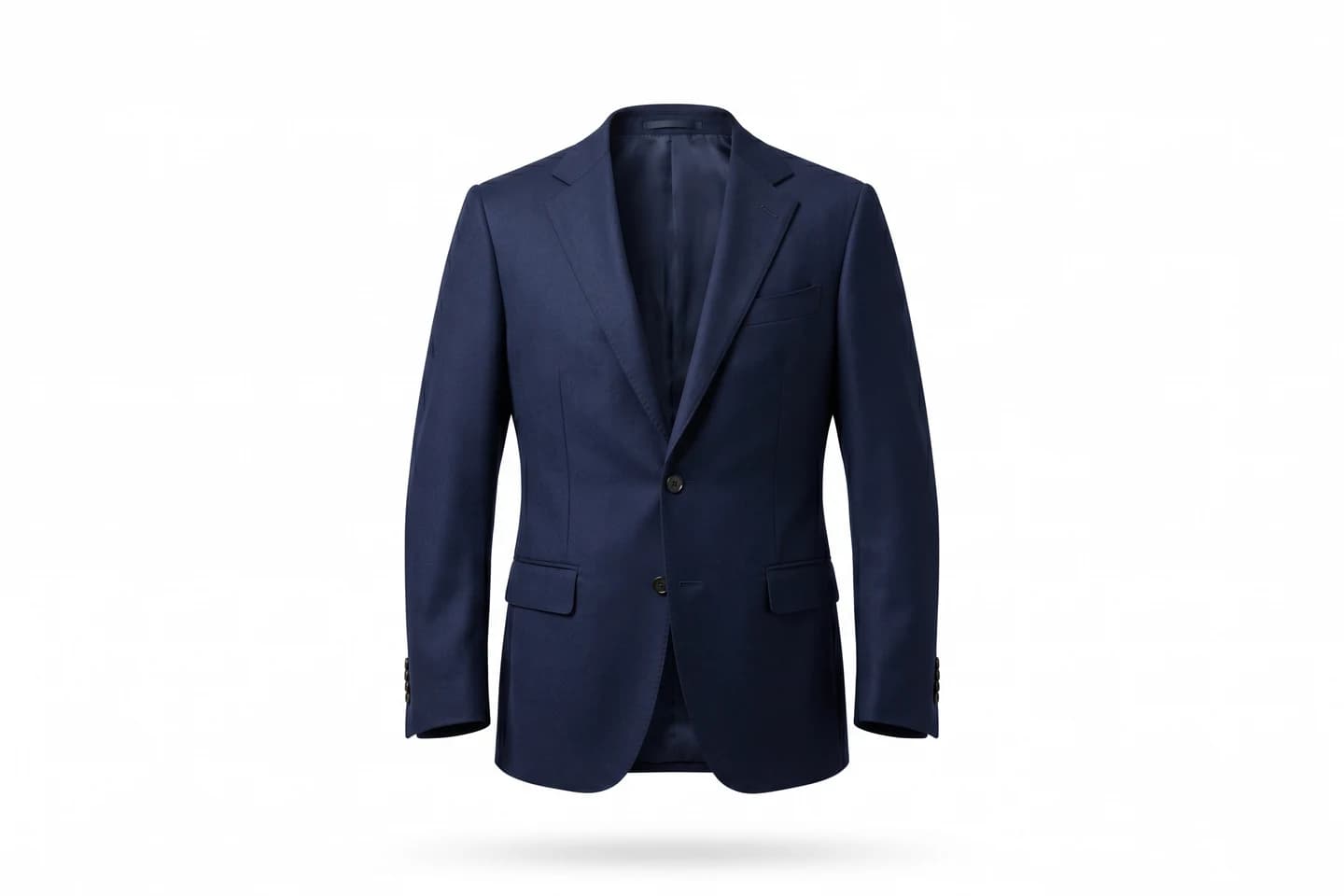
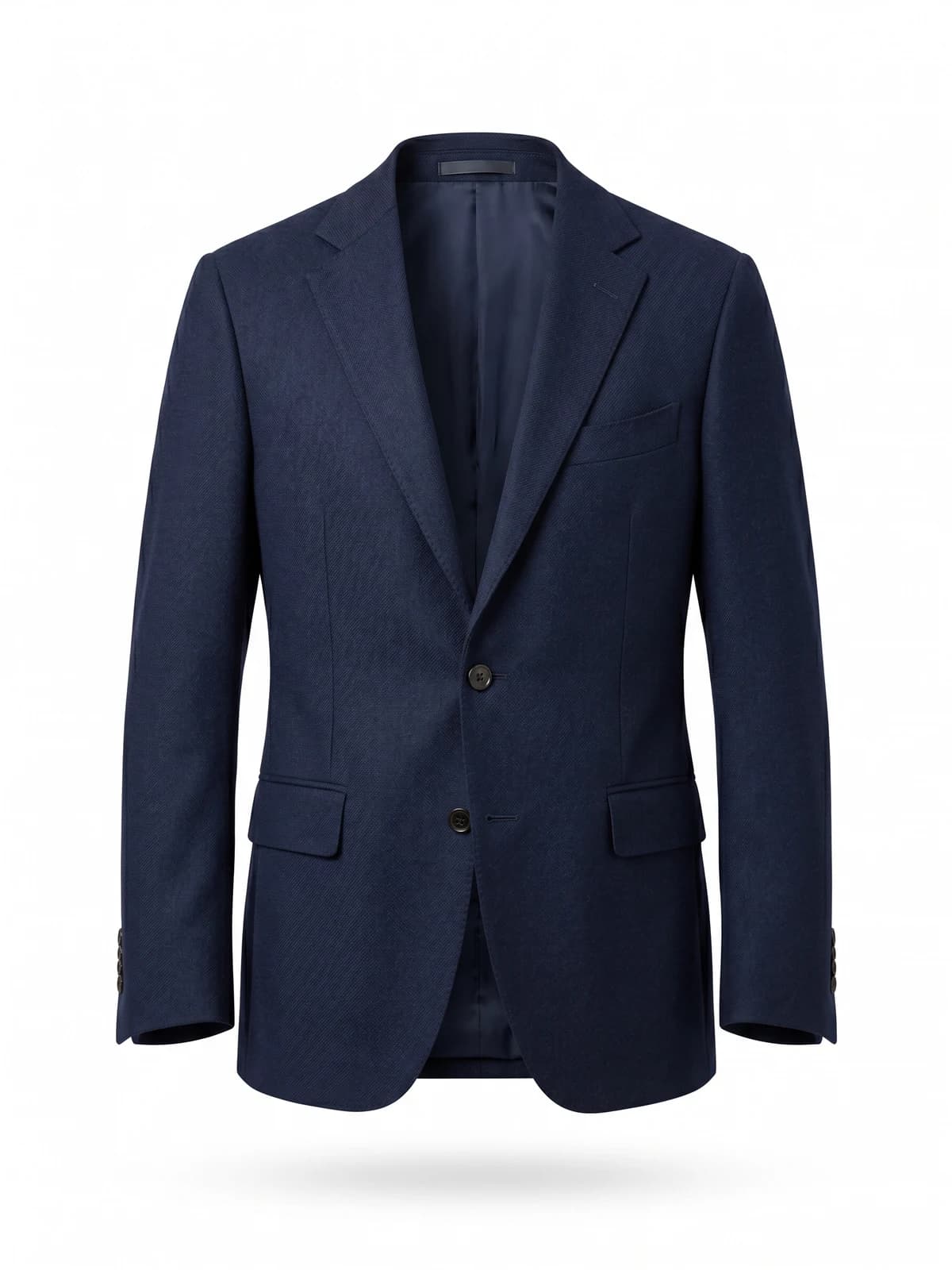
Clean ghost-mannequin shots, instantly
Remove the mannequin and get crisp invisible-model product images that look studio-shot.
Best mannequin for photography: a quick overview
- Full-body invisible ghost mannequin: Best for dresses and complete outfits: removable neck, arms, and torso panels exist exactly for invisible-mannequin photography.
- Ghost mannequin torso form: Best value for tops and outerwear: the same removable-piece system at roughly a third of the full-body price.
- Professional dress form with collapsible shoulders: Best for tailored styling: a pinnable surface and collapsing shoulders make structured garments sit the way they should.
- Adjustable dress form: Best for multi-size sellers on a budget: dials expand the bust, waist, and hips to match each garment's size.
- Leg and hip form: Best for pants, leggings, and skirts: a lower-body form costs far less than a full mannequin if you only sell bottoms.
- Kids ghost mannequin: Best for childrenswear: age-specific forms replace child models entirely.
- Budget torso on a tripod stand: Best starter option: a usable form for under $100 while you validate the store.
- WearView (the AI alternative): Best if you would rather skip the gear: one garment photo becomes a ghost mannequin image or a full on-model shot.
| Mannequin type | Best for | Ghost-mannequin friendly? | Price range |
|---|---|---|---|
| Full-body invisible ghost mannequin | Dresses, jumpsuits, full outfits | Yes, built for it | About $400 to $1,430 |
| Ghost mannequin torso form | Tops, jackets, knitwear | Yes | About $230 to $410 |
| Professional dress form | Tailored, structured garments | Partly, needs more editing | About $440 to $800 |
| Adjustable dress form | Sellers shooting many sizes | No | About $40 to $150 |
| Leg and hip form | Pants, leggings, skirts | For bottoms | About $130 |
| Kids ghost mannequin | Baby and children's clothing | Yes | About $335 to $560 |
| Budget torso mannequin | First product photos | No | About $25 to $100 |
| WearView (AI) | Ghost or on-model images without gear | Yes, generated | From $29/month |
1. Full-body invisible ghost mannequin, best for complete outfits
If your catalog includes dresses, jumpsuits, or layered looks, this is the form to buy. An invisible ghost mannequin breaks apart into removable pieces: neck cap, arms, hands, torso panels, and often thigh sections. You photograph the garment on the assembled form, then remove specific pieces and shoot again to capture the inside of the neckline or the back of the waistband. Your editor (or an AI tool) merges the frames so the clothing appears to float on an invisible body.
Mannequin Mall's full-body invisible forms sell for around $1,328 (the Ultimate V3.0 models) to $1,428, with plus-size male and female versions at about $997. Subastral's full-body ghost mannequins start near $395 for a standard V-neckline female form; its multi-piece forms (12-piece female, 11-piece male) run $680, and the top "Ultimate" versions with maximum segmentation cost $980. DE-LIANG and The Mannequin Makers sell comparable forms.
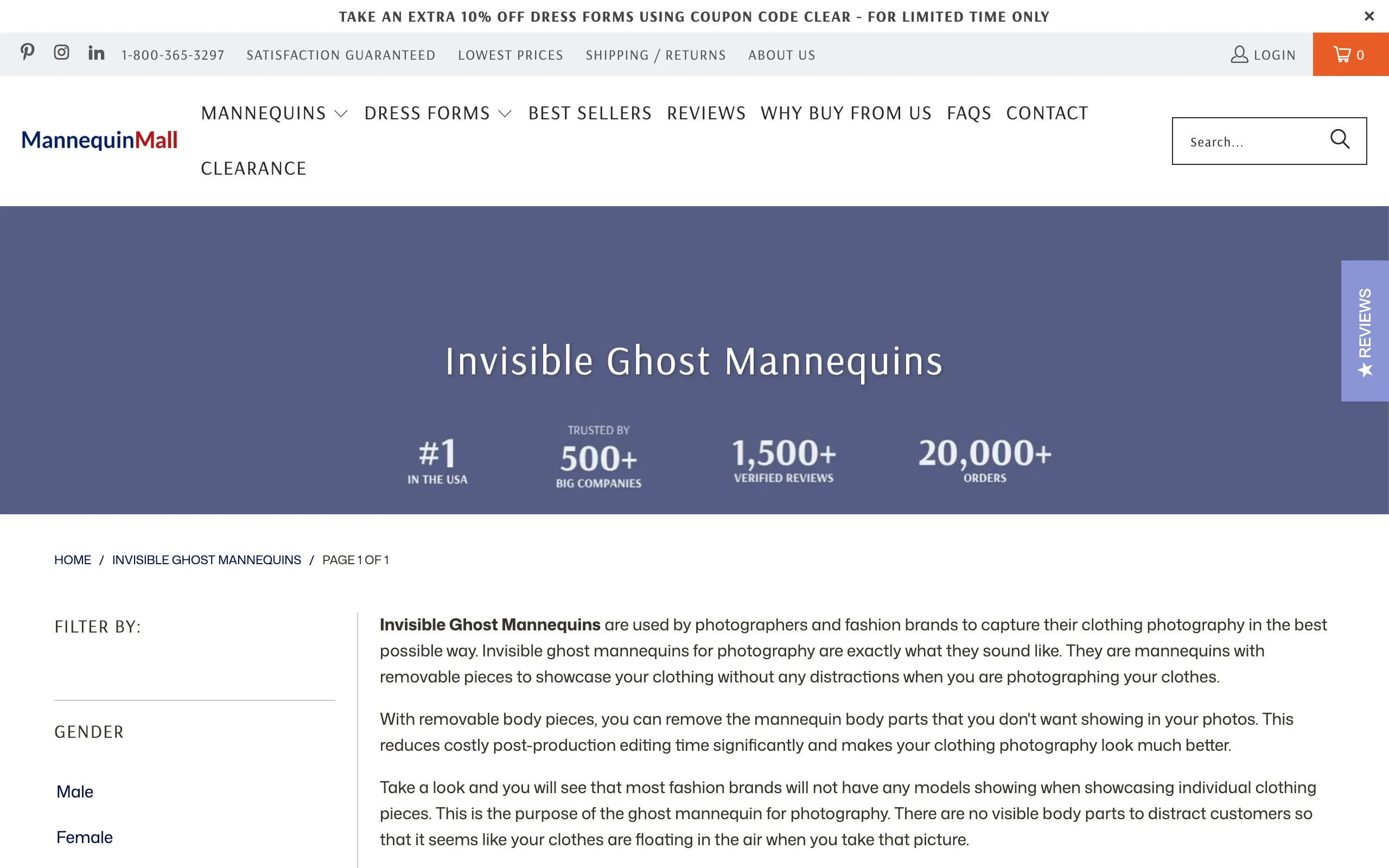
Mannequin Clothing Photography with Mannequin Mall
Key features
- 8 to 12 removable body pieces depending on the model
- Matte finish that keeps reflections off fabric
- Male, female, and plus-size versions
- Steel base with a support pole for stability
Pricing
- Standard full-body forms from about $395 (Subastral)
- Flagship multi-piece versions around $980 to $1,430 (Subastral Ultimate, Mannequin Mall Version 3.0)
Pros
- Handles every garment category in one purchase
- Cuts per-SKU editing time compared to improvising with a solid form
- Plus-size versions let you shoot extended sizing accurately
Cons
- The most expensive physical option in this list
- Bulky to store, and swapping pieces slows down high-volume shoot days
2. Ghost mannequin torso form, best value for tops and outerwear
Most apparel catalogs are heavy on upper-body garments, which makes a torso-only ghost form the smartest first purchase for a lot of sellers. You get the same removable neck and arm system as the full-body version, just without the legs, at roughly a third of the price.
Subastral sells basic ghost mannequin torsos for $235 and 3/4-length invisible torsos with 6 to 7 removable parts for $375. Mannequin Mall's equivalent 3/4 torsos run about $298 to $408. If you shoot shirts, hoodies, blouses, and jackets all day, this form covers you, and you can always add a leg form later.
Key features
- Removable neck cap and arms for interior neckline shots
- 3/4-length versions extend past the hip, so longline jackets and tunics still drape correctly
- Same matte photography finish as full-body forms
- Lighter and easier to reposition than a full body
Pricing
- Basic ghost torsos from $235 (Subastral)
- Multi-part 3/4 torsos from about $298 to $408 (Mannequin Mall, Subastral)
Pros
- Best price-to-coverage ratio for a tops-heavy catalog
- Faster garment changes than a full-body form
Cons
- Useless for pants, skirts, and full dresses
- Cropped framing is obvious on longer garments like maxi dresses
3. Professional dress form with collapsible shoulders, best for tailored styling
A professional dress form is a different animal from a display mannequin. The body is a pinnable, fabric-covered torso built to industry size standards, and the shoulders collapse inward so you can slide on a fitted blazer without stretching the seams. Brands that sell structured garments use these because the garment sits the way a pattern maker intended, and you can pin excess fabric at the back for a clean silhouette.
The Shop Company (TSC Forms) is the reference brand here. Its professional half-body forms with collapsible shoulders sell for $439, and the full-body version with collapsible shoulders and legs runs $799. For photography, expect extra editing: the seamed linen surface and cream color are visible in every frame, so a ghost effect takes more masking work than it would with a purpose-built matte ghost form.
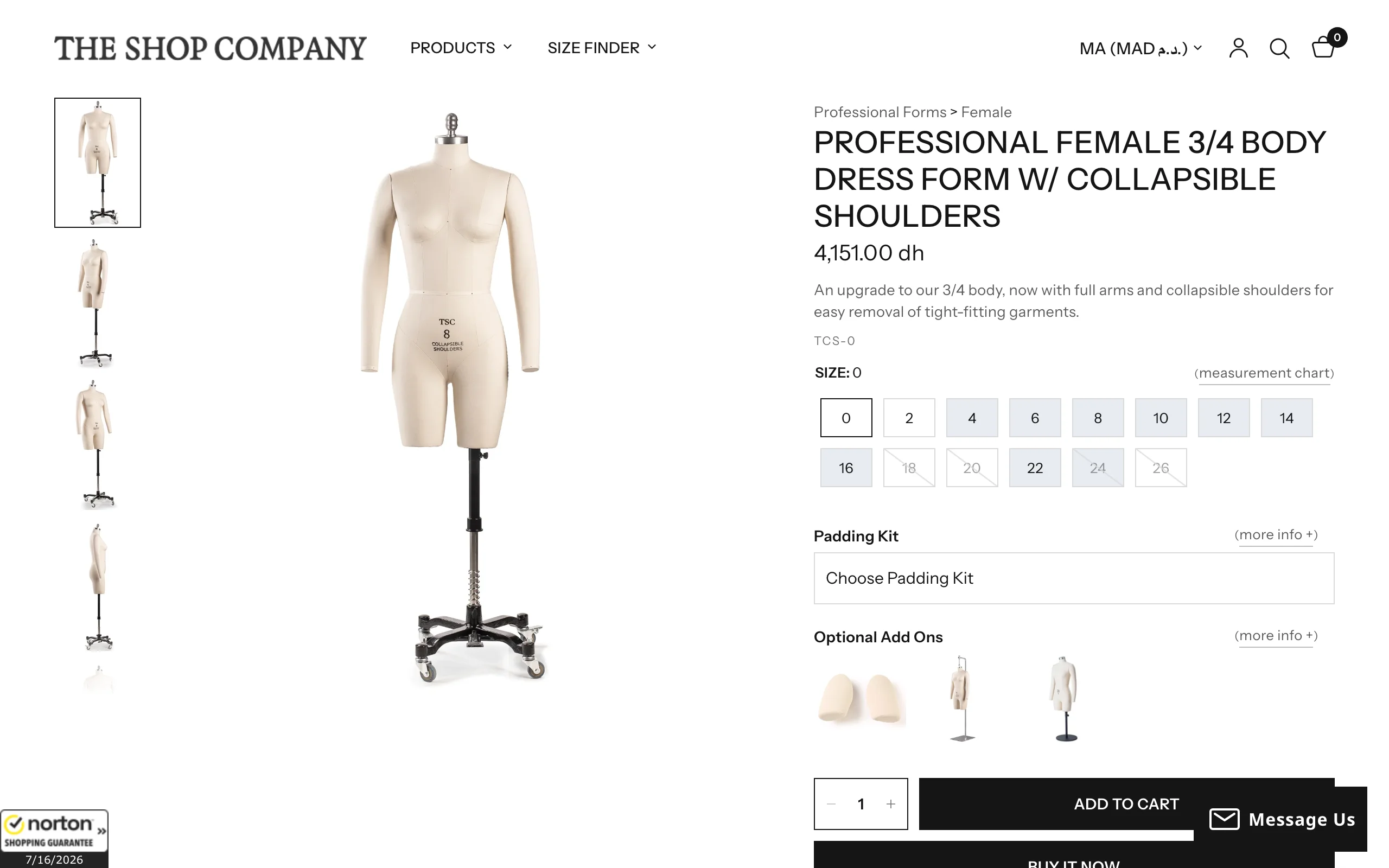
Mannequin Clothing Photography with The Shop Company
Key features
- Collapsible shoulders for dressing tight, tailored garments without stress
- Fully pinnable surface for styling and cinching fit
- Standard industry sizing (size 0 through 22 and beyond, depending on the model)
- Cast iron base with pedal-operated height adjustment
Pricing
- Half-body professional forms at $439 (The Shop Company)
- Full-body forms with collapsible shoulders and legs at $799
Pros
- Unmatched garment presentation for blazers, coats, and structured dresses
- Pinning beats clamping: no hardware visible from the side
- Doubles as a fitting and sampling tool if you also design
Cons
- Not designed for ghost shots, so editing time goes up
- Costs more than a ghost torso while covering less photographic ground
4. Adjustable dress form, best for multi-size sellers on a budget
Adjustable forms like the Dritz Sew You and the Singer adjustable dress form use dials to expand or shrink the bust, waist, hips, and neck. The Dritz Sew You covers US sizes 4 to 12 in its small/medium version and 12 to 18 in medium/large, with 12 adjustment dials and a pinnable surface. For a seller who photographs the same style in many sizes, dialing the form up between shots keeps each size looking properly filled instead of pinned and bunched.
These are sewing-room tools first, so prices are friendly. Singer adjustable forms sell for roughly $40 to $99 depending on the model and retailer, and the Dritz Sew You runs around $146.
Key features
- Dial adjustment at bust, waist, hips, and neck
- Pinnable fabric surface
- Adjustable height on a tripod stand
- Small/medium and medium/large size ranges
Pricing
- Singer adjustable forms from about $40 at big-box retailers like Walmart (Singer's own store lists them higher, around $190)
- Dritz Sew You around $146 (Amazon, eBay)
Pros
- The cheapest way to photograph multiple sizes convincingly
- Widely available at big-box craft and sewing retailers
Cons
- Dial seams and gaps show through fitted knits
- No removable parts, so ghost mannequin shots are off the table
5. Leg and hip forms, best for pants and skirts
Torso forms ignore half your catalog if you sell denim, leggings, or skirts. A leg form is a standing lower body, usually from the waist down, mounted on a base. It gives waistbands, rises, and hems a realistic drape that a flat lay or a hanger cannot fake, and it costs a fraction of a full mannequin.
Store Supply Warehouse sells a 43-inch female plastic leg form with a 26-inch waist and glass base for about $131, with a male version at a similar price. Displays2go carries a range of half-body torso and leg forms in male and female versions. One workflow note: to show the inside of a waistband for a ghost-style image, you still need a second shot of the garment's interior, so plan for that in editing.
Key features
- Waist-down body shape with realistic hip and thigh proportions
- Glass or steel base with a support rod
- Male and female versions in standard retail sizes
- Lightweight plastic or fiberglass construction
Pricing
- Female or male plastic leg forms around $131 (Store Supply Warehouse)
- Displays2go also carries half-body and torso forms (check its site for current prices)
Pros
- Far cheaper than buying a full-body form just for bottoms
- Quick garment changes: one waistband, no arms to thread
Cons
- Single-purpose, and most are display-grade rather than matte photography forms
- Waistband interiors still need a separate insert shot for ghost images
6. Kids ghost mannequin, best for childrenswear
Photographing children's clothing on child models is slow and heavily regulated, which is why kidswear brands lean on forms more than any other segment. Kids ghost mannequins come in age-banded sizes with the same removable pieces as adult versions, so a 4T dress can get a proper invisible-mannequin treatment instead of another flat lay.
Subastral sells a toddler-size invisible ghost mannequin for $335, a child size for $349 (both with 8 removable pieces), and a 12-year-old size for $399, all in matte white. Mannequin Mall's child versions run about $497 for the 2-year-old size up to $557 for the 12-year-old size. Most forms work for both boys' and girls' clothing.
Key features
- Age-specific sizing (roughly 2, 6, and 12 years across brands)
- 8 removable pieces for neckline and back shots
- Matte white finish
- Works for both boys' and girls' garments
Pricing
- Subastral kids ghost forms from $335 to $399
- Mannequin Mall child versions from about $497 to $557
Pros
- Removes child-model logistics from the production schedule entirely
- Accurate proportions beat pinning kidswear onto a small adult form
Cons
- A brand covering newborn through teen needs several forms
- Resale demand is thinner than for adult forms if you change approach
7. Budget torso on a tripod stand, best starter option under $100
If you are validating a store and cannot justify $300 yet, a basic torso form on a tripod stand does the job. Amazon's dress form category has dozens of options in the $25 to $50 and $50 to $100 bands, typically a fabric-wrapped or plastic female torso on a wooden tripod with an adjustable-height stand. It will hold a shirt in shape, and with careful clipping at the back you can produce clean, consistent product photos.
Know what you are giving up. The surface is often glossy or lightly seamed, nothing detaches, and the proportions are display-generic rather than size-chart accurate. Treat it as a bridge purchase: shoot your first hundred SKUs on it, then upgrade to a ghost torso once sales support the spend.
Key features
- Height-adjustable tripod stand, usually pine or metal
- Fabric-wrapped or molded plastic torso
- Tool-free assembly
- Light enough to move between window light and backdrop
Pricing
- Between $25 and $100 on Amazon depending on material and stand
Pros
- Lowest possible entry cost for on-form photography
- Fine for social content and marketplace listings while you test demand
Cons
- No removable parts, so no true ghost mannequin shots
- Sizing and surface quality vary a lot between near-identical listings
How to choose the best mannequin for clothing photography
1) Decide if you need ghost mannequin shots
This single question filters the whole market. If your product pages need that clean, hollow, floating-garment look, only forms with removable pieces will get you there without hours of cloning in Photoshop. Buy a ghost torso (about $230 to $410) or a full ghost body (roughly $400 to $1,430). If you plan to show garments on a visible form, or you crop the form out entirely, an adjustable or budget form is fine.
2) Match the form to your catalog, not the other way around
A tops-heavy catalog is happiest with a 3/4 ghost torso. Denim brands should put the money into a leg form first. Dresses and jumpsuits force the full-body purchase. Write down your 20 best-selling SKUs and count categories before you spend anything: the answer is usually obvious.
3) Check finish, color, and size chart fit
Matte beats gloss every time, because gloss reflects your lights back into the lens and throws color casts onto fabric. White or light gray forms are the easiest to mask in editing. Then compare the form's bust, waist, and hip measurements to your size chart. A form that sits between your sizes leaves every garment slightly baggy or slightly strained, and you will fight it with pins forever.
4) Budget for the whole workflow, not just the form
The mannequin is one line item. A physical setup still needs a camera, at least two lights, a backdrop, a steamer, and editing time for every SKU: a ghost composite typically means merging two or three frames per product. If you shoot 10 products a week, that overhead is manageable. At 100 a week, the editing bill often costs more than the mannequin did.
The AI alternative: skip the mannequin entirely
Here is the part most mannequin buying guides leave out: for a growing number of sellers, the right amount of mannequin is none. AI tools now generate the ghost mannequin effect, or a full on-model photo, from a single garment photo. You photograph the piece flat on a table, on a hanger, or on whatever cheap form you already own, and the software does the rest.
WearView is built around exactly this workflow. Upload a garment photo to the AI ghost mannequin tool and it produces a clean invisible-mannequin image with a filled-out body shape and a natural neckline, no compositing session required. If you want to go further than a hollow form, the same platform handles product photography with AI models: the garment lands on a realistic AI model with the pose, body type, and background you describe, generated in under 15 seconds. Both sit inside a broader AI fashion photography workspace that also covers virtual try-on, consistent model identity across a catalog, and 4K output with commercial usage rights.
The honest comparison looks like this. A physical mannequin is a one-time purchase, but every shot still costs you camera time, lighting, steaming, and per-SKU editing. The AI route works from one photo per garment and needs no gear beyond a phone camera, but it is a subscription: WearView starts at $29 per month on the Lite plan (50 credits), with Pro at $49 for 200 credits. There is no free tier. For a seller listing a handful of products a month, a $50 torso form may genuinely be the better deal. For anyone shooting dozens of SKUs, seasonal drops, or multiple size runs, the math flips fast.
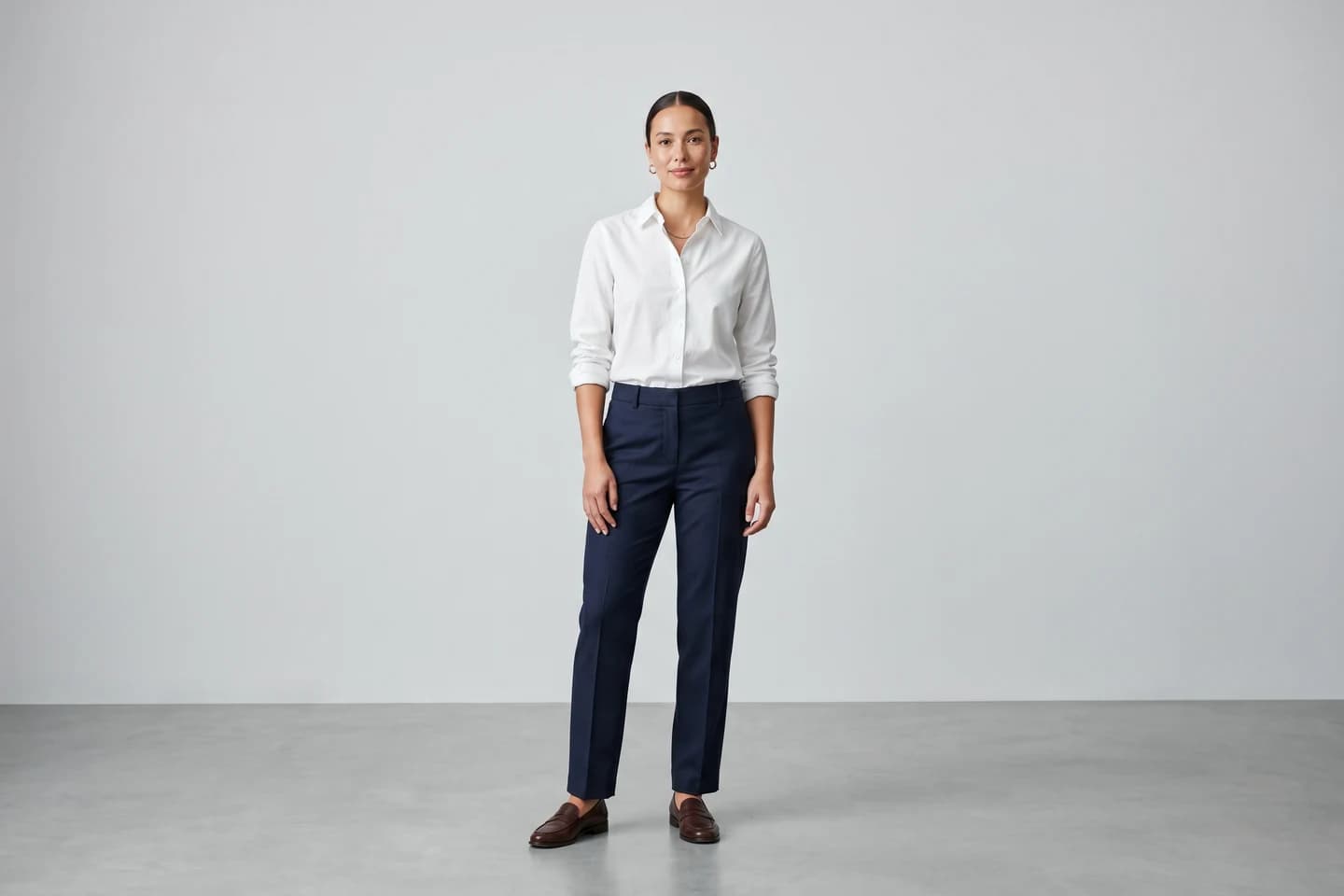
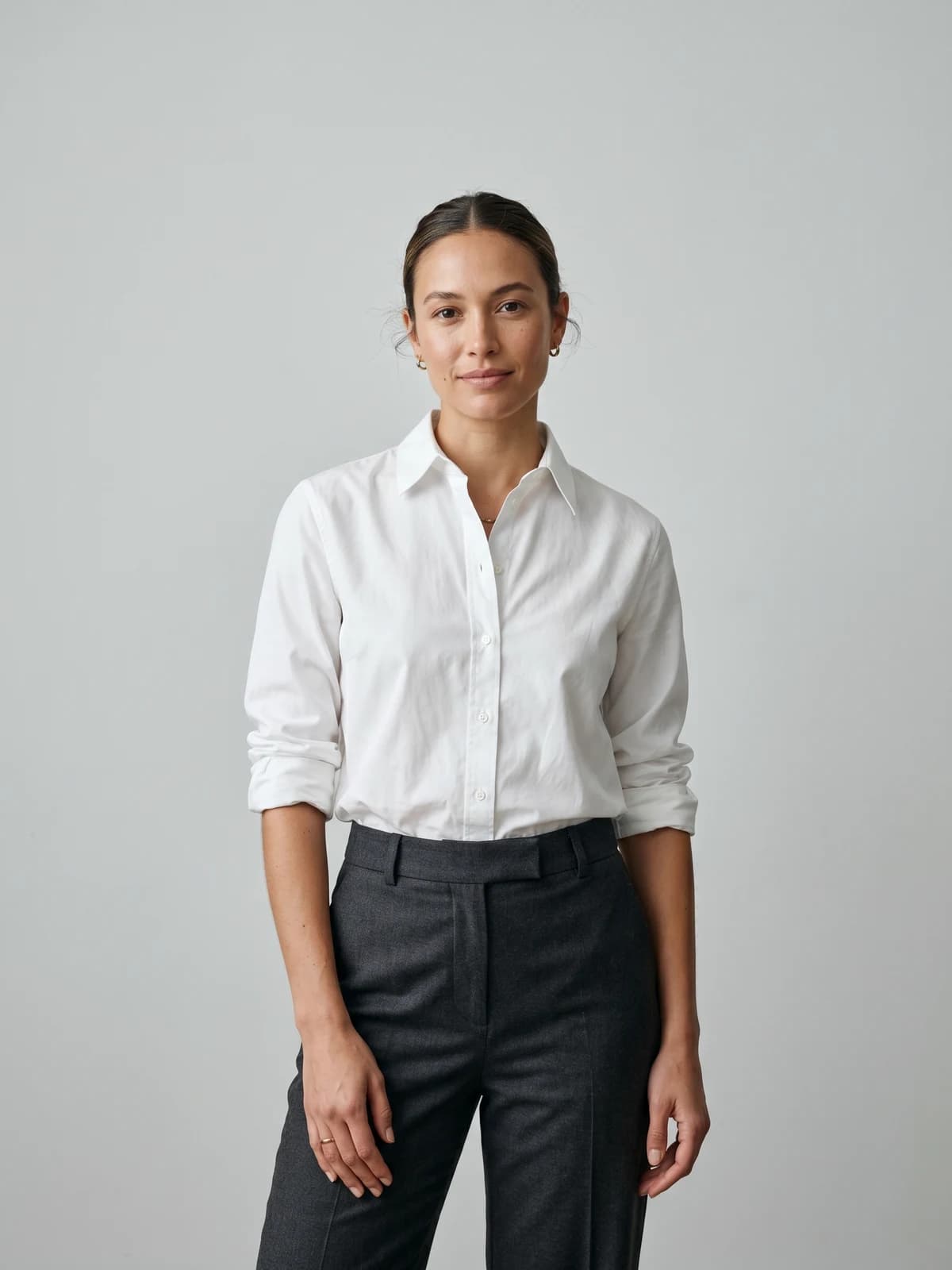
Turn flat-lays into on-model photos
Drop in a flat-lay or product shot and get professional on-model photography ready for your store.
FAQ
What is the best mannequin for photography?
For most clothing sellers, a ghost mannequin torso form is the best starting point: it has the removable neck and arm pieces that invisible-mannequin shots require, costs about $230 to $410, and covers the tops that dominate most catalogs. Move up to a full-body ghost form (about $400 to $1,430) if you sell dresses or complete outfits.
What makes a mannequin "ghost mannequin friendly"?
Removable pieces. To create the ghost effect you photograph the garment on the form, then remove the neck cap or arms and shoot the interior details, and the frames get merged in editing. A solid display mannequin cannot produce those interior shots, which is why editing around one takes so much longer.
Do I need a full-body mannequin or is a torso enough?
Count your catalog. If tops, knitwear, and jackets make up most of your SKUs, a 3/4 torso form covers you and costs hundreds less. You only need the full body for dresses, jumpsuits, and styled head-to-toe looks.
What color mannequin is best for product photos?
Matte white or light gray. A matte surface keeps your lights from reflecting into the lens, and neutral light colors avoid casting a tint onto the fabric, which shortens color correction. Glossy black or flesh-tone display forms are the hardest to edit around.
Can I use a sewing dress form for clothing photography?
Yes, and for tailored garments a professional pinnable form is actually the best styling tool available, since you can pin and cinch the fit invisibly. The trade-off is editing: the fabric surface and seams stay visible in every frame, so producing a ghost effect from a dress form takes more masking work than from a purpose-built ghost form.
How do you photograph pants without a full mannequin?
Use a leg form: a waist-down lower body on a base, around $131 at Store Supply Warehouse. It gives the waistband and legs a worn shape that hangers and flat lays cannot match. For the inside-waistband detail in ghost images, shoot one extra frame of the garment interior and merge it in editing.
Can AI really replace a photography mannequin?
For product-page imagery, yes. Tools like WearView generate a ghost mannequin effect or a complete on-model photo from one garment picture, so there is no form, studio, or compositing session involved. If you want to see what that looks like in practice before buying any gear, our guide on how to take pictures of clothes without a mannequin walks through the options.
Is a cheap Amazon mannequin good enough to start with?
For marketplace listings and social posts, a $25 to $100 tripod torso is workable if you clip garments carefully and keep your lighting soft. Its limits show up when you scale: no ghost shots, inconsistent sizing, and a surface that fights your editor. Plan to replace it once the store proves out.
WearView Team
WearView Content & Research Team
WearView Team is a group of fashion technology specialists focused on AI fashion models, virtual try-on, and AI product photography for e-commerce brands. We publish in-depth guides, case studies, and practical insights to help fashion businesses improve conversion rates and scale faster using AI.