
June 14, 2026•3 min read
Samsung Galaxy Z Rollable with Movable Camera Module
Samsung's first Galaxy Z Rollable could be one of its most unusual phones in years. A newly spotted patent shows a rollable device whose screen expands sideways and whose rear camera module slides out with the body. Here's what the drawings reveal and what to expect next.
Picture of Samsung Galaxy Z Rollable with Movable Camera Module article
Samsung's first Galaxy Z Rollable could be one of its most unusual phones in years.
The patent, spotted thanks to our collab with David from @xleaks7, shows a rollable-style Samsung device where the screen expands sideways. But the most interesting part is not only the display. It is the rear camera module, which appears to move together with the expanding body.
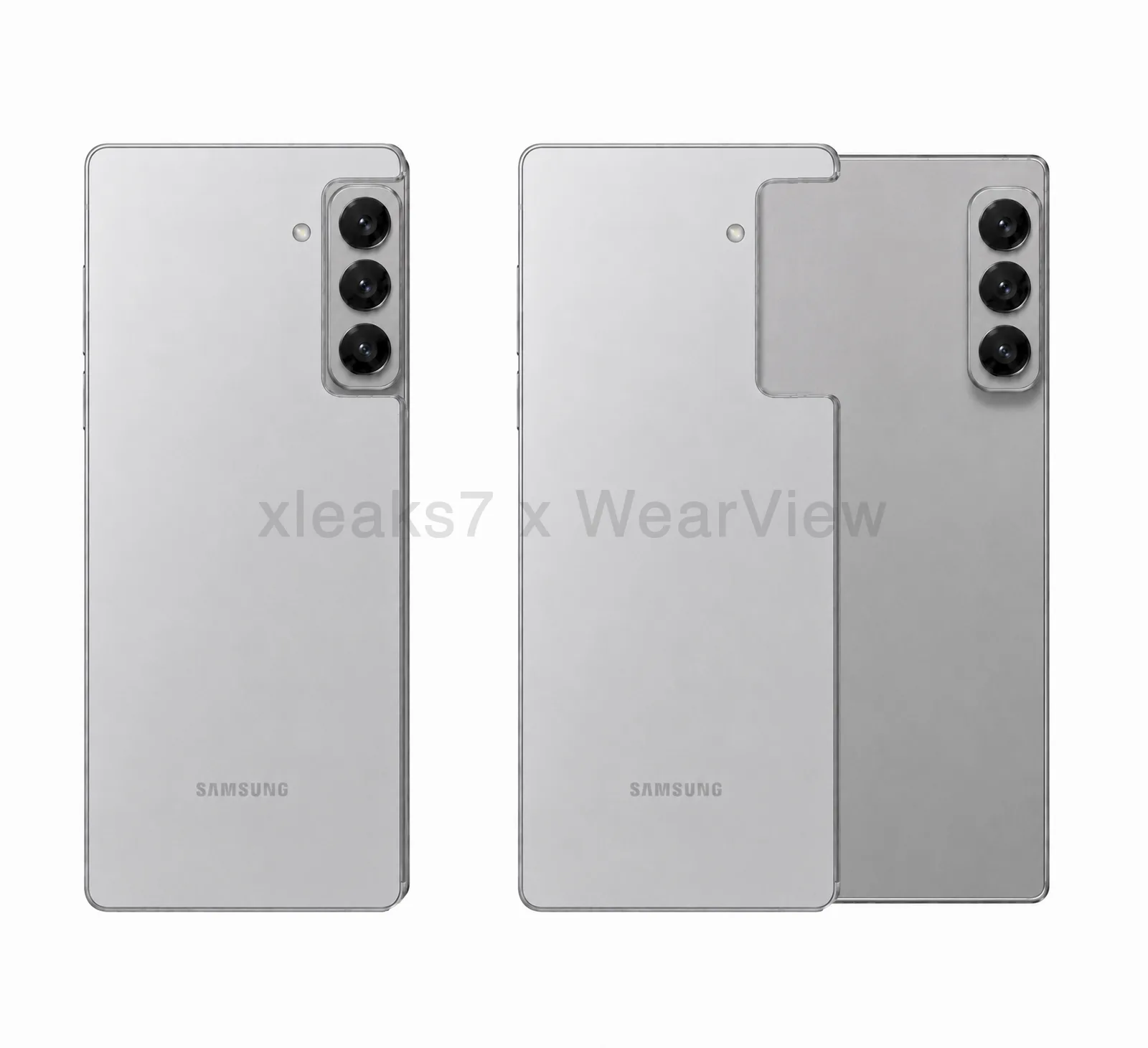
When the phone is closed, the camera area fits into a special frame slot. When the display rolls out, the camera module moves outward with the second part of the phone. That could make the Galaxy Z Rollable feel very different from today's foldables.
Samsung Galaxy Z Roll with a movable camera module | Image: WearView
Design Overview
The design looks like a normal smartphone in its compact form.
From the front, it has a tall display with a centered selfie camera. But when the screen expands, the phone becomes much wider, almost like a small tablet.
On the back, Samsung's idea gets more interesting. The camera module is placed on the moving section of the body. As the display expands, this whole rear section slides out. When the device closes again, the camera module returns into a cutout in the frame.
This gives the phone a cleaner look when closed and a more futuristic look when opened.
The exciting part is that the camera module is not just decoration. It becomes part of the rollable mechanism. That could make the device instantly recognizable in videos and hands-on demos.
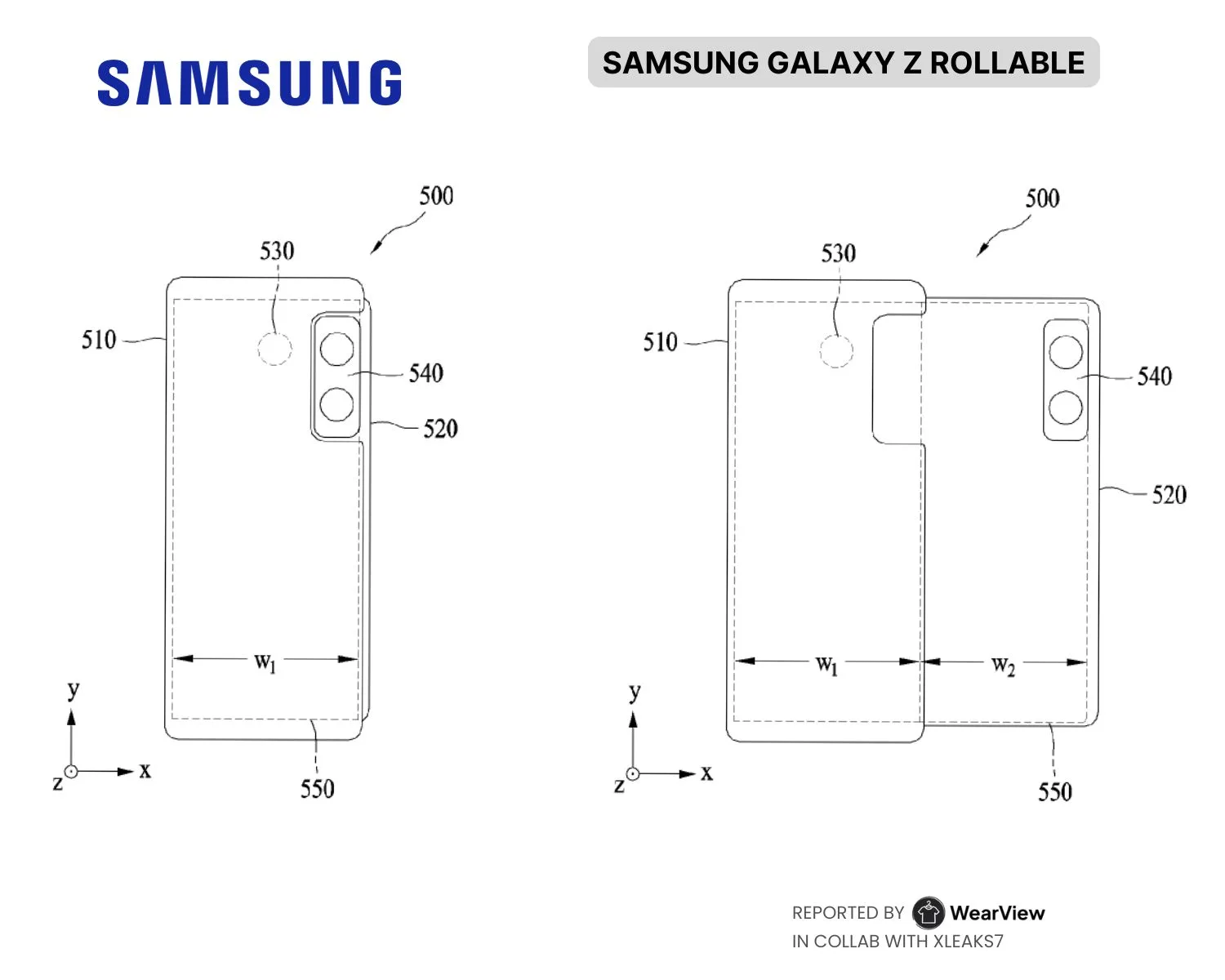
Drawings of Samsung Galaxy Z Rollable | Image: WearView
The Patent
Samsung's patent describes an electronic device with a flexible display, movable housing, camera module, antenna, sensors, and processor.
The drawings show a phone that can change its width, with the camera placed on the moving side of the body.
The technical goal of the patent is to help the device understand how its parts move when the screen expands or retracts. This is important for camera alignment, AR features, and positioning.
But from a design point of view, the big idea is simple: Samsung is looking at a rollable phone where the hardware actually shifts as the screen grows.
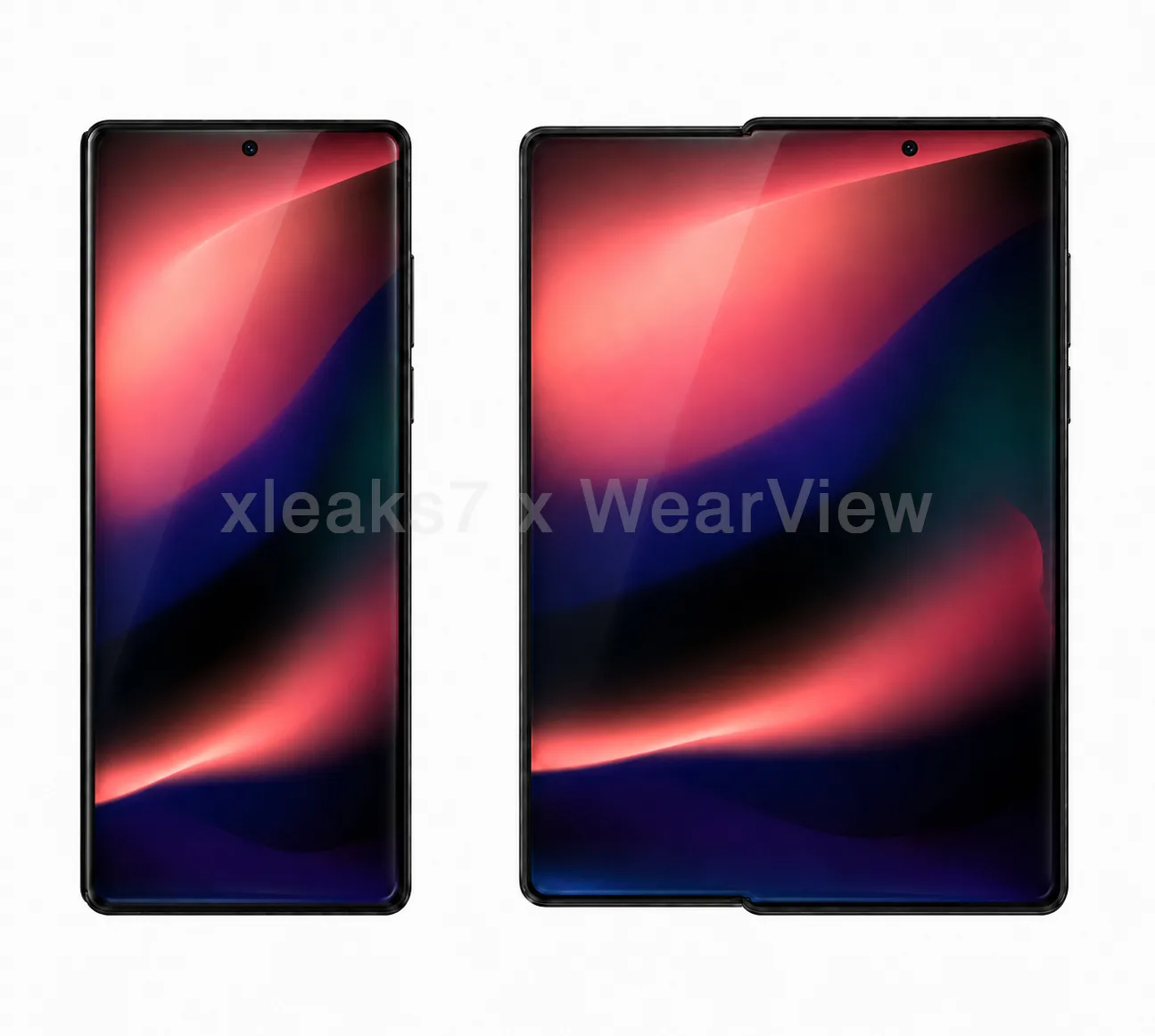
Front view of Samsung Galaxy Z Rollable | Image: WearView
Key Points
- Rollable display that expands sideways
- Movable rear camera module
- Camera area slides into a frame slot when closed
- Phone can work as a normal smartphone or a wider tablet-style device
- More futuristic design than a regular foldable
- The back design changes together with the screen
What to Expect in Future
Samsung Display has already shown rollable and slidable screen concepts, so this idea is not coming from nowhere. One recent concept, Slidable Flex Duet, could expand from 8.1 inches to 12.4 inches.
There are also rumors that Samsung is working on a large rollable phone, possibly called Galaxy Z Roll or Galaxy Z Rollable. But for now, Samsung has not confirmed any release date.
The big question is whether Samsung can make this design durable enough for real users. A moving screen is already complicated, and a moving camera module makes it even more interesting.
If Samsung gets it right, the Galaxy Z Rollable could be more than just another foldable alternative. It could become the company's next real "wow" phone.
When the Camera Starts to Disappear
It is interesting that so much phone innovation still revolves around the camera — sharper sensors, moving modules, smarter positioning. Yet in one corner of the industry, fashion e-commerce, the trend is heading the other way: away from the camera entirely.
Instead of booking a studio and shooting every product on a live model, brands now generate on-model photography with AI. A single garment image run through AI virtual try-on becomes a full set of model shots, while flat-lay-to-model AI turns a plain product photo into a studio-quality result — no photographer, model, or set required. The models themselves don't even need to exist; they can be made from a prompt with an AI fashion model generator, and the output no longer stops at stills — an AI fashion video generator can put those looks in motion.
So while Samsung reinvents the hardware that captures images, the way product images get made is quietly being reinvented too.
Note to editors: The text and visuals of this article are the intellectual property of WearView.co. If you want to share the content, please give a proper clickable credit. Thanks for understanding.

WearView Team
WearView Content & Research Team
WearView Team is a group of fashion technology specialists focused on AI fashion models, virtual try-on, and AI product photography for e-commerce brands. We publish in-depth guides, case studies, and practical insights to help fashion businesses improve conversion rates and scale faster using AI.