July 14, 2026•14 min read
How AI Models Save Clothing Brands Money on Photoshoots (Real ROI)
A plug-in-your-numbers ROI model for switching from studio shoots to AI models: per-SKU and per-campaign cost, break-even by catalog size, and the line items you still pay for.
Picture of How AI Models Save Clothing Brands Money on Photoshoots (Real ROI) article
You already know AI photoshoots are cheaper. What you actually need is a number you can defend in a budget meeting. Most write-ups on AI models photoshoot cost savings stop at a per-image price and a "90% cheaper" headline, which is easy to hand-wave and impossible to defend when someone pushes back. That is not a business case. This one is.
A traditional 100-SKU fashion shoot runs about $24,700 once you stack the photographer, studio, models, hair and makeup, styling, post-production, and logistics, which works out to roughly $247 per SKU (source: Tellos, Fashion Photography Cost in 2026). AI-generated on-model images run about $2 to $3 each, a 70 to 90% reduction (source: Couture.ai). Below is the full switching math: per-SKU and per-campaign cost side by side, the break-even point by catalog size, the revenue you recover by shipping weeks earlier, and an honest list of what you still pay for. If you want the traditional-cost breakdown itemized first, our real cost of fashion photoshoots post does that stack in detail. This post assumes those numbers and does the ROI on top.
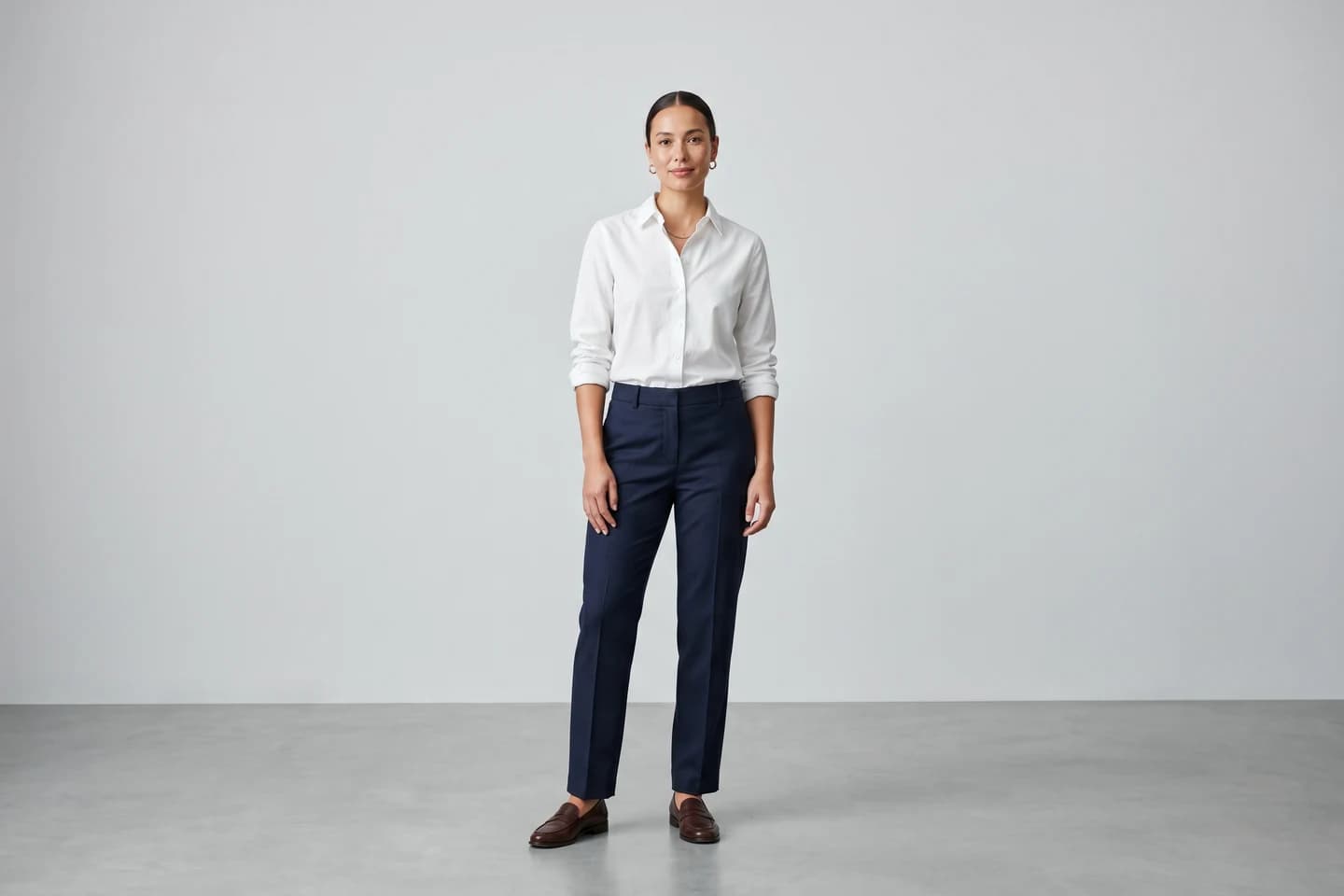
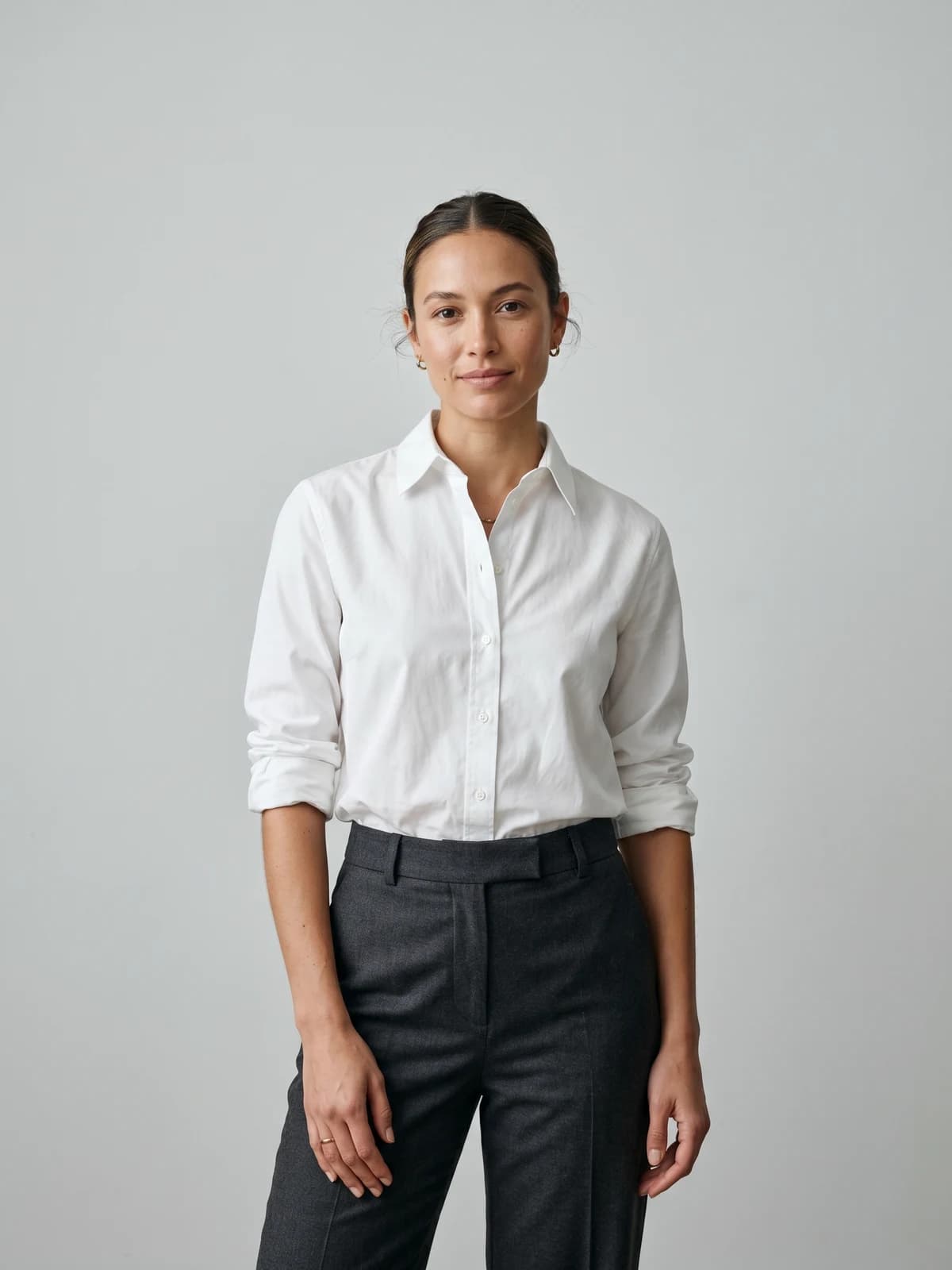
Turn flat-lays into on-model photos
Drop in a flat-lay or product shot and get professional on-model photography ready for your store.
AI models photoshoot cost savings: the 30-second ROI math
Here is the whole argument in four lines, using the cited 100-SKU benchmark.
- Traditional shoot: ~$24,700 for 200 on-model images (2 per SKU)
- AI equivalent on WearView Pro: $49/month for 200 credits
- Gross savings on that one shoot: about $24,650
- Return on the subscription cost: over 500x
That ratio looks fake until you notice why it holds. A studio shoot is almost entirely variable cost. Every SKU adds model time, styling, and retouching. AI photography flips that: you pay a small fixed subscription and the marginal cost of the next image rounds to pennies. The bigger your catalog, the wider the gap gets.
The rest of this post pressure-tests that number so you can bring the honest version to whoever signs off on it.
Traditional cost per SKU vs AI cost per SKU (line item by line item)
The fairest comparison is per SKU, not per image, because that is how catalog budgets are planned. Assume 2 on-model images per SKU (a front and a styled shot), which matches the Tellos benchmark of 200 images for 100 SKUs.
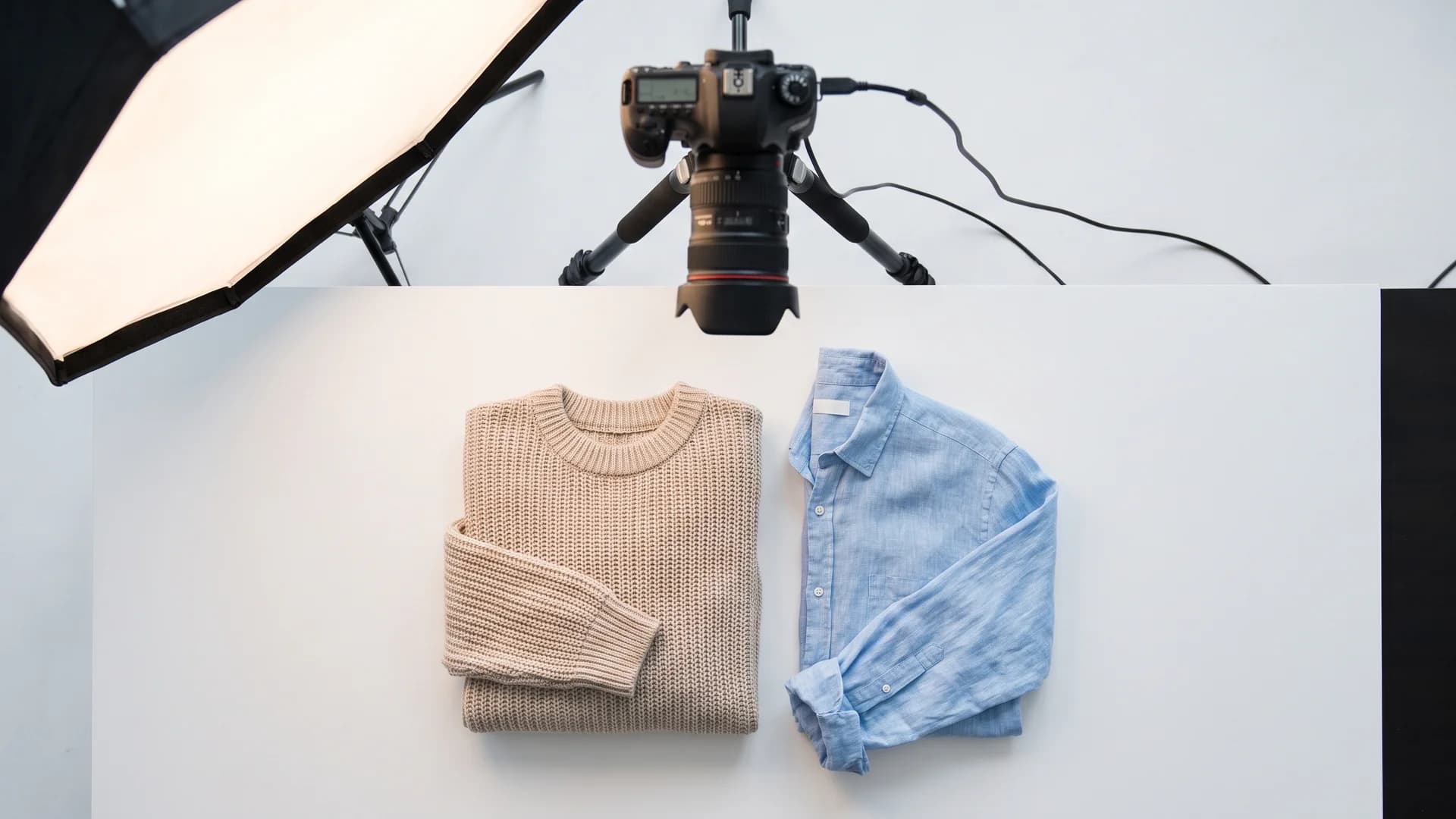
Traditional fashion photoshoot cost setup with a flat-lay garment on a studio backdrop
| Cost line (per SKU) | Traditional studio shoot | WearView AI models |
|---|---|---|
| Photographer + studio time | Included in ~$247/SKU | $0 |
| Model day rate + agency fee | Included | $0 |
| Hair, makeup, styling | Included | $0 |
| Post-production / retouching | Included | Light QA only |
| Platform / credits | n/a | ~$0.25 to $0.50 |
| Garment prep + art direction | Included | Still yours (see below) |
| Blended cost per SKU | ~$247 | ~$1 to $5 |
The $247 traditional figure is the all-in blended number from the 2026 benchmark (source: Tellos). On the AI side, a WearView Pro plan gives you 200 credits for $49, so a two-image SKU costs roughly $0.49 in credits plus a few minutes of your own time to prep the garment shot and review the output.
That is the core reason the ratio is so lopsided. On a traditional shoot you are renting people and a room by the hour. With product to model, a flat-lay becomes an on-model image in under 15 seconds, and the cost of the next SKU is the cost of the next credit.
Per-campaign ROI: what one product drop costs each way
Most brands do not budget a year at a time. They budget by drop. So model a single 40-SKU capsule, the kind of launch a small label runs four to six times a year.
| Line item | Traditional drop (40 SKUs) | WearView drop (40 SKUs) |
|---|---|---|
| On-model images (2 per SKU) | 80 images | 80 images |
| Production cost | ~$9,880 | $49 (Pro plan, 1 month) |
| Reshoots for rejects | $500 to $1,500 | ~$0.25 (just regenerate) |
| Turnaround | 2 to 3 weeks | Same day |
| Total cash out | ~$10,000 to $11,000 | ~$49 to $99 |
Traditional image production averages $55 to $160-plus per image, and a 2025 report found 76% of small businesses using AI product photography cut visual-content costs by over 80% (source: Couture.ai). Figures like that one come from vendor blogs, so check them against a fact-checked set of AI image statistics before you put a number in a deck. The reshoot line matters more than it looks. On a studio shoot, a rejected frame means rebooking the model. With AI you regenerate the pose or background for the price of one more credit, so quality control stops being a budget risk.
For brands that rerun the same faces every drop, consistent AI models keep one signature look across the whole campaign, which is the part traditional shoots struggle to reproduce once a model is no longer available.
Break-even by catalog size: when AI photography pays for itself
This is the table nobody else publishes. Because AI cost is a small fixed subscription and traditional cost scales per SKU, the break-even point is not somewhere out at 500 SKUs. It is at the first one.
| Catalog size | Images (2/SKU) | Traditional cost | WearView plan | Savings | Payback point |
|---|---|---|---|---|---|
| 10 SKUs | 20 | ~$2,470 | $29 (Lite, 50 cr) | ~$2,441 | First SKU |
| 100 SKUs | 200 | ~$24,700 | $49 (Pro, 200 cr) | ~$24,651 | First SKU |
| 1,000 SKUs | 2,000 | ~$247,000 | ~$400 to $600 (Advanced + packs) | ~$246,400 | First SKU |
A few honest notes on this table:
- Traditional cost uses the $247/SKU blended benchmark and scales linearly.
- WearView cost assumes ~1 credit per generated image; the 1,000-SKU row needs 2,000 credits, covered by the Advanced plan (500 credits, $99/month) run across a few months or topped up with credit packs.
- The reason the payback point is "first SKU" every time: a single traditional shoot session for a mid-sized business runs $2,500 to $5,000 minimum before you shoot anything, while an AI subscription starts at $29 (source: ElectroIQ, Product Photography Statistics 2025).
So the real question is not "at what catalog size does AI pay off." It pays off immediately. The size question is only about which plan you need, not whether the switch clears break-even.
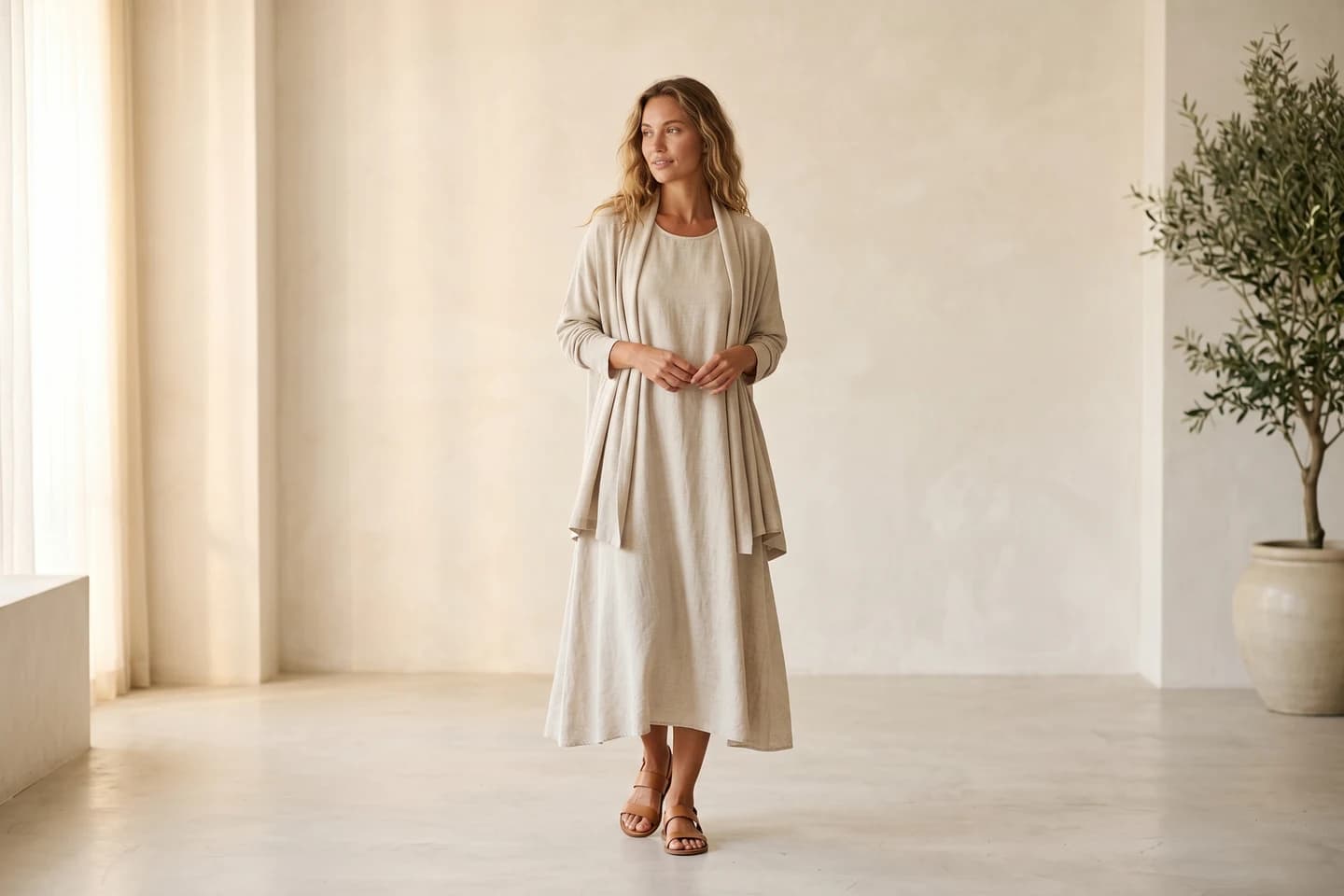
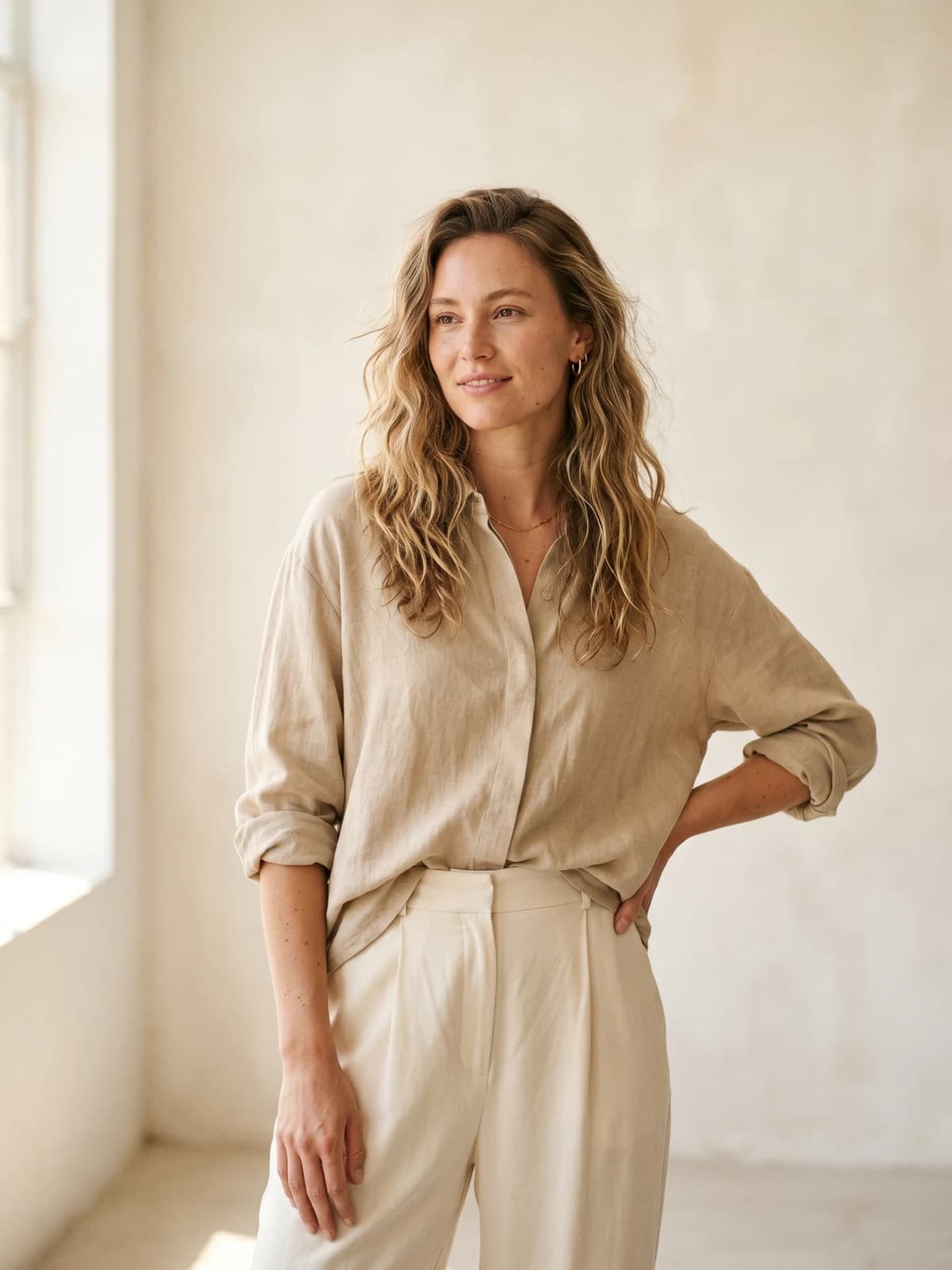
Replace your next photoshoot with AI
Professional on-model fashion photography in seconds, at a fraction of the cost of a studio shoot.
Time-to-market ROI: turning three saved weeks into revenue
Cash savings is only half the return. The other half is time, and time is revenue you either capture or forfeit. Businesses generated 50-plus final product images in under 6 hours with AI, saving 160-plus hours per batch versus a traditional 2 to 3 week concept-to-delivery timeline (source: ElectroIQ).
Put a dollar figure on those three weeks. Say a drop is expected to earn $30,000 in its first 90 days. Shipping it 21 days earlier means roughly a third of a month of extra selling time on the front end, when demand and novelty are highest. Even a conservative estimate of one extra week of full-price sales before markdowns can add several thousand dollars per drop that never shows up in a "cost per image" comparison.
The hours matter too. Those 160 saved hours per batch are your team's hours: no shoot scheduling, no model casting, no shipping samples back and forth. If you value that time at even $40/hour, that is $6,400 of recovered labor per batch, on top of the direct production savings. Faster catalog updates also mean you can test more designs. When you can generate an AI fashion model wearing a new sample the same afternoon it arrives, you find your winners weeks before a studio-bound competitor.
What you still pay for with AI models (the honest line items)
AI models are not free labor with zero inputs. If your ROI model pretends they are, someone will poke a hole in it. Here is what stays on your books after you switch.
- Art direction and creative decisions. The tool renders; you still decide the mood, poses, and which looks match the brand. That judgment does not disappear.
- Garment prep. A clean, well-lit flat-lay or packshot going in gives you a clean on-model image coming out. Sloppy input still means sloppy output.
- Quality control and light retouching. You review generations, pick the keepers, and occasionally fix a detail. Far less than studio retouching, but not zero.
- The occasional hero or editorial shot. For a campaign centerpiece or a true editorial story, some brands still commission a real shoot. AI covers the catalog volume; a hero image is a separate, deliberate spend.
- The subscription itself. Small and fixed, but real. Budget $29 to $99 a month depending on volume.
Being upfront about these is what makes the ROI credible. The savings are large enough that you do not need to hide the costs to win the argument.
Cost savings vs revenue lift: the conversion multiplier most ROI models miss
Every calculation so far has been about spending less. But better on-model images also make you earn more, and that side of the ledger is usually left off entirely.
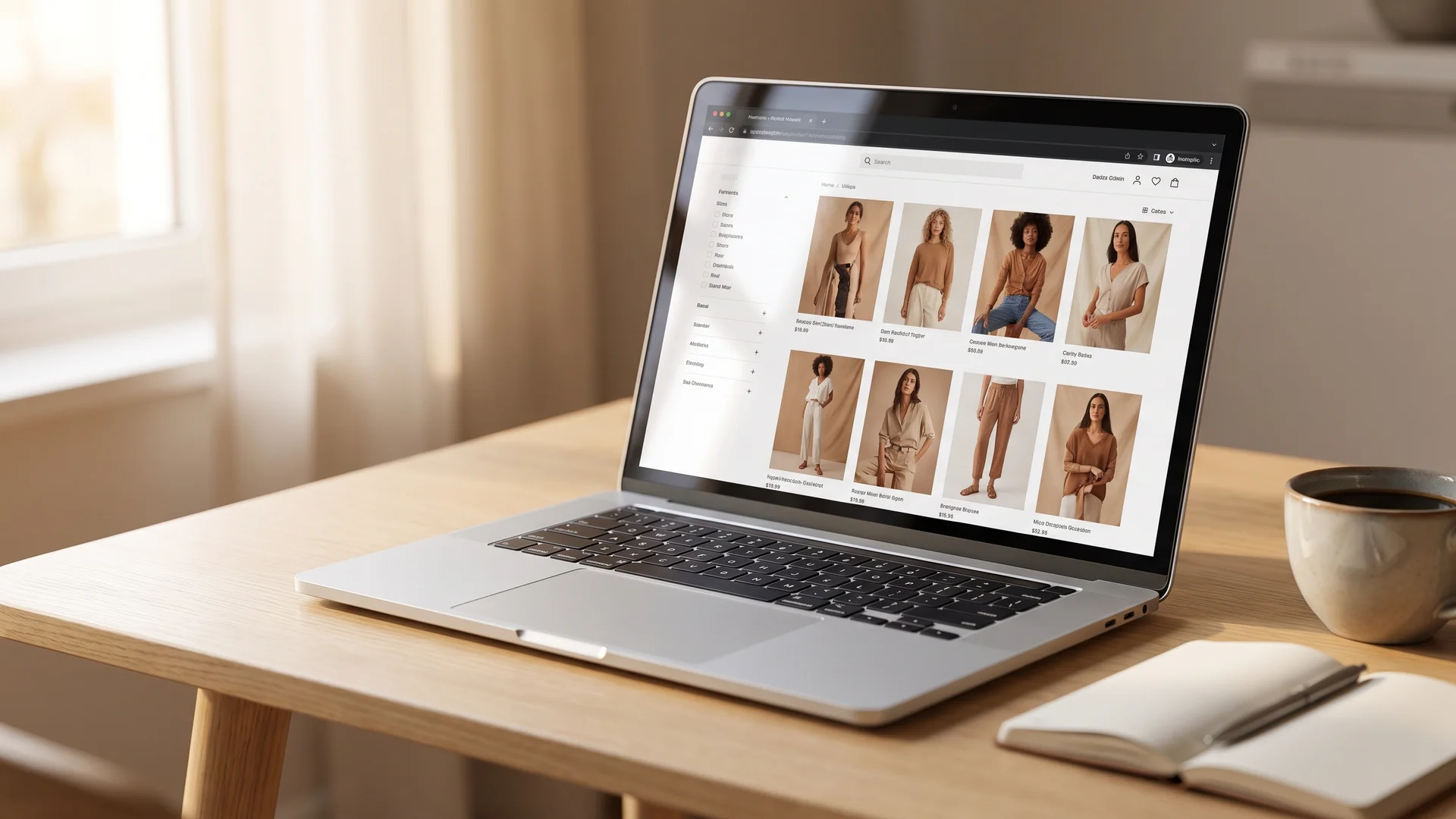
AI product photography catalog of on-model fashion images shown on a laptop store page
Products shown with clear, sharp images convert 33% better than products with low-quality visuals, and one retailer saw a 9.46% lift in total sales just by swapping small category thumbnails for larger high-quality images (source: ElectroIQ). If AI lets you put every SKU on a model instead of leaving half your catalog as flat-lays, that lift compounds across the whole store.
Do the quick version. A store doing $50,000 a month at a 2% conversion rate that nudges conversion up even half a point through consistent on-model imagery adds real monthly revenue, month after month, with no extra ad spend. That is the multiplier: you spent 99% less on photography and the photography still sells harder. Tools like virtual try-on push this further by letting shoppers see a garment on a body before they commit.
Build your own AI models photoshoot cost savings calculator (plug in your numbers)
You do not need a spreadsheet template. You need six inputs and two subtractions. Fill in your own figures.
- SKUs per year = A
- Images per SKU = B (usually 2 to 4)
- Traditional cost per image = C (benchmark $55 to $160; use your real quote)
- AI plan cost per year = D ($29 to $99/month, so $348 to $1,188)
- Extra AI credits/packs = E (only if volume exceeds your plan)
- Weeks saved per cycle x revenue per week = F (your time-to-market gain)
Then:
- Traditional annual cost = A x B x C
- AI annual cost = D + E
- Net annual savings = (A x B x C) minus (D + E), plus F
Worked example at 100 SKUs across two seasons: traditional photography runs about $60,000 a year versus roughly $3,300 with AI-generated on-model photography, a saving near $56,700 and a 17x-plus return (source: Tellos). Note the AI figure there includes labor and setup, not just the subscription, which is why it is higher than the raw $49 plan cost and more honest for planning. If you want to see the whole platform before you model it, WearView runs product-to-model, model creation, and try-on in one place.
Key takeaways
- Break-even is the first SKU, not some far-off catalog size. Traditional cost scales per SKU; AI cost is a small fixed subscription, so the switch clears payback almost immediately.
- Model per campaign, not just per year. A single 40-SKU drop that costs ~$10,000 to shoot traditionally costs $49 to $99 on AI, with regenerations for pennies instead of paid reshoots.
- Count the time, not only the cash. Saving 160-plus hours and 2 to 3 weeks per batch turns into recovered labor and earlier full-price selling that a cost-per-image number hides.
- Keep the honest line items in. Art direction, garment prep, QA, and the odd hero shot stay on your books. The savings are big enough that you do not need to pretend otherwise.
- Remember the revenue side. Sharper on-model images convert up to 33% better, so the switch cuts cost and lifts sales at the same time.
Sources: Tellos, Fashion Photography Cost in 2026, Couture.ai, AI Photoshoots vs Traditional Photography, ElectroIQ, Product Photography Statistics 2025
FAQ
How much do AI models save on a photoshoot? Against the 2026 benchmark of ~$247 per SKU for a traditional shoot, AI on-model images cost roughly $1 to $5 per SKU on a subscription plan. On a 100-SKU catalog that is about $24,700 traditional versus $49 in AI credits, a saving of over $24,000 on a single shoot.
What is the ROI of switching to AI fashion photography? For a 100-SKU catalog run twice a year, brands report roughly $60,000 in annual traditional cost versus about $3,300 with AI, a 17x-plus return once you include AI labor and setup. The subscription itself pays for itself on the very first SKU you would otherwise have shot in a studio.
How much does an AI photoshoot cost per image and per SKU? AI-generated images run about $2 to $3 each on most platforms, versus $55 to $160-plus per image traditionally. On WearView, a Pro plan gives 200 credits for $49/month, so a two-image SKU costs roughly $0.49 in credits plus a few minutes of prep and review.
At what catalog size does AI product photography pay for itself? The first SKU. A traditional shoot session for a mid-sized business starts at $2,500 to $5,000 before a single frame, while an AI subscription starts at $29/month. That gap means AI clears break-even immediately; catalog size only decides which plan you need.
Are AI model photos cheaper than hiring a real model and photographer? Yes, by a wide margin. A real shoot bundles model day rates, agency fees, photographer and studio time, hair, makeup, styling, and retouching into every SKU. AI replaces those variable costs with a fixed monthly subscription and near-zero marginal cost per image.
What do you still have to pay for when using AI models? Art direction, garment prep, quality control and light retouching, the occasional commissioned hero or editorial shot, and the subscription. These are small next to a full shoot, but an honest ROI model keeps them in rather than claiming zero inputs.
How much faster is an AI photoshoot than a traditional shoot? Brands have generated 50-plus final images in under 6 hours with AI, versus a 2 to 3 week concept-to-delivery timeline for a studio shoot, saving 160-plus hours per batch. On WearView, a single flat-lay becomes an on-model image in under 15 seconds.
Do AI product photos convert as well as traditional on-model photos? Clear, sharp images convert 33% better than low-quality visuals regardless of how they were made, and one retailer saw a 9.46% sales lift from upgrading to larger high-quality images. Consistent AI on-model photography lets you put every SKU on a body, which usually lifts conversion versus a catalog of flat-lays.
WearView Team
WearView Content & Research Team
WearView Team is a group of fashion technology specialists focused on AI fashion models, virtual try-on, and AI product photography for e-commerce brands. We publish in-depth guides, case studies, and practical insights to help fashion businesses improve conversion rates and scale faster using AI.