March 7, 2026•20 min read
Fashion Web Design: Modern UX Tips to Elevate Your Brand
Master fashion web design with proven branding and UX tactics to build a site that elevates your brand and boosts conversions.

Fashion Web Design: fashion web design that elevates your brand with modern UX
When it comes to fashion web design, we’re not just building a place to sell clothes. We're crafting an immersive brand experience—a digital flagship that captures your brand's story, vibe, and values from the moment someone lands on the page.
Building Your Digital Flagship Store
Your website is so much more than a sales channel. It’s the digital equivalent of a stunning brick-and-mortar flagship store, where new customers get their first impression of who you are. It's where they explore your collections and, ultimately, decide if they see themselves in your world. This is why moving beyond generic, off-the-shelf templates is non-negotiable if you want to stand out.
Truly great fashion web design translates your brand's soul into an interactive journey. Every single choice—from your color palette and typography to the mood of your photography—has to work in harmony to create a cohesive and magnetic atmosphere for your visitors.
Weave Brand Identity Into Every Pixel
Before a single line of code is written, you have to get crystal clear on your brand’s unique visual language. What feeling are you trying to evoke? Is your brand sleek, minimalist, and modern? Or is it more bohemian, romantic, and free-spirited? Whatever your identity is, your website needs to be its most powerful and consistent expression.
This is where your brand strategy directly informs your design decisions. It’s a process of making your brand tangible online.
Let's break down the essential components that bring your brand's identity to life on your website. Each element needs to be defined and then consistently applied to ensure every pixel reflects who you are.
Core Elements of Fashion Brand Identity Online
| Element | Description | Impact on Web Design |
|---|---|---|
| Mood & Emotion | The core feeling you want customers to experience—e.g., sophisticated, edgy, playful, serene. | Drives the overall art direction, from photography style to motion effects and color grading. |
| Color Palette | A defined set of primary and secondary colors that represent your brand's personality. | Dictates backgrounds, text colors, button styles, and accent elements for a cohesive look. |
| Typography | The specific fonts used for headlines, body text, and calls-to-action. | Sets the tone. A serif font might feel classic and luxurious, while a sans-serif feels modern and clean. |
| Brand Voice | The personality of your written content—how you "speak" to your audience. | Shapes all copy, from product descriptions and "About Us" pages to microcopy on buttons. |
| Imagery Style | The aesthetic of your photography and videography (e.g., high-flash, natural light, studio). | The most powerful tool for conveying your brand’s world. Consistency is key. |
Once these elements are locked in, you can start building an experience that feels authentic from top to bottom.
Of course, a beautiful site that's a nightmare to navigate is a failed site. Your design absolutely must be intuitive, guiding users effortlessly from that initial moment of discovery all the way to checkout.
A great fashion website strikes a perfect balance between forward-thinking aesthetics and flawless usability. It’s never a choice between one or the other; it’s about making them work together to create a seamless and delightful customer journey.
The opportunity here is massive. The fashion e-commerce market is projected to surge past $1.2 trillion by 2027, which underscores just how vital a killer online presence is. To truly carve out your space, understanding the nuances of custom ecommerce website development is the only way to build a digital flagship that can capture a piece of that growing market.
Creating a Winning Visuals and Imagery Strategy
In the world of fashion e-commerce, your visuals do more than just show a product; they are the product in the customer’s eyes. The right imagery strategy is the single most important tool you have for communicating your brand’s essence, highlighting the details of your garments, and ultimately, convincing a shopper to click "add to cart." What they see on their screen is how they decide if your clothing fits their style and their life.
For years, this meant one thing: expensive, complicated photoshoots. You had to juggle model bookings, studio rentals, and photographer schedules, a process that was not only costly but incredibly slow. While the results could be beautiful, this old-school method is just too rigid for the breakneck speed of modern fashion retail.
The New Era of Agile Visual Production
Fortunately, a much more nimble approach is taking over, one built around speed, creative control, and pure efficiency. AI-driven tools are completely changing the game, allowing brands to shift from cumbersome photoshoots to on-demand image creation. This move is a cornerstone of modern fashion web design.
This process is about building a strong brand identity first, which then guides all your design and launch decisions—especially your visuals.
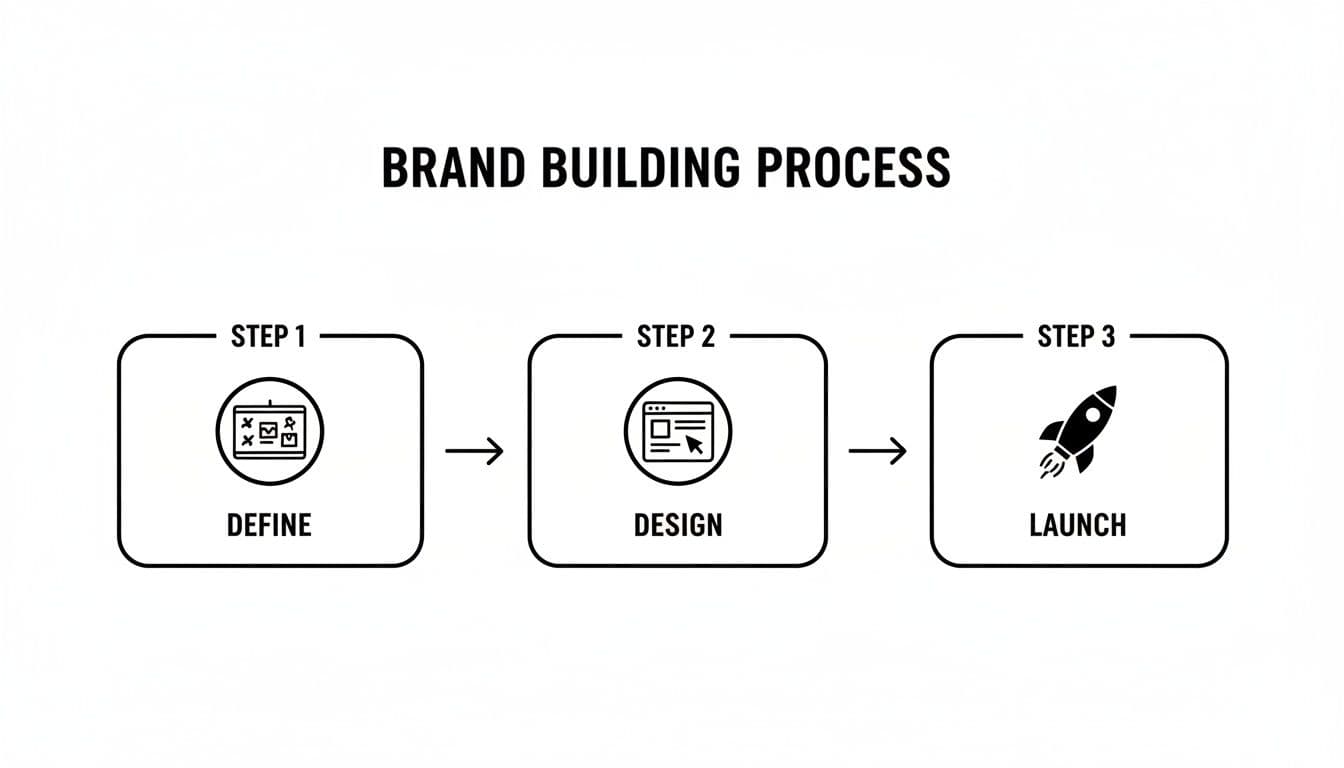
A flowchart illustrating the three-step brand building process: define, design, and launch.
As you can see, a clear brand definition directly feeds the design and launch phases. Your visual strategy isn't an afterthought; it’s a thread that runs through the entire process, and today’s tools can amplify its impact at every step.
From Product Shot to On-Model Magic
Imagine taking a simple flat-lay photo of a sweater and, just minutes later, having a full gallery of realistic, on-model images ready to go. That's the power of a product-to-model workflow. With tools like WearView, this isn’t just possible—it’s incredibly easy. You can generate an entire collection of lifestyle shots without ever booking a studio.
You just upload your basic product photos, and the AI produces studio-quality visuals on a diverse cast of models that you’ve chosen to perfectly match your brand’s look and feel.
- Slash Production Costs: Brands have reported saving up to 90% on their imagery budget by moving away from traditional shoots.
- Accelerate Time-to-Market: Go from receiving a new product to having a visually rich, conversion-ready product page live in a matter of hours, not weeks.
- Maintain Brand Consistency: By using the same set of AI-generated models across your entire collection, you create a flawlessly cohesive and professional look.
This isn't about replacing creativity; it's about amplifying it. When you remove the logistical headaches and financial burdens of photoshoots, you free up your team to focus on what really matters: crafting a compelling brand story.
Think about it: a small boutique can instantly showcase a new dress on ten different models, with unique backgrounds and poses, giving shoppers a far richer understanding of its fit and style. This level of visual merchandising used to be something only the biggest names in fashion could afford. You can explore more insights on using high-quality images for e-commerce to see how deep the impact goes.
AI-powered imagery makes it possible to ensure every single visual on your website is perfectly on-brand and optimized to drive sales.
Designing a Flawless Mobile-First Experience
Let's be honest, your customers aren't sitting at a desk browsing for their next favorite outfit. They’re on their phones—in line for coffee, on their commute, or scrolling from the couch. Your brand’s digital storefront is in their pocket, which means a mobile-first approach to fashion web design isn’t just a trend, it’s the only way to compete.
This goes way beyond just making your desktop site shrink to fit a smaller screen. We're talking about designing the entire shopping journey from the ground up, specifically for a smartphone. The experience has to feel fluid, intuitive, and completely natural to a user tapping and swiping with their thumb.
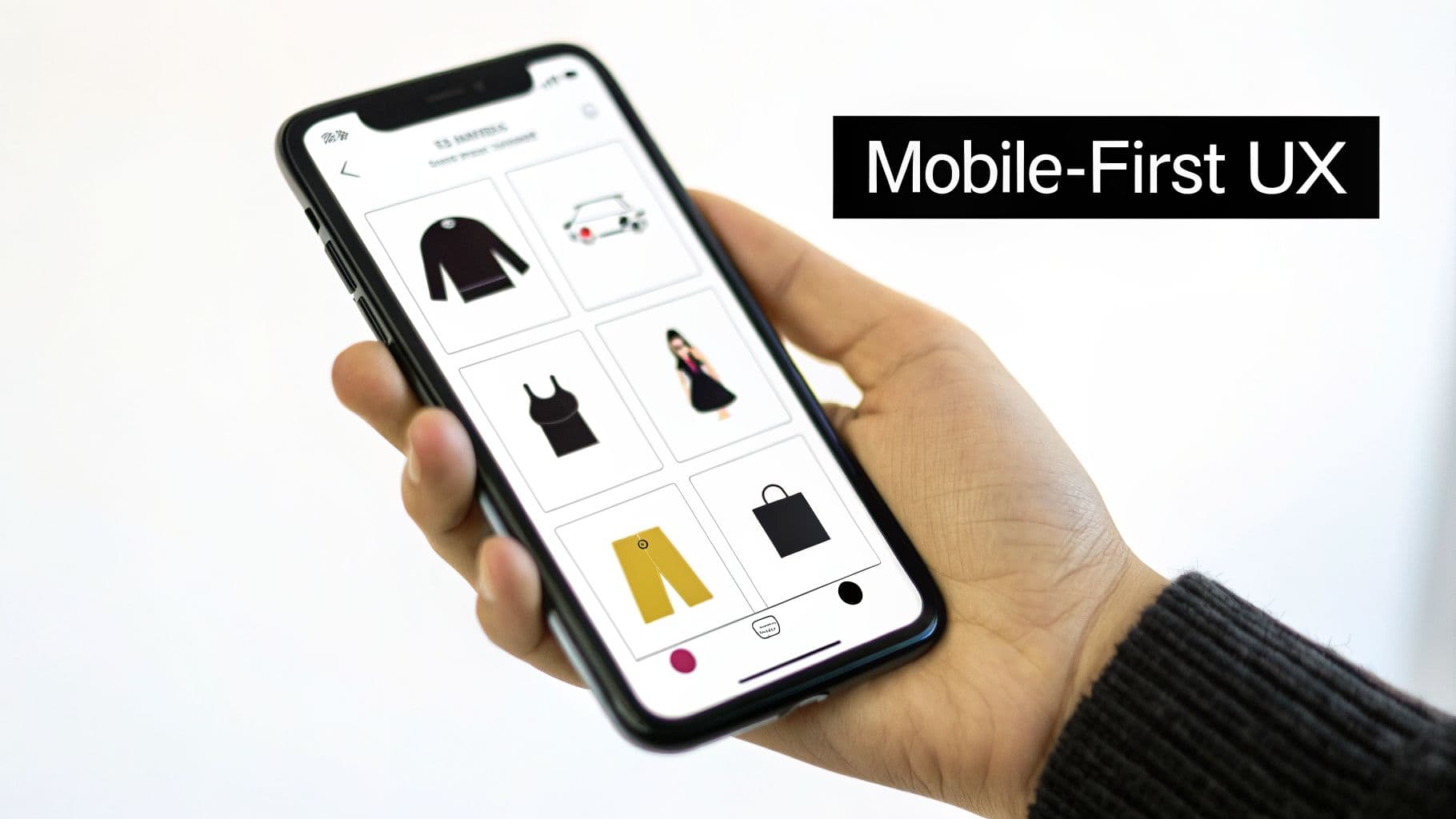
A hand holds a smartphone displaying a fashion e-commerce app with clothing items, highlighting mobile-first UX.
Thinking mobile-first forces you to get ruthless with your priorities. It means stripping away the clutter, focusing on clean layouts, and making sure every button is easy to tap. Any friction point, no matter how small, is an invitation for someone to close the tab and forget they ever visited. The end goal is an experience so smooth and responsive it feels like a native app.
Prioritizing Performance and Speed
In fashion e-commerce, speed is money. Period. With 75% of online purchases now happening on smartphones and a staggering 80% of fashion site visits coming from mobile devices, every millisecond counts. Customers might be on a shaky Wi-Fi connection or using an older phone, and they simply won't wait for a slow site to load.
These aren't just vanity metrics; they directly impact your bottom line. To dig deeper into the numbers, check out the full research on modern fashion e-commerce trends.
In mobile fashion, speed isn't a feature—it's the foundation of the entire experience. A slow site is a broken site, no matter how beautiful it looks.
So, how do you keep your mobile site blazing fast? It comes down to a few non-negotiables:
- Smart Image Optimization: Your stunning visuals are useless if they take forever to load. Compress every image and use modern formats like WebP. Just as important, use lazy loading so images only load as a shopper scrolls, keeping that initial page load snappy.
- Clean, Minimal Code: Bloated code is the enemy of speed. Every extra line of code, clunky plugin, or unnecessary script adds to your load time. This not only frustrates users but also hurts your SEO rankings.
- Invest in Fast Hosting: Don't skimp on your hosting. I've seen countless brands invest in gorgeous design only to have it all crumble on a cheap, slow server. A quality hosting provider can handle traffic spikes without breaking a sweat.
Crafting Intuitive Navigation and Checkout
On a small screen, there's no room for confusion. Navigation has to be dead simple, getting shoppers to what they want with the fewest taps possible. A clunky, multi-level menu is a guaranteed way to lose a sale.
Think about creating a frictionless path from the moment they land on your site to the final "thank you" page.
- A Simple, Clear Menu: A clean "hamburger" icon is your best friend here. It keeps categories neatly tucked away. When opened, the main categories should be instantly understandable, reflecting how your customers actually think and shop (e.g., "Dresses," "Tops," "New Arrivals").
- Powerful, Easy-to-Use Filters: Nobody has the patience to scroll through hundreds of items. Give them smart filters for size, color, price, and style that are easy to see and tap on a touchscreen. This single feature can make or break the browsing experience.
- A Streamlined Checkout Process: This is the final-mile problem where so many brands stumble. Cut down the number of steps it takes to buy. Offer guest checkout—forcing someone to create an account is a top reason for cart abandonment. And absolutely integrate one-tap mobile payment options like Apple Pay and Google Pay. The fewer fields they have to type, the higher your conversion rate will be.
How to Optimize Product Pages for Conversion
Let’s be honest: your product page is where the magic really happens. It's the final stop on the customer journey, the place where a casual browser decides to become a buyer. Even the slightest friction here can kill a sale, so turning this page into a conversion powerhouse is non-negotiable.
A great product page does more than just list features; it tells a story and sells a feeling. Every photo, every word, every button has to work in harmony to help shoppers see themselves wearing your clothes. This is where all your hard work on fashion web design comes together to close the deal.
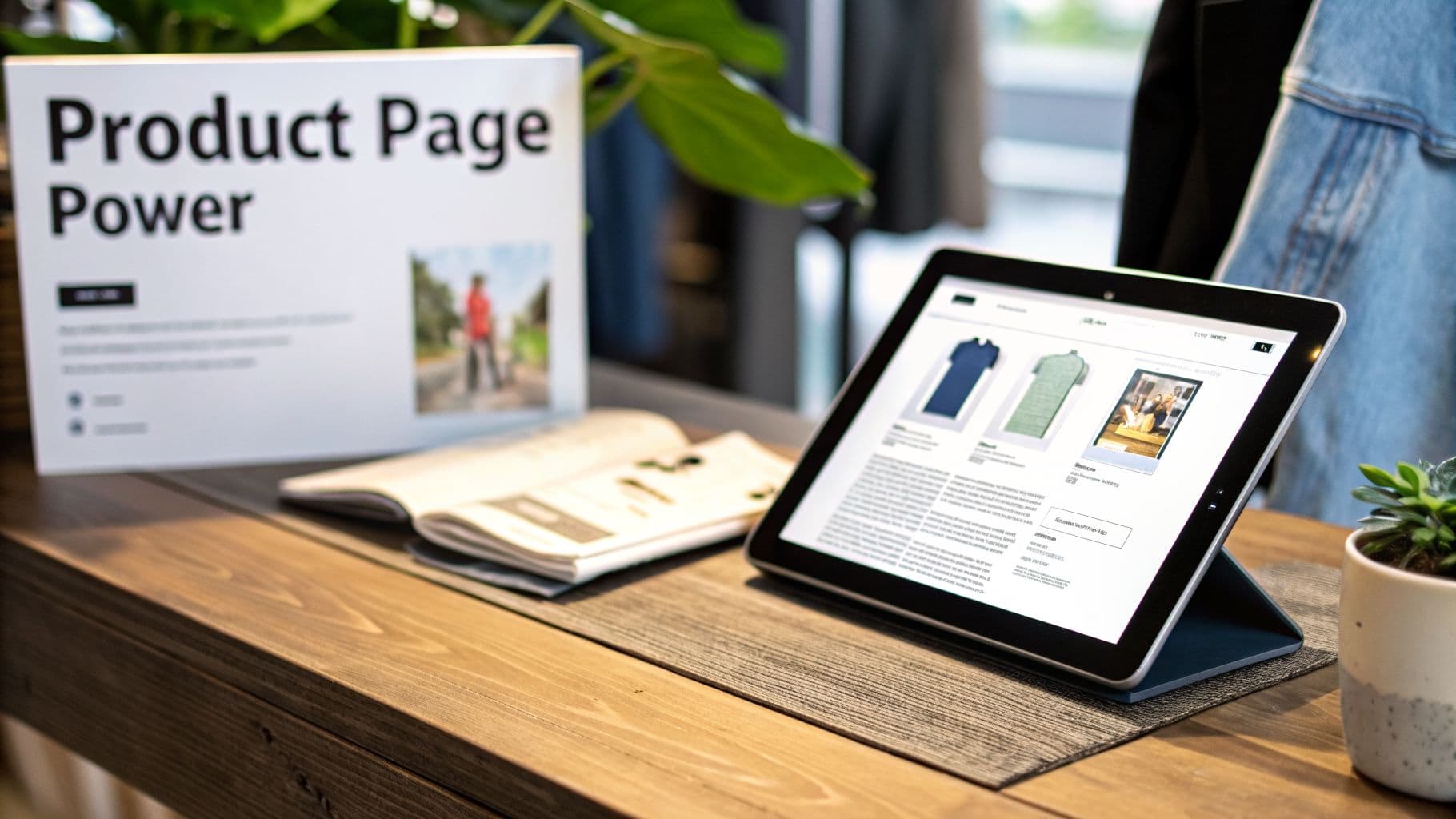
Tablet showing a fashion product page with t-shirts, alongside a 'Product Page Power' sign and a magazine on a wooden desk.
From Information To Interactive Experience
One of the biggest conversion killers I see is ambiguity. If a shopper has a question they can't answer immediately, you've likely lost them. Your job is to anticipate those questions and provide all the information they need to feel confident hitting "Add to Cart."
This means going way beyond a single product shot and a generic description.
Bring the Product to Life: Show it from every conceivable angle. Get close-ups of the fabric, the texture of the knit, the quality of the stitching. And most importantly, show it on a person so customers can instantly understand its fit, drape, and scale.
Write Compelling Product Stories: Don't just say it's a "blue silk dress." Talk about how the silk feels against the skin, the way the cut flatters the body, or the perfect event to wear it to. You're selling an experience, not just an item.
Create Unmistakable Size Guides: Vague sizing is a recipe for abandoned carts and costly returns. Give detailed garment measurements for every size. Even better, add the model’s height and the size they’re wearing (e.g., "Model is 5'9" and wearing a size M") to provide a crucial real-world reference.
Think of your product page as your best, most attentive sales associate. It needs to answer questions before they're asked and build the kind of trust that makes a customer feel completely secure in their purchase.
Building Trust And Urgency
Once you’ve covered the basics, it’s time to add layers of social proof and tools that eliminate any last-minute hesitation. This is how you build the final bridge to conversion. A page that feels empty will struggle, but one that’s buzzing with customer activity feels like a safe bet. You can dig deeper into the many product page optimization strategies out there to find what works for your brand.
The goal is to create an interactive fitting room, not a flat catalog. For example, AI tools like WearView are changing the game by letting customers see an item on a model that truly reflects their own body type. This kind of personalization builds incredible confidence and is proven to reduce returns by over 35%.
Here’s a quick checklist for what every powerful product page needs:
- Rich Visuals: A mix of on-model photos, flat lays, and detailed close-ups.
- Visible Customer Reviews: Prominently display star ratings and written testimonials.
- A Clear Call-to-Action: Your "Add to Cart" button should be impossible to miss.
- Real-Time Stock Levels: Create authentic urgency with alerts like "Only 3 left!".
- Accessible Policies: Don't make customers hunt for shipping and return info. Link it clearly.
By weaving these elements together, you create a page that doesn’t just inform—it actively persuades. If you're hungry for more ideas on turning visitors into buyers, our full guide on improving ecommerce conversion rates has plenty of other tips to explore.
5. Weaving AI and Personalization into Your Design
AI isn’t some far-off concept anymore. It’s a very real, very powerful tool that’s already shaping how the most successful fashion brands design their websites. The old one-size-fits-all approach is fading fast. Today, it’s all about using AI to create shopping experiences that feel genuinely personal to every single visitor.
Think of it less as a flashy new feature and more as intelligent infrastructure. It’s like giving every customer their own personal stylist—one who understands their tastes and knows what they want to see the moment they land on your site.
From Static Pages to Dynamic Experiences
This is where AI really shines in fashion web design: turning a standard website into a living, breathing platform that adapts on the fly. Machine learning algorithms get to work analyzing user behavior in real-time—what they click on, what they search for, and what they’ve bought before—to serve up a completely customized journey.
What does that look like in practice? It might mean the homepage banner automatically shifts to feature a product category that a specific user has been browsing. Or, it could involve reordering a collection page to put styles that match their past purchases right at the top. The end result is a site that feels less like a digital catalog and more like a helpful conversation.
This kind of deep personalization pays off, big time. In fact, companies that master personalization can generate up to 40% more revenue from it. By embedding machine learning for dynamic content, smart layout adjustments, and even virtual try-on features, fashion brands don’t just boost sales. They build serious buyer confidence and slash return rates. You can find more insights on new e-commerce design trends that show just how big this shift is.
Practical AI Applications That Actually Drive Sales
Getting started with AI doesn't require a complete site overhaul. You can begin with a few high-impact applications that solve specific customer problems and deliver immediate value.
Personalized Product Recommendations: This goes way beyond a generic "You might also like" carousel. Modern AI can suggest complementary items to build a full outfit, recommend products based on what similar shoppers bought, and showcase new arrivals that perfectly fit a user's established style profile.
Smarter Visual Merchandising: Imagine your website automatically curating new collections based on emerging trends, color palettes, or specific styles—all without you lifting a finger. AI can analyze your entire product catalog to do just that, keeping your site fresh and engaging with minimal manual effort.
AI-Powered Image Generation: Tools that generate on-model imagery from a flat product photo are a total game-changer. For example, using an AI Ghost Mannequin service or on-model generator allows you to display your clothing on a diverse range of virtual models instantly, giving shoppers the rich visual context they need to click "buy" with confidence.
AI-Powered Personalization Features and Their Impact
Understanding how specific AI tools translate into business growth is key. The table below breaks down some of the most effective features and the direct impact they can have on your store's performance.
| AI Feature | How It Works | Business Impact |
|---|---|---|
| Dynamic Recommendations | Analyzes a user's browsing history, past purchases, and real-time behavior to suggest relevant products. | Increases Average Order Value (AOV) by showing customers items they are highly likely to want. |
| Personalized Search | Reorders search results based on an individual's style preferences, brand affinity, and past interactions. | Improves conversion rates by helping shoppers find what they're looking for faster, reducing friction. |
| Virtual Try-On/Model Generation | Uses AI to generate images of products on various models or allows users to "try on" items using their own photo. | Boosts buyer confidence and significantly reduces return rates by providing a better sense of fit and look. |
| Automated Merchandising | Creates curated collections and landing pages by analyzing product tags, sales data, and current trends. | Saves countless hours of manual work and keeps the site feeling fresh and relevant for returning visitors. |
Ultimately, these tools work together to create an experience that feels uniquely crafted for each customer, building the kind of loyalty that marketing alone can't achieve.
By treating AI not as a gimmick but as a core part of your design strategy, you make every shopper feel like their experience was custom-built just for them. This creates a level of brand loyalty that simply can't be bought with advertising.
Even after you’ve nailed down a strategy, diving into a fashion website redesign always brings up new questions. Here are a few of the most common ones I hear from brand owners and marketing teams, along with some straight-to-the-point answers.
What Are the Most Important UX Elements for a Fashion Website?
At its core, a great user experience makes shopping feel intuitive and even a little luxurious. It all starts with navigation that actually makes sense to your customer—think clear, logical categories that mirror how they would browse in a physical store. And of course, high-resolution imagery from every conceivable angle is a must. Shoppers can’t touch the fabric, so your photos have to do the heavy lifting.
Beyond the basics, a lightning-fast mobile site and a ridiculously simple checkout are table stakes. But what really separates the leaders from the pack are features like visual search (where a user can upload a photo to find a similar style) and incredibly detailed size guides that include specific garment measurements, not just generic charts. These details build serious buyer confidence.
How Can AI Tools Improve My Fashion Web Design?
AI tools can dramatically change the game for your website's visuals. The biggest impact is on your imagery workflow. Forget the slow, expensive grind of traditional photoshoots. Now, you can take a single flat-lay image of a garment and generate an endless variety of on-model photos in just a few minutes.
A platform like WearView is a perfect example. You can showcase your collection on a diverse cast of models that truly reflect your brand, A/B test different styling concepts, and fill your product pages with beautiful, consistent photography. This speed and creative freedom not only make your site look incredible but can also give your conversion rates a major lift—all while costing a fraction of a single photoshoot.
What KPIs Should I Track to Measure My Website's Success?
Revenue is the ultimate goal, sure, but the right Key Performance Indicators (KPIs) tell you the story behind that number. These are the metrics I always keep a close eye on:
- Conversion Rate: Don't just look at the overall number. Segment it by device (mobile vs. desktop) and traffic source. You'll quickly spot where the friction is.
- Average Order Value (AOV): Is your site design successfully encouraging customers to add that one extra item? This tells you if your cross-selling and upselling are working.
- Cart Abandonment Rate: If this number is high, it’s a massive red flag. It almost always points to a clunky checkout process or last-minute sticker shock from shipping fees.
- Customer Lifetime Value (CLV): This is the long-game metric. It tells you if you're building a loyal following that comes back again and again, which is the key to sustainable growth.
You should also watch engagement metrics like bounce rate on your most important pages (product pages, especially) and average session duration. These give you a read on how shoppers are actually interacting with your content.
Tracking the right metrics moves you from guesswork to data-driven decisions. A high bounce rate on your new arrivals page, for instance, isn't a failure—it's a clear signal telling you exactly where to focus your optimization efforts next.
How Important Is SEO for a Fashion E-commerce Site?
Search Engine Optimization (SEO) isn't just important; it's your engine for long-term, sustainable growth. Paid ads are great for a quick traffic boost, but a strong organic presence brings a constant flow of shoppers to your digital doorstep—people who are actively searching for exactly what you sell. That traffic is not only free, but it also tends to convert at a much higher rate.
Good fashion SEO is more than just stuffing a few keywords onto a page. It means writing product descriptions with specific, long-tail keywords that match how people really search (like "women's high-waisted wide-leg linen trousers" instead of just "pants"). It also requires a technically sound website—fast load times, flawless mobile performance, and a smart internal linking structure are non-negotiable if you want to earn top rankings from Google.
Ready to transform your visual merchandising and create stunning, conversion-driving product pages? WearView replaces costly photoshoots with on-demand, AI-generated model imagery in seconds. Generate your first images for free.
WearView Team
WearView Content & Research Team
WearView Team is a group of fashion technology specialists focused on AI fashion models, virtual try-on, and AI product photography for e-commerce brands. We publish in-depth guides, case studies, and practical insights to help fashion businesses improve conversion rates and scale faster using AI.