September 9, 2026•7 min read
How AI Video Helps Fashion Brands Localize Ads for Global Markets
Most fashion brands run one ad in every market because localizing means a new shoot per region. A guest post from the ImagineArt team on how AI dubbing, captions, and region-tuned visuals turn one source clip into every market's version.
Picture of How AI Video Helps Fashion Brands Localize Ads for Global Markets article
This is a guest post from the team at ImagineArt, an AI creative suite for images, video, and voice.
Most small and mid-sized fashion brands run the exact same ad in every market they sell into. One video, one language, one visual style, pushed to buyers in Berlin, Manila, and São Paulo alike. Not because a single global ad is the right strategy, but because localizing per market with traditional production means a new shoot, a new voice recording, and a new edit for every region, and that cost adds up fast for a team without a dedicated production budget.
The result is a ceiling on performance in every market outside the brand's home base. Localized ads consistently outperform generic ones, but for years the only way to localize was to reproduce the entire ad from scratch. That's no longer true. An AI video generator can now take one source clip and produce every region-specific variant from it, without a new shoot for each market.
How AI Video Helps Fashion Brands Localize Ads for Global Markets
What Localization Actually Means for a Fashion Video Ad
Localization is often reduced to "translate the subtitles," but a video ad carries far more region-specific signals than its spoken words.
A properly localized fashion ad accounts for:
- Language: spoken dialogue, voiceover, and on-screen text in the market's primary language
- Visual pacing: some markets respond to fast, high-energy cuts, others to slower, more editorial pacing
- Cultural framing: color associations, gestures, and styling choices that read differently across regions
- Platform format: a 9:16 clip built for Instagram Reels needs a different crop and safe zone than a 16:9 spot built for YouTube pre-roll
- Captions and subtitles: not just translated, but timed and styled to match reading speed and screen conventions in that market
Brands like Zara, Uniqlo, and H&M sell into dozens of markets simultaneously, and their ad performance depends on getting each of these right, not just the language layer.
Why Brands Skip Localization Today
The honest answer is cost and turnaround time. A traditional localization workflow usually means:
- Booking a translator or localization agency per target language
- Re-recording voiceover with native speakers
- Sending the edit back to a video editor for re-cutting and re-timing
- Reformatting the export for each platform's aspect ratio
- Repeating the review and approval cycle for every market
Multiply that by five or six target markets, and most marketing teams default to localizing only their top-performing regions, leaving the rest running an ad built for a different audience entirely. It's not a strategic decision but a resourcing decision that happens to look like one.
How AI Removes the Localization Bottleneck
The shift is in decoupling the source asset from the market-specific output. A brand generates or films one source video or photo, and every regional variant branches from that single source instead of requiring a new production.
Each of the three localization layers gets handled directly from that source asset:
Visual: region-tuned video variants
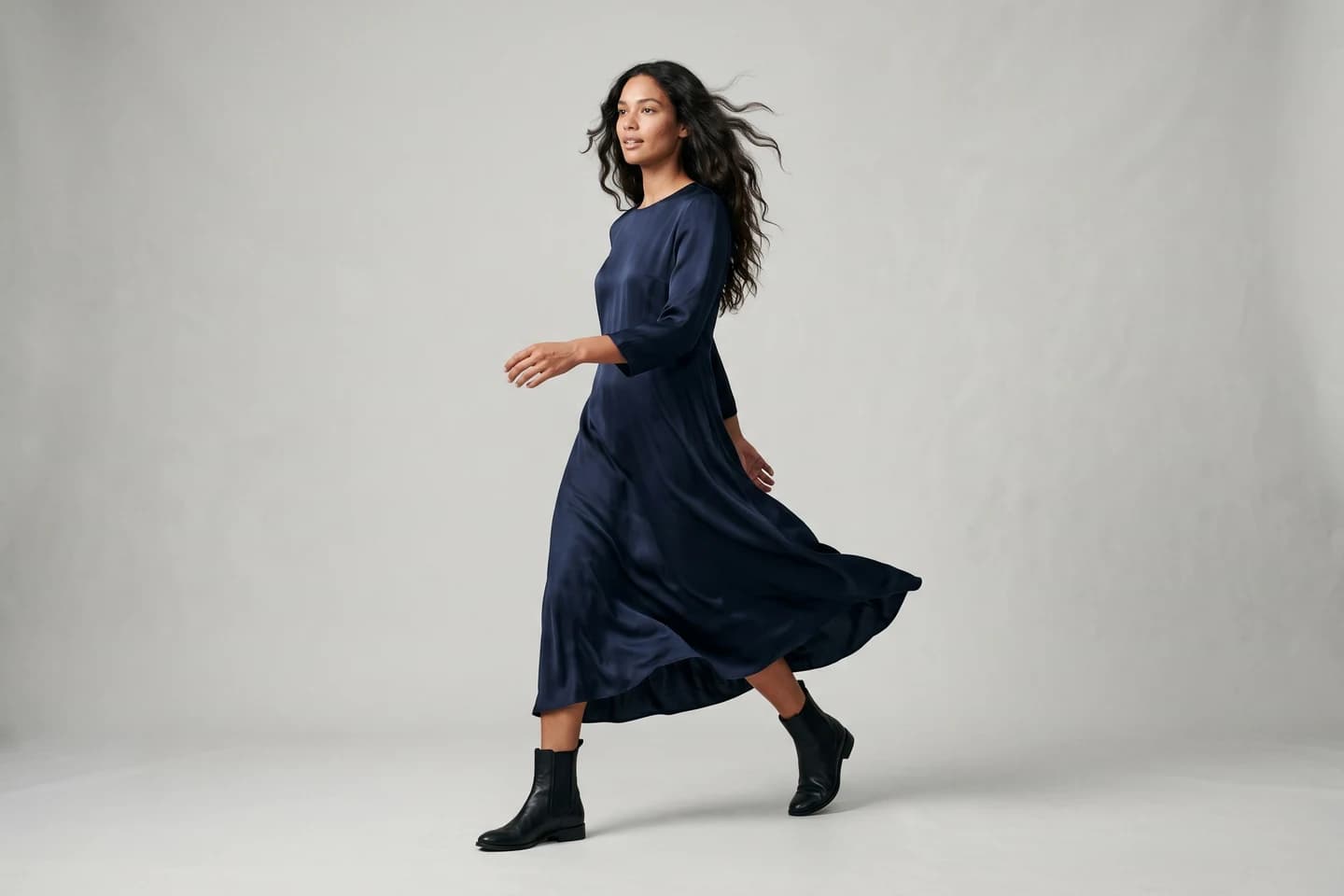
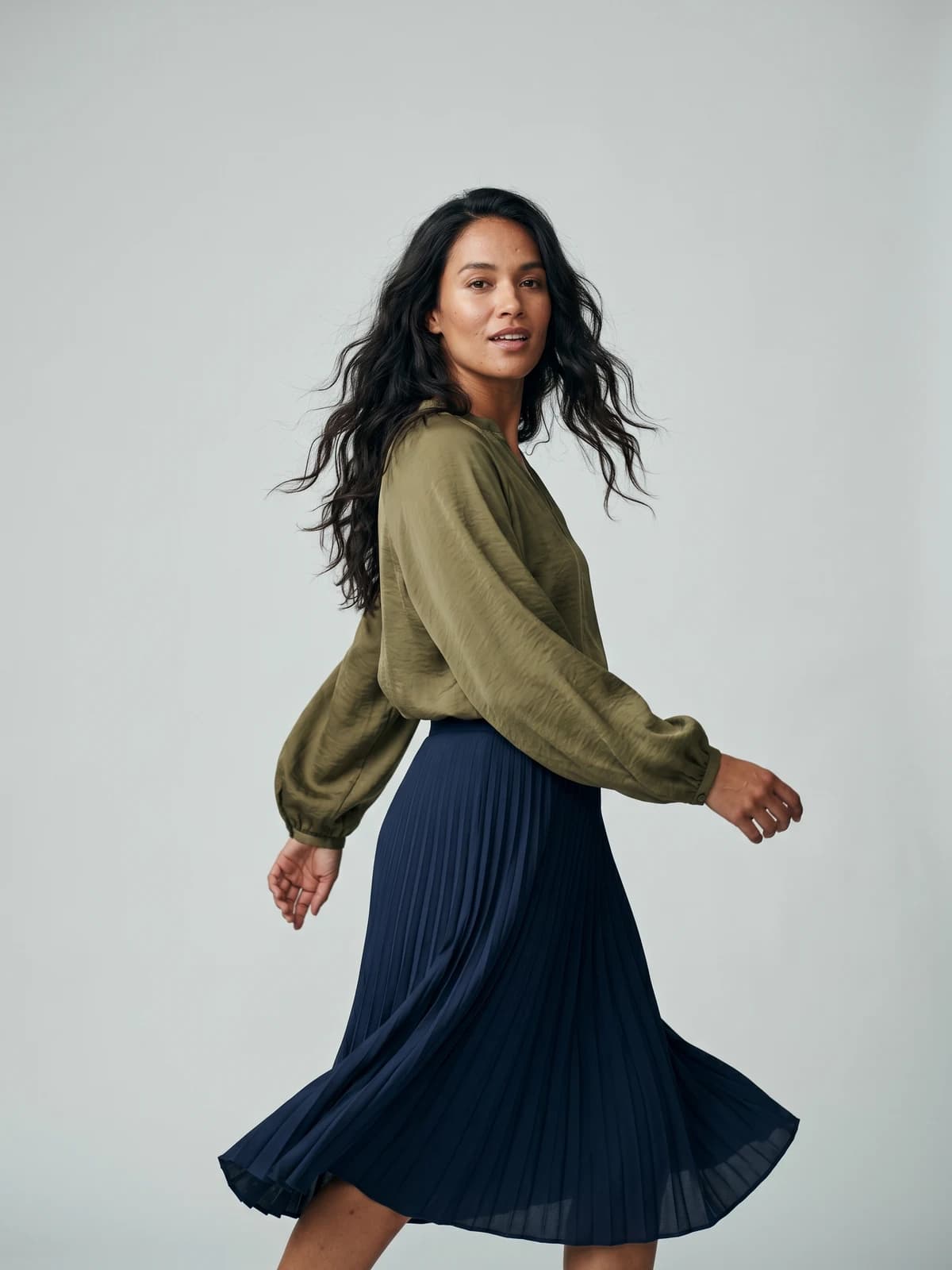
Instead of reshooting for every market, the same source footage can be restyled or adjusted per region. A market-appropriate on-model image, generated in WearView through an AI model photoshoot where you choose the model's look for each audience, gives the ad a visual that reads as made for that market rather than reused from a different one. ImagineArt's AI image generator can produce additional diverse model variations where a market calls for it, and its video inpainting tool can edit specific objects within an existing clip, swapping a prop, background element, or styling detail, to fit that market's cultural setting without a reshoot.
Audio: AI dubbing and translation
ImagineArt's dedicated Audio Studio dubs a source video into more than 100 languages. From there, its Lipsync tool lets a brand either record and add its own voiceover in any language or generate one using built-in multilingual voices across a range of accents and speaking styles, matched to the original video's mouth movement so the dubbed version doesn't read as obviously re-voiced.
Text: multi-language captions and subtitles
ImagineArt's dedicated AI captions feature adds captions and subtitles in more than 100 languages, with built-in presets to match each platform's caption style, rather than exporting a flat translated file that still needs manual formatting per region.
Bring your products to life on video
Turn a single image into a scroll-stopping fashion video for social feeds and product pages.
A Simple Localization Workflow for Small Teams
For a team without a dedicated localization department, the workflow collapses into five steps:
- Source asset: Film or generate one core video or photo that represents the campaign. A virtual fashion photoshoot gets you the source stills without booking a studio
- Dub and translate: Run the audio through AI dubbing for each target language
- Caption: Generate and style captions per market, matched to the dubbed audio
- Match aspect ratio per market: Export in the format each platform expects (9:16 for Reels and TikTok, 16:9 for YouTube, 1:1 for feed placements)
- Launch: Publish the region-specific version to its target market
A five-person marketing team can run this workflow across six markets in the time it previously took to localize two. If you are still choosing the tool for step one, our roundup of AI video generators for clothing brands compares the current options.
Why This Matters for Brands Already Selling Internationally
WearView's own platform runs across nine languages, because a fashion tool that only speaks to one market undersells itself to every buyer outside it. Localization stops being a nice-to-have the moment a brand has active buyers in more than one country. At that point, it's a gap in a channel that's already generating revenue, and one that AI video for clothing brands has made affordable enough to close.
Timing matters as much as language. Ramadan, Lunar New Year, Diwali, and Singles' Day (11.11) drive some of the largest fashion purchasing shifts of the year, and each is a fixed date, not a flexible one. A traditional reshoot-and-localize cycle that takes four to six weeks per market means missing that window entirely in half the regions a brand sells into. When source-to-launch runs in days instead of weeks, a brand can actually hit these calendar moments market by market, instead of publishing a late, generic version after the event has already peaked.
Frequently Asked Questions
Does AI dubbing sound natural, or obviously synthetic?
Modern AI dubbing models preserve the tone, pacing, and emotional inflection of the original speaker rather than generating flat, robotic voiceovers. Quality varies by tool, so it's worth testing a short clip in your target language before committing to a full campaign rollout.
Do I need a different source video for every market?
No. The point of this workflow is that one source video or photo generates every regional variant. The localization work happens after generation, not before.
What aspect ratio should I use for each platform?
9:16 for Instagram Reels, TikTok, and YouTube Shorts. 16:9 for YouTube pre-roll and most website placements. 1:1 for feed-based placements on Instagram and Facebook. Matching the platform's native ratio avoids letterboxing that reduces watch time.
Can a small team really manage localization across six or more markets?
Yes, when the workflow is dub, caption, and reformat from a single source rather than reshoot per market. The bottleneck was never the number of markets. It was the production cost per market, which AI video tools remove.

WearView Team
WearView Content & Research Team
WearView Team is a group of fashion technology specialists focused on AI fashion models, virtual try-on, and AI product photography for e-commerce brands. We publish in-depth guides, case studies, and practical insights to help fashion businesses improve conversion rates and scale faster using AI.