March 5, 2026•23 min read
Top 10 Clothing Photo Ideas to Elevate Your Brand in 2026
Discover 10 professional clothing photo ideas to boost your e-commerce sales. From flat lays to AI-powered model shots, level up your brand's visuals today.
Top 10 Clothing Photo Ideas to Elevate Your Brand in 2026
In the hyper-competitive world of e-commerce fashion, stunning visuals are not just an asset, they're the entire storefront. Generic product shots no longer capture attention. Consumers demand more than just seeing a garment; they want to understand its story, its fit, and how it feels to wear. This is where a diverse and strategic approach to clothing photography becomes essential for success.
From classic flat lays to dynamic video and inclusive, AI-powered model imagery, the right clothing photo ideas can dramatically reduce return rates, boost conversions, and build a powerful brand identity. However, traditional photoshoots are notoriously slow and expensive, creating a bottleneck that hinders agile brands from keeping up with market demands.
This guide provides 10 actionable clothing photo ideas with a modern twist. We will detail not only how to execute each concept traditionally but also how to achieve superior results faster and at a fraction of the cost using AI tools like WearView. Let's explore the techniques that will define fashion e-commerce, making high-quality, diverse, and engaging content accessible to every brand.
1. Flat Lay Product Photography
Flat lay photography, a foundational technique for any e-commerce brand, captures clothing items arranged on a flat surface from directly above. This "bird's-eye view" creates a clean, organized, and easily digestible image that showcases the garment's shape, texture, and key details without distraction. It's one of the most effective clothing photo ideas for building clean product pages and cohesive social media grids, as seen on the websites of minimalist brands like Everlane and Uniqlo.
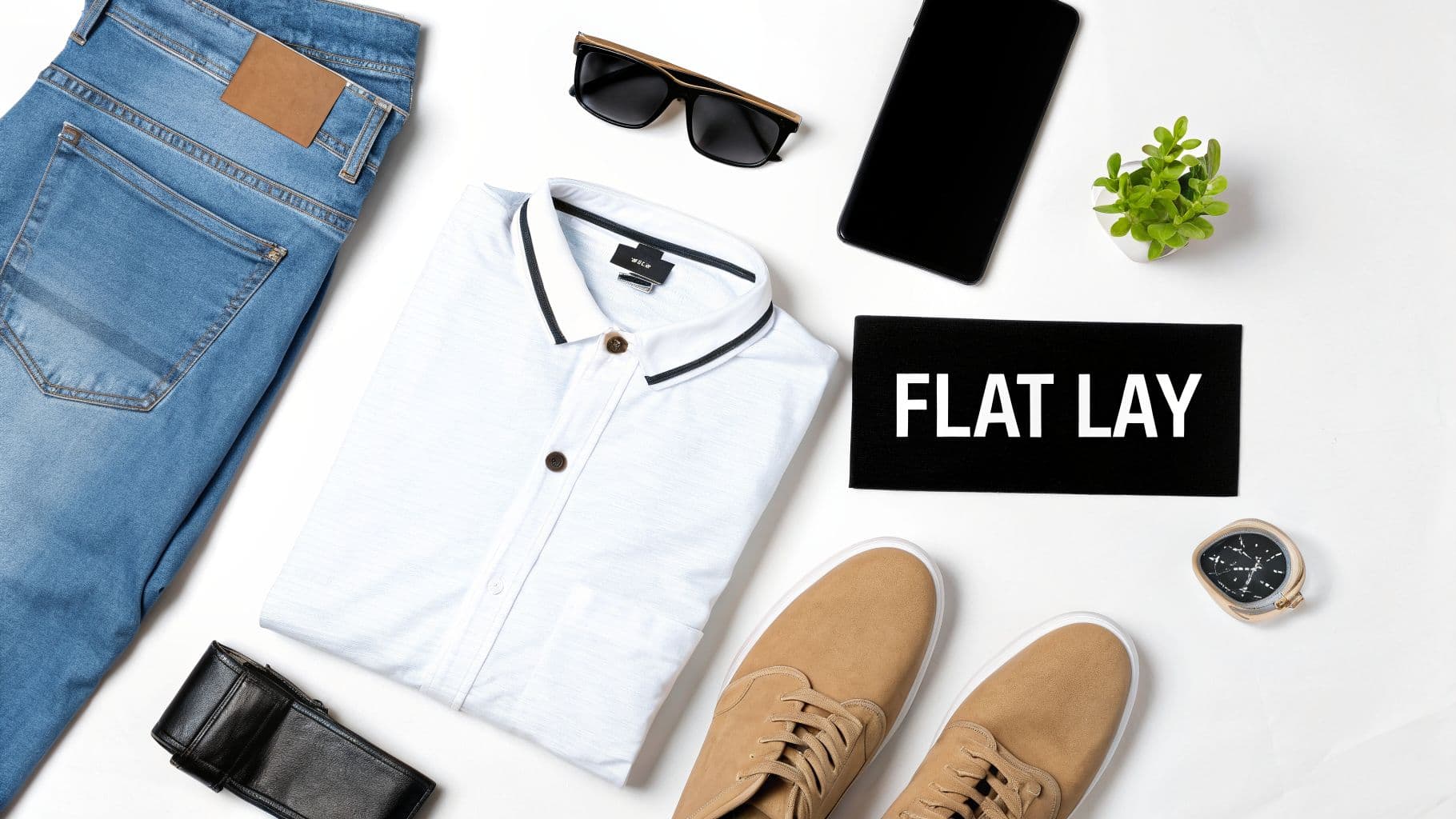
A flat lay of men's casual outfit featuring jeans, polo shirt, sneakers, and accessories.
The primary benefit of the flat lay is its versatility and efficiency. You can shoot dozens of products quickly while maintaining a consistent aesthetic, making it perfect for catalog pages, email marketing, and Instagram feeds. This method also serves as the ideal starting point for generating on-model imagery. High-quality flat lay shots can be instantly converted using a flat lay to model AI generator, producing photorealistic lifestyle images without the time or expense of a traditional photoshoot.
How to Create Effective Flat Lays:
- Consistent Background: Always use a neutral or on-brand background, such as white, grey, or a textured wood surface, to ensure your product stands out.
- Even Lighting: Position your camera and lights to eliminate shadows and capture the garment's true color and texture. Soft, diffused light from a large window or a softbox is ideal.
- Strategic Styling: Arrange the clothing neatly, either folded or laid out as if worn. Add a few complementary props like shoes, a watch, or a book to create a lifestyle feel, but avoid clutter that distracts from the main product.
- Maintain Consistency: Keep the product positioning, angle, and lighting uniform across all your shots. This consistency builds a strong, recognizable brand identity on your e-commerce site and social channels.
2. Hanger Shot and On-Hanger Photography
The hanger shot is a professional industry standard that displays garments on a hanger against a clean background. This method emphasizes the item's true silhouette, length, and drape without the distortion of a model's body. It provides a straightforward, accurate representation, making it one of the most trusted clothing photo ideas for wholesalers, rental platforms, and fast-fashion giants like Shein and ASOS who need to photograph massive volumes of inventory with consistency.
The key advantage of on-hanger photography is its ability to present the garment's design and construction clearly. Customers can see exactly how the fabric falls and understand the garment's shape, which helps manage expectations and reduce returns. This method is also a highly efficient starting point for creating dynamic on-model imagery. Hanger shots can be uploaded to an AI model generator like WearView to produce realistic on-body photos, bridging the gap between clinical product shots and engaging lifestyle content.
How to Create Effective Hanger Shots:
- Invest in Quality Hangers: Use consistent, high-quality hangers (wooden, metal, or branded) across all your product shots to create a uniform and professional look. Avoid flimsy or mismatched plastic hangers.
- Ensure Even Lighting: Set up your lighting to illuminate the garment evenly and eliminate distracting shadows behind it. This ensures the color and texture are captured accurately.
- Shoot Multiple Angles: Capture the front, back, and any important details (like a unique neckline or embroidery). A 3/4 angle can also add depth and show the garment's construction.
- Maintain Centering and Consistency: Keep the hanger position, camera angle, and background identical for every shot. This uniformity is critical for creating a clean and cohesive catalog or product grid.
3. Lifestyle and Styled On-Body Photography
Lifestyle photography places clothing in real-world contexts, telling a story and creating an emotional connection with the viewer. By featuring models in natural settings like a bustling city street, a serene park, or a cozy home, this approach shows customers how a garment can fit into their own lives. It’s one of the most powerful clothing photo ideas for building brand identity and is central to the marketing of aspirational brands like Reformation and activewear leaders like Lululemon.
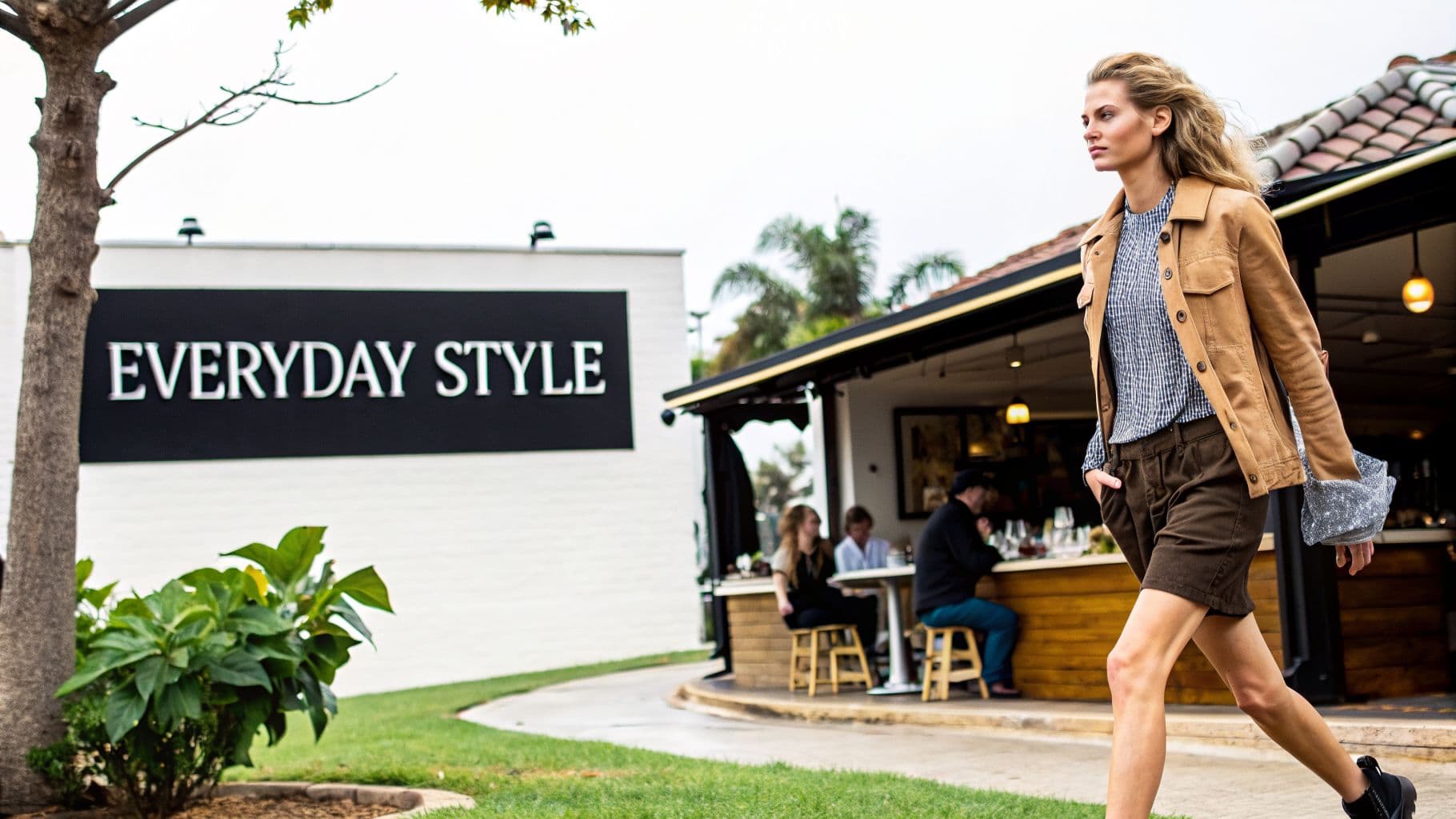
A stylish woman walks in front of an 'Everyday Style' sign, wearing a brown jacket and shorts.
The primary goal of lifestyle imagery is to sell an experience, not just a product. It helps shoppers visualize themselves wearing the clothes, which can significantly increase conversion rates. While traditional lifestyle photoshoots are known for being expensive and logistically complex, new technology provides a more efficient alternative. With tools like an AI video generator, brands can now produce dynamic, animated lifestyle content from a single product image, bypassing the need for location scouting, model booking, and extensive video shoots.
How to Create Effective Lifestyle Photos:
- Authentic Locations: Choose locations that align with your brand's values and your target audience's aspirations. A sustainable brand might shoot in nature, while a streetwear label would opt for an urban setting.
- Natural Poses: Direct models to interact with their environment and each other. Poses should feel candid and unforced, such as walking, laughing, or enjoying a coffee, to create a sense of authenticity.
- Diverse Casting: Represent your entire customer base by casting models of different sizes, ethnicities, and ages. Inclusive representation makes your brand more relatable and appealing to a wider audience.
- Tell a Cohesive Story: Ensure that the location, styling, model, and mood all work together to tell a consistent brand story across your website, social media, and ad campaigns.
4. Detail and Close-Up Photography
Detail and close-up photography focuses on the small elements that define a garment's quality, such as fine stitching, fabric texture, unique hardware, and branding. This macro-level approach is vital for communicating craftsmanship and material value, which are key factors in a customer's decision to buy. It's a powerful way to build trust and justify a higher price point by showing, not just telling, what makes a product special. Luxury brands like Loro Piana use this to showcase cashmere fibers, while heritage brands like Red Wing Shoes highlight durable construction.
This photographic style is one of the most important clothing photo ideas for building perceived value and answering unspoken customer questions about quality. The images bridge the gap between online browsing and the in-person experience of touching a fabric or inspecting a seam. For brands that use AI model generation, high-quality detail shots provide essential texture and authenticity, adding a layer of realism that complements the primary on-model photos.
How to Create Effective Detail Shots:
- Use the Right Gear: A macro lens is ideal for capturing ultra-fine details with clarity. If you don't have one, a standard lens with extension tubes can also work. A ring light or dual-light setup helps to illuminate the subject evenly and eliminate harsh shadows.
- Logical Sequencing: Shoot your details in a sequence that tells a story. Start with the overall fabric texture, move to construction details like stitching or seams, and finish with specific hardware like buttons, zippers, or branded labels.
- Maintain Clarity: A clean, neutral background and consistent magnification across your product line help shoppers compare items and focus entirely on the details. This is especially important for product page image carousels.
- Provide Scale Context: For very small items like jewelry or intricate embellishments, including a common object like a coin can help customers understand the true size and scale of the detail you're highlighting.
5. Size and Fit Comparison Photography
Fit comparison photography directly tackles the number one reason for online returns: fit uncertainty. This method showcases the same garment on different model body types, across a range of sizes, or with size-chart overlays to visually communicate how an item fits. By showing instead of just telling, brands can build customer confidence, reduce return rates, and promote size inclusivity. This practical approach is one of the most customer-centric clothing photo ideas and is used effectively by brands like Aerie and Old Navy on their product pages.

Three diverse women modeling similar black, olive, and blue slip dresses to compare sizes.
The main advantage of this approach is its ability to answer the customer's most pressing question: "How will this look on me?" This is crucial for brands with extended size ranges or unique fits. By presenting a garment on multiple body types, you help shoppers visualize the drape, length, and overall silhouette on a body similar to their own. Modern tools make this easier than ever. For instance, WearView's Consistent Models feature can generate images of the same product across a diverse set of virtual models, maintaining a uniform look while providing a comprehensive fit guide without needing to hire and shoot multiple people.
How to Create Effective Fit Comparisons:
- Identical Conditions: Whether shooting in a studio or generating images with AI, keep the background, lighting, and pose identical for each size and model variation. This ensures the focus remains on the fit of the clothing.
- Logical Progression: Arrange the images in a clear sequence, such as from smallest to largest size (e.g., XS, S, M, L, XL). This creates an intuitive and easy-to-understand comparison for shoppers.
- Provide Context: Include the model's height and the size they are wearing in the photo description. Adding key measurements like bust, waist, and hips offers an even clearer reference point for customers.
- Clear Labeling: Add text overlays that clearly label the size shown in each image. Pair these with fit notes, such as "runs large" or "form-fitting," to manage customer expectations effectively.
6. Virtual Try-On and Augmented Reality Photography
Virtual try-on uses augmented reality (AR) to let customers see clothing on their own bodies through their smartphone cameras, fundamentally changing how people shop online. This immersive format bridges the digital-physical gap, addressing fit anxiety while creating engaging, tech-forward brand experiences. It’s one of the most interactive clothing photo ideas for building customer confidence, as seen in the AR features from brands like Gucci, ASOS, and Warby Parker.
The primary benefit of virtual try-on is its ability to reduce returns and increase conversions by giving customers a better sense of how an item will look and fit. This technology turns a static product image into an interactive experience, boosting engagement and setting a brand apart from competitors. Services offering an AI virtual try on can convert standard product photos into AR-compatible assets, making this technology accessible without needing an in-house development team.
How to Implement Virtual Try-On:
- Start with Specific Categories: Begin with product types that are well-suited for AR, such as shoes, glasses, hats, or jewelry. These items are easier to render accurately on a user's body.
- Test Extensively: Ensure the AR experience works smoothly across different device types, operating systems, and lighting conditions. A poor user experience can do more harm than good.
- Promote the Feature: Make the virtual try-on option highly visible on product pages, in marketing emails, and in social media ads. Create clear calls-to-action encouraging customers to "Try It On."
- Encourage Social Sharing: Develop branded AR filters that users will want to share on platforms like Instagram or Snapchat. This turns your customers into brand advocates and generates organic marketing.
7. Video and Movement-Based Clothing Photography
Static images show what a garment looks like, but video shows how it lives. Capturing clothing in motion-through walking, dancing, or simple gestures-answers crucial customer questions about fabric drape, fit, and real-world behavior. This dynamic approach produces engaging, high-performance content that stands out on social media platforms, as seen in Lululemon's lifestyle videos and Zara's runway-inspired clips. It's a powerful clothing photo ideas strategy for building trust and reducing purchase hesitation.
Video content has become essential for modern fashion marketing, particularly on platforms like TikTok and Instagram Reels where movement is key to capturing attention. Showing a dress flow as a model walks or how a jacket flexes with arm movement provides a level of detail that static photos cannot match. For brands looking to scale their video efforts, emerging technologies like AI Fashion Video Generators can transform still product images into realistic, dynamic videos, saving immense time and production costs.
How to Create Effective Video Content:
- Keep it Short and Punchy: Aim for videos between 15 and 30 seconds. This length is optimal for holding viewer attention on fast-paced social feeds and delivering your message effectively.
- Showcase Realistic Movement: Capture models walking, sitting down, bending, or stretching to demonstrate how the garment performs during everyday activities. When showcasing garments in motion, learning how to create compelling product videos can significantly enhance viewer engagement.
- Use Trending Audio: Incorporate popular sounds and music on platforms like TikTok and Instagram to increase your video's visibility and reach a wider audience through algorithm-driven discovery.
- Optimize for Each Platform: Create different versions of your video for various channels. Use a vertical 9:16 aspect ratio for TikTok and Reels, and a wider 16:9 format for YouTube to ensure the best viewing experience.
8. Model Diversity and Inclusive Casting Photography
Inclusive casting photography moves beyond traditional industry standards to intentionally feature models from a wide range of body types, skin tones, ages, abilities, and gender identities. This approach creates authentic and relatable brand imagery that reflects the true diversity of consumers. It's a powerful and ethical one of many clothing photo ideas that builds brand loyalty and broadens market appeal, as demonstrated by pioneering brands like Aerie and Fenty.
This method’s main advantage is its ability to foster a genuine connection with your audience. When customers see themselves represented in your marketing, it validates their identity and builds a sense of community around your brand. This not only drives sales but also cultivates long-term brand advocates. For brands seeking to implement this without complex and costly casting processes, AI tools offer a practical solution. You can generate on-model images using a diverse library of AI models or create new ones from text prompts, ensuring consistent and authentic representation across all campaigns.
How to Create Inclusive Model Photography:
- Audit and Identify Gaps: Review your current marketing materials to identify where representation is lacking. Are you only showing one body type, age group, or ethnicity? This audit provides a clear roadmap for improvement.
- Use Diverse AI Models: Take advantage of AI model libraries that feature a wide spectrum of human diversity. This allows you to generate high-quality, inclusive imagery on-demand, ensuring your product pages and social media feeds are consistently representative.
- Specify Diverse Attributes: When using AI tools with text-to-model features, be specific in your prompts. Describe the desired ethnicity, body shape (e.g., "curvy build," "athletic frame"), age, and other characteristics to generate models that fill your representation gaps.
- Apply Inclusivity Everywhere: Ensure your commitment to diversity is reflected across every channel, from your website’s main banners and product pages to your email newsletters and social media content. Consistency is key to building trust and authenticity.
9. Seasonal and Trend-Based Fashion Photography
Seasonal and trend-based fashion photography aligns your products with current moments, creating timely and highly relevant content for holiday shopping, weather changes, and viral fashion trends. This agile approach captures customer interest when it's highest by showing how your clothing fits into their immediate lives. It's a key strategy for fast-fashion giants like Zara and H&M, who constantly refresh their imagery to reflect the latest seasonal drops and micro-trends.
This method is crucial for maintaining relevance and driving sales during key periods. By creating imagery for a "Fall Collection" or a "Holiday Gift Guide," you tap into existing consumer search behavior and purchase intent. These time-sensitive clothing photo ideas make your brand appear current and in-sync with the fashion world. However, the need for rapid production can be a major hurdle. Tools that generate on-model imagery from simple product shots allow brands to produce seasonal and trend-responsive content on demand, bypassing the logistical delays of traditional photoshoots.
How to Create Effective Seasonal and Trend-Based Photos:
- Plan a Content Calendar: Map out your key seasons, holidays, and promotional periods at least 2-3 months in advance. This gives you ample time to prepare campaigns for Black Friday, Valentine's Day, or the start of summer.
- Monitor Fashion Trends: Keep a close eye on TikTok, Pinterest, and fashion media to spot emerging trends early. Being first to showcase a new color, silhouette, or styling technique can set your brand apart.
- Create Capsule Looks: Show customers how versatile your core pieces are by styling them for different seasons. A simple white tee can be part of a summer outfit with shorts or a winter look layered under a sweater and coat.
- Emphasize Scarcity: Use messaging that highlights the limited-edition nature of seasonal items. Phrases like "Limited Holiday Drop" or "Summer Exclusive" create a sense of urgency that encourages immediate purchases.
10. Social Media and Platform-Optimized Clothing Photography
This approach moves beyond a one-size-fits-all strategy, treating each social media platform as a unique marketing channel with its own visual language, audience behavior, and technical requirements. Platform-optimized photography involves creating or adapting clothing images specifically for the aspect ratios and engagement patterns of Instagram, TikTok, Pinterest, and others. This technical and strategic method ensures your content feels native to the platform, boosting visibility and performance. Brands like ASOS and Shein excel at this by creating distinct content for each channel.
This meticulous approach is one of the most impactful clothing photo ideas because it respects how users consume content on different apps. A square, minimalist shot that works on an Instagram grid may get lost on Pinterest’s vertical feed, while a dynamic, fast-paced video that succeeds on TikTok may not fit a brand's YouTube aesthetic. By tailoring your visuals, you meet your audience where they are and in the format they prefer. To make your clothing photography resonate deeply with audiences, explore game-changing visual storytelling techniques for TikTok & Instagram.
How to Create Platform-Optimized Photography:
- Create Platform-Specific Style Guides: Define your brand's look for each platform. This could mean a clean, minimalist aesthetic for Instagram, dynamic and trend-driven content for TikTok, and aspirational, informative pins for Pinterest.
- Shoot for Multiple Aspect Ratios: During your photoshoot, capture images and video in various orientations (1:1, 4:5, 9:16). Alternatively, use a tool like WearView to instantly generate on-model images in multiple aspect ratios from a single flat lay, saving significant production time.
- Analyze Platform Engagement: Regularly review your analytics on each platform. Identify which formats, styles, and compositions receive the most engagement and adjust your content strategy accordingly.
- Use Native Tools for Testing: Leverage platform-native features like Instagram Stories polls or TikTok's A/B testing for ad creatives. Use these tools to test different image styles and see what your audience responds to in real time.
10-Point Clothing Photo Ideas Comparison
| Format | Implementation Complexity 🔄 | Resource Requirements 🔄⚡ | Expected Outcomes ⭐📊 | Ideal Use Cases 💡 | Key Advantages ⭐ |
|---|---|---|---|---|---|
| Flat Lay Product Photography | Low 🔄 | Minimal gear, basic lighting, quick setup ⚡ | High product clarity; strong e‑commerce conversion ⭐⭐📊 | Catalogs, social grids, WearView Product-to-Model input | Fast & cheap; scalable; AI-ready |
| Hanger Shot and On-Hanger Photography | Low–Medium 🔄🔄 | Branded hangers, consistent lighting; few props | Accurate silhouette and proportions; professional catalog quality ⭐⭐📊 | Wholesale/B2B listings, detailed product pages | True shape visibility; easy catalog scaling |
| Lifestyle and Styled On-Body Photography | High 🔄🔄🔄 | Models, locations, crew, longer production time | Highest emotional engagement and brand storytelling ⭐⭐⭐📊 | Hero campaigns, social storytelling, brand building | Authentic fit context; top social performance |
| Detail and Close-Up Photography | Medium 🔄🔄 | Macro lens, controlled lighting, skilled photographer | Communicates craftsmanship and material quality ⭐⭐📊 | Luxury, sustainable, and premium product pages | Builds trust; highlights unique construction |
| Size and Fit Comparison Photography | Medium–High 🔄🔄🔄 | Multiple models or AI-generated variants; consistent setup | Reduces returns; increases conversion for sizing-uncertain shoppers ⭐⭐⭐📊 | Inclusive sizing pages, detailed fit guides | Directly lowers returns; demonstrates inclusivity |
| Virtual Try-On and Augmented Reality | High 🔄🔄🔄 | AR tooling, device testing, 3D/AR assets (WearView speeds this) | Strong engagement; reduced fit anxiety and returns ⭐⭐⭐📊 | Shoes, eyewear, accessories, interactive shopping | Immersive try-on; highly shareable; data-rich |
| Video and Movement-Based Clothing Photography | High 🔄🔄🔄 | Videography, talent direction, editing, storage (AI can generate) ⚡ | Very high engagement and platform performance ⭐⭐⭐📊 | TikTok/Reels, product demos, activewear | Shows real movement and drape; viral potential |
| Model Diversity and Inclusive Casting Photography | Medium–High 🔄🔄🔄 | Diverse talent sourcing or AI model creation; consistent art direction | Improves conversion across segments; builds brand trust ⭐⭐⭐📊 | Brands prioritizing inclusion and broad-market fit | Expands addressable market; authentic representation |
| Seasonal and Trend-Based Fashion Photography | Medium 🔄🔄 | Frequent shoots/edits, styling, trend monitoring | Timely boosts in sales and relevance; supports drops ⭐⭐📊 | Seasonal campaigns, holiday promotions, trend-reactive drops | Agile content refresh; drives urgency and novelty |
| Social Media & Platform-Optimized Photography | Medium 🔄🔄 | Multi-aspect exports, platform-specific edits, asset management ⚡ | Better algorithm performance and CTRs across channels ⭐⭐📊 | Omnichannel marketing, influencer collaborations | Maximizes reach; enables efficient A/B testing |
Your Next-Generation Visual Strategy Starts Now
Your journey through these diverse clothing photo ideas reveals a clear, undeniable truth: a one-size-fits-all approach to visual merchandising is no longer sufficient. The modern consumer demands variety, authenticity, and context. They want to see how a garment fits on different body types, how it moves in a real-world setting, and what specific details make it unique. Sticking to a single style, like flat lays or basic hanger shots, leaves sales on the table and fails to build a meaningful connection with your audience.
The most successful brands today are those that build a rich, multi-faceted visual library. They master the essentials, like clean flat lays for product pages, but also push the creative boundaries with dynamic video content for social media and inclusive model photography that reflects their community. This is not about choosing one idea over another; it's about building a complete visual ecosystem where each type of photo serves a distinct purpose, from sparking initial interest on Instagram to providing crucial fit information on a product page.
Key Takeaways for Building a High-Impact Visual Catalog
The path from concept to conversion is paved with compelling images. As you move forward, keep these core principles at the forefront of your content strategy:
Diversify Your Content Mix: Your visual strategy should mirror a well-balanced investment portfolio. Allocate resources to foundational shots (flat lays, hanger shots) for clarity, growth assets (lifestyle, video) for engagement, and detail-oriented images (close-ups, fit comparisons) to build trust and reduce returns. Don't rely on a single approach to do all the heavy lifting.
Think Platform-First: A beautiful lifestyle photo created for a website banner may not perform well as a TikTok video or an Instagram Story. Always consider the final destination. Shoot vertical video for mobile-first platforms, create square-formatted carousels for Instagram feeds, and produce high-resolution, zoomable images for your e-commerce product pages. Tailoring content to the platform isn't just a best practice; it's essential for maximizing reach and impact.
Embrace Inclusivity as a Standard: Featuring a diverse range of models is not a trend; it's a business imperative. Shoppers are more likely to purchase from brands where they see themselves represented. Integrating models of different sizes, ethnicities, ages, and abilities into your photography makes your brand more relatable and significantly broadens your market appeal.
From Ideas to Implementation: Your Actionable Next Steps
Armed with these clothing photo ideas, your next objective is to turn inspiration into execution. Start by auditing your current visual assets. Where are the gaps? Are you overly reliant on one type of photography? Do your images truly reflect your brand's identity and speak to your target customer?
From there, create a realistic content production plan. You don't need to implement every idea overnight. Begin by introducing one or two new concepts into your next photoshoot. Perhaps you focus on adding more detail shots to your key products or experimenting with short-form video to showcase the fabric's movement.
Crucial Insight: The biggest barrier for most brands isn't a lack of ideas but the perceived complexity and cost of production. The traditional model of booking photographers, models, and studios is slow and expensive. Modern tools are designed to overcome this exact challenge, giving you the power to create a wide variety of high-quality visuals quickly and affordably.
By integrating this broader spectrum of clothing photo ideas into your workflow, you create a more engaging and effective customer journey. You move from simply showing a product to telling its story, answering customer questions visually, and building a brand that feels authentic and trustworthy. This comprehensive approach is what separates fleeting trends from enduring brands. The time to build a more agile, inclusive, and conversion-focused visual strategy is now.
Ready to generate thousands of on-brand, on-model clothing photos without the logistical headaches of traditional photoshoots? WearView uses advanced AI to instantly place your designs on a diverse range of models, giving you an endless supply of unique clothing photo ideas to implement. Discover how WearView can help you create a world-class product catalog at a fraction of the cost and time.

WearView Team
WearView Content & Research Team
WearView Team is a group of fashion technology specialists focused on AI fashion models, virtual try-on, and AI product photography for e-commerce brands. We publish in-depth guides, case studies, and practical insights to help fashion businesses improve conversion rates and scale faster using AI.