January 28, 2026•17 min read
The Personal Fashion Stylist App Revolution for Brands
Discover how a personal fashion stylist app can redefine your customer experience. Learn key features, business benefits, and how to drive e-commerce growth.
The Personal Fashion Stylist App Revolution for Brands
A personal fashion stylist app is the closest thing to putting a real, live fashion expert in every customer's pocket, ready to go 24/7. This isn't just another online catalog. It’s technology that delivers personalized outfit recommendations, styling tips, and shopping guidance, turning a passive browse into an interactive styling session.
What a Personal Fashion Stylist App Really Does
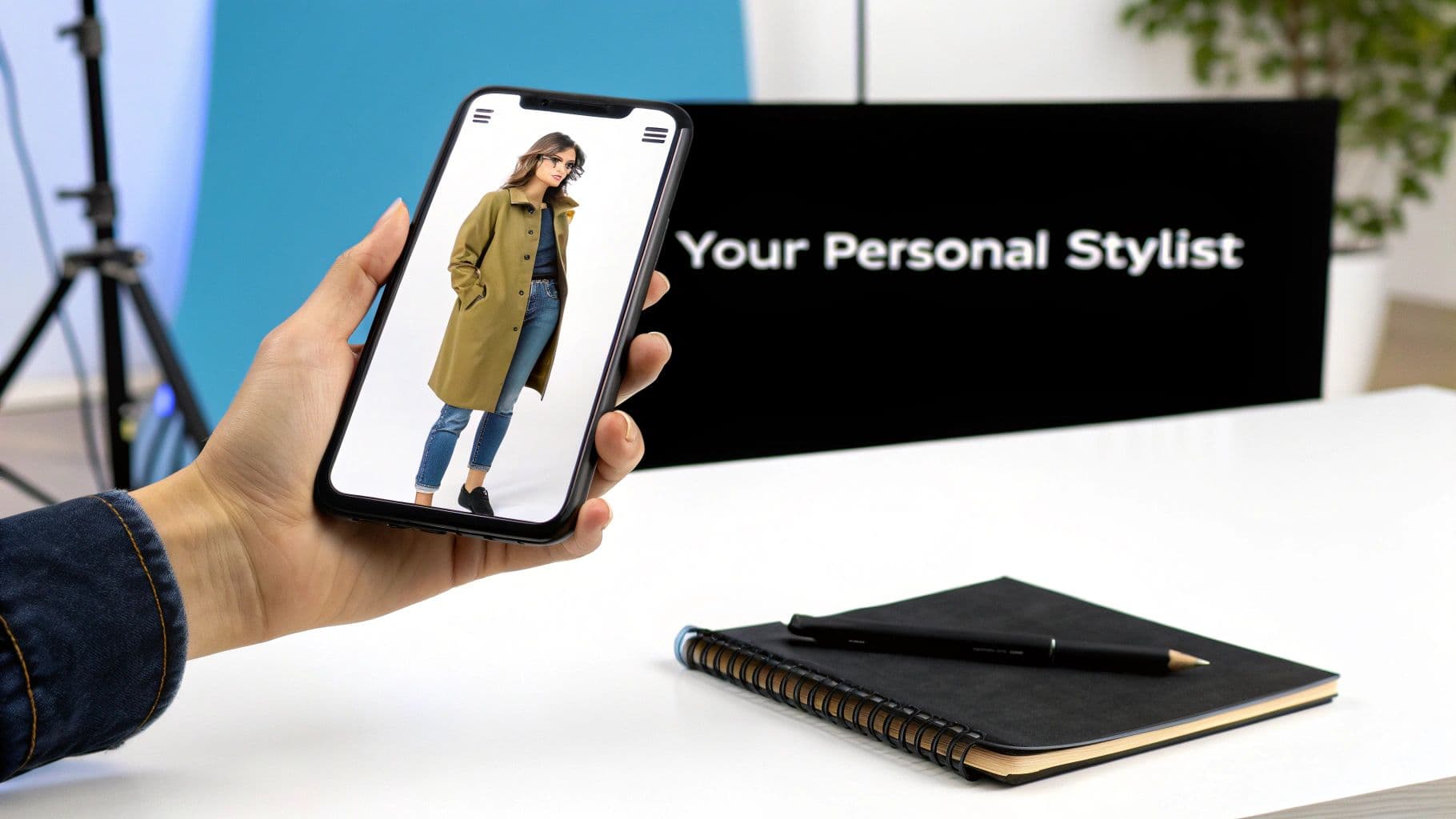
A person holds a smartphone displaying a fashion model, with 'Your Personal Stylist' on a background screen.
Think of it like this: a great personal stylist app is the digital twin of a seasoned fashion consultant. Instead of the usual one-size-fits-all shopping grid, these apps get to know the user's unique traits and deliver advice that actually fits. It’s the end of aimlessly scrolling through endless product pages.
This tech flips online shopping from a solo, often frustrating, activity into an engaging, personalized journey. For fashion brands, this is huge. It means forging a much deeper connection with customers by truly understanding—and catering to—their individual style.
Understanding the Customer on a Deeper Level
At its core, a personal fashion stylist app is a pretty sophisticated tool. It's built to understand fashion not just as a product, but as a personal expression. It goes way beyond basic filters like "size" or "color" to dig into the nuanced factors that actually drive a purchase.
These apps get smart by incorporating things like:
- Personal Taste: They learn from a user's browsing history, past buys, and even quick style quizzes.
- Body Type Analysis: Suggesting silhouettes and cuts that will actually flatter a specific body shape.
- Existing Wardrobe: The best ones can even integrate with what a customer already owns to suggest pieces that complete an outfit.
- Contextual Needs: Need an outfit for a big work event? A casual weekend brunch? The app recommends something that fits the occasion.
By crunching all this data, the app can spit out recommendations that feel genuinely personal and helpful, just like a real-life stylist would.
A great personal stylist app doesn't just sell clothes; it solves the timeless problem of "what should I wear?" by providing context-aware, confidence-boosting solutions that help customers build a wardrobe they truly love.
This shift is a game-changer for brands trying to cut through the noise. It shows you're committed to the customer's entire style journey, not just a single sale. The payoff? A more loyal customer base that sees your brand as a trusted partner in their fashion choices, building a relationship that lasts long after they've clicked "buy."
Of course, here is the rewritten section, crafted to sound human-written and match the provided examples.
The Hidden Business Value for Fashion Retailers
A personal stylist app might seem like a nice-to-have customer perk, but its real power is in the cold, hard business results it drives. This isn't just about novelty; it's a strategic tool that directly impacts the core metrics that make or break a fashion brand. It’s how you turn casual window shoppers into loyal, high-value customers.
The most immediate impact? It tackles e-commerce’s biggest headache: returns. By giving a shopper a virtual try-on, you give them the confidence that an item will actually fit and look good before they click "buy." That single feature cuts down on the uncertainty that leads to so many costly returns, directly protecting your margins and simplifying inventory management.
Boosting Conversions and Customer Lifetime Value
But this technology does more than just cut costs—it actively grows revenue. When a customer sees how a new jacket perfectly complements a dress they already own, their desire to buy goes through the roof. This is where AI-driven recommendations truly shine, turning a simple product page into a compelling, must-have outfit.
This kind of smart personalization doesn't just lock in one sale; it builds the foundation for long-term loyalty. When you consistently offer relevant, inspiring style advice, you create a sticky experience that keeps customers coming back. This is how you see a real lift in both Average Order Value (AOV) and, more importantly, overall Customer Lifetime Value (CLV).
The market is already catching on. The global styling app market was recently valued at USD 2.55 billion and is on track to hit USD 5.5 billion by 2032. This explosion is fueled by a massive global user base and a booming e-commerce fashion sector, a trend you can explore further with these insights on the styling app market.
The Power of On-Brand Visuals
Here’s the thing: any personal fashion stylist app is only as good as the images it has to work with. To make those personalized recommendations feel authentic and inspiring, you need a massive library of high-quality, on-brand model imagery. This is where a platform like WearView becomes absolutely essential.
By generating an endless supply of diverse, photorealistic model images, brands can power their styling algorithms with content that truly connects with every single customer segment. This translates directly into higher engagement and a more powerful brand story.
For example, instead of showing a single, sterile product shot, an app powered by dynamic visuals can show that same item on five different virtual models, each styled in a unique way. This doesn't just make the product more appealing; it feeds the AI the visual data it needs to make even better recommendations down the line. Ultimately, this leads to better engagement and better sales. If you want to go deeper, check out our guide on how to improve your e-commerce conversion rate.
This visual-first strategy isn't a luxury anymore. It’s a critical part of modern fashion retail.
The Core Features That Actually Move the Needle
The best personal fashion stylist apps do more than just show you clothes. They become an essential part of a shopper's daily routine by solving that age-old problem: "What should I wear?" Their real power comes from a handful of core features that create a sticky, personal, and genuinely useful experience. These are the functions that turn a one-time download into a go-to tool.
At the very top of that list is virtual try-on technology. This is the game-changer. It tackles the single biggest hurdle in online fashion—the uncertainty of how something will actually look and fit. When a shopper can see a dress on a model that mirrors her own body type, that hesitation disappears, replaced by the confidence to click "buy." If you want to dive deeper, we've broken down exactly how a virtual dressing room works and why it’s reshaping e-commerce.
AI-Powered Outfit Recommendations
Right alongside virtual try-on is the app's AI recommendation engine. Think of it as the app's brain—or better yet, its intuition. It doesn't just push random products. It analyzes a user's browsing habits, past purchases, and style preferences to suggest complete, head-to-toe outfits.
Imagine this: a customer just bought a pair of high-waisted jeans. A few days later, she gets a notification showing three different ways to style them—one for the office, one for a casual weekend, and another for a night out. Suddenly, the app isn't just a store; it's a trusted fashion advisor, actively helping her get more value from her purchases.
The diagram below shows how these engaging features create a virtuous cycle for retailers, directly boosting the metrics that matter most.
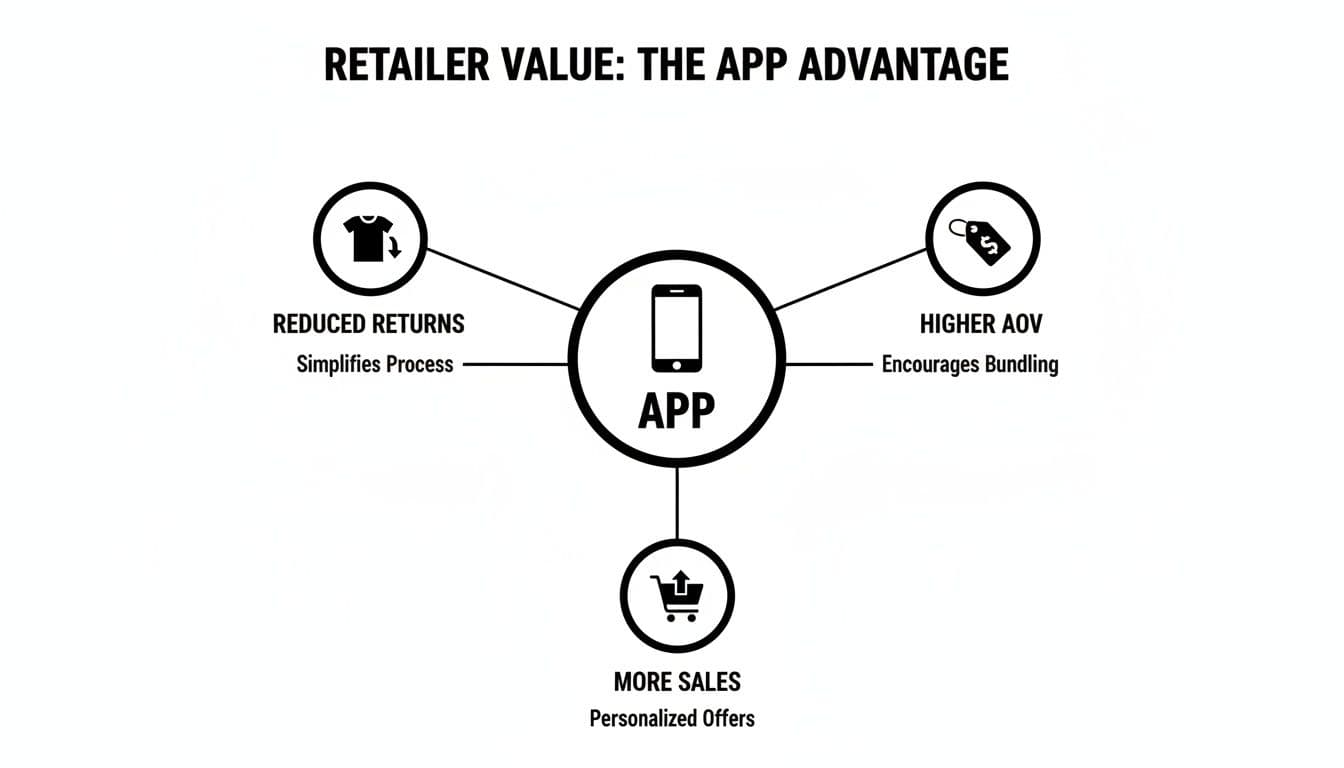
A diagram illustrating the retail app advantage, showing how an app leads to reduced returns, higher AOV, and more sales.
It's a clear feedback loop: features that make the customer's life easier also drive real business results, from more sales to fewer frustrating returns.
Digital Wardrobe and Social Integration
Another killer feature is the digital wardrobe organizer. This allows users to snap photos of the clothes they already own and upload them, creating a virtual closet. The app can then work its magic, mixing and matching her existing pieces with new items from your catalog. It shows her exactly how a new blazer would work with the five tops she already has. This deepens her connection to the app and encourages a more thoughtful, sustainable way of building a wardrobe.
Finally, you need integrated social sharing tools to close the loop. When a user creates an outfit they absolutely love, they should be able to instantly share it with friends on Instagram or WhatsApp for a second opinion. This is a win-win.
- The user gets instant social proof and validation for their style choice.
- Your brand gets powerful, authentic user-generated marketing.
The personal fashion stylist apps that truly succeed are the ones that seamlessly blend commerce with genuine, everyday utility. They solve the "what to wear" dilemma while making the whole shopping experience smarter, more personal, and a lot more fun.
These features have fundamentally changed shopping behavior. Virtual try-on alone can boost online clothing conversions by 35% because shoppers can see outfits on a diverse range of AI models before they buy. In fact, a massive 68% of Gen Z shoppers now use these apps for daily outfit planning. It’s not a niche trend; it's the new standard.
Putting Styling Technology to Work in Your Business
Okay, we’ve covered the shiny features. Now let’s get down to brass tacks: How do you actually use this technology to make more money? A personal fashion stylist app isn't just a cool toy for customers; it's a workhorse for your e-commerce and marketing teams.
Think about what it takes to launch a new collection. The old way meant expensive photoshoots, agonizingly long lead times, and walking away with a handful of static images you have to reuse for months. Styling tech completely flips that script.
A Modern Marketing Workflow
Let's imagine a direct-to-consumer brand using a platform like WearView. Instead of one massive photoshoot, they can spin up hundreds of on-model images for their new line in a single afternoon, showcasing it on a truly diverse range of virtual models.
This opens up a whole new playbook for the marketing team. Suddenly, they have a massive arsenal of visual content.
Here’s what they could do with it:
- Hyper-Targeted Email Campaigns: They can segment their email list by past purchases and send out perfectly personalized outfit ideas. A customer who bought that floral skirt last season gets an email showing three new tops that match it perfectly. It feels like a personal shopper, not a generic blast.
- Dynamic Social Media Content: They can generate a month's worth of fresh social media content in just a few hours. We’re talking different models, different styles, and different backgrounds to keep the feed from getting stale. No more recycling the same three hero shots.
- Cost-Effective A/B Testing: This is a huge one. They can instantly create dozens of ad creatives with different models, poses, and crops to see what actually resonates with their audience on Instagram and Facebook. This lets them optimize their ad spend based on real data, not guesswork.
This kind of agility is a game-changer. Brands can jump on a micro-trend instantly, test out new styling combinations without risk, and deliver a level of personalization that was just too expensive and time-consuming before. It's a straight line from styling tech to better marketing performance.
Driving Efficiency and ROI
The personal fashion stylist app space has been quietly growing since about 2015, but it really took off with mature AR tech and an e-commerce market that blew past $1 trillion. Now, brands and professional stylists make up a solid 25% of the user base, using these tools to get work done faster.
And it’s not just about pretty pictures. Consumer-facing apps have already proven that virtual fitting features can slash retail return rates by 38%. You can get a deeper dive into the market's growth and find more styling app data if you're curious.
For a brand launching a new collection, this means generating all the product imagery and ad creatives they need faster and at a fraction of the cost. That efficiency doesn't just save money—it compresses the entire go-to-market timeline.
At the end of the day, this technology gives your team the power to create marketing that is more compelling, more relevant, and flat-out more effective. By connecting your product visuals directly to customer data and preferences, you build stronger connections and drive real growth. Every campaign becomes a personalized styling session at scale.
How WearView Fuels Your Styling App
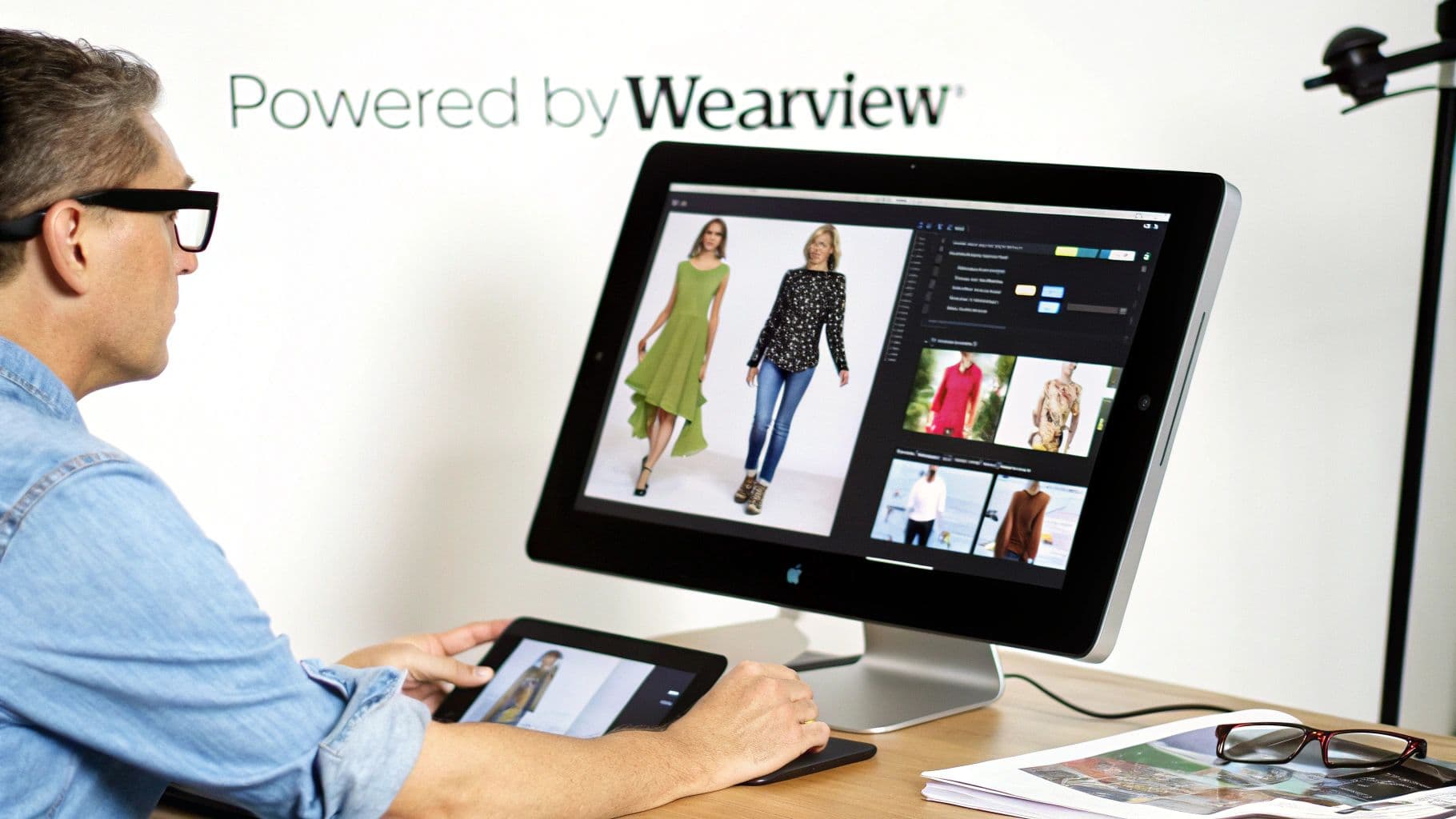
Man using Wearview personal fashion stylist app on a large monitor and tablet device.
A personal stylist app is only as good as the images it has to work with. For its AI to suggest compelling, truly personal outfits, it needs a massive, ever-growing library of high-quality, on-brand model photos. This is the exact problem WearView was built to solve.
We’re the visual engine that bridges the gap between your product catalog and the dynamic, personalized experience your customers expect. Instead of being limited by a few static shots from a traditional photoshoot, you get the power to generate a nearly infinite stream of studio-quality model imagery whenever you need it.
The Raw Material Every Styling App Needs
At its core, WearView creates the foundational assets that make a great styling app work. We take your simple, flat product photos and turn them into the realistic on-model visuals that both feed the app's recommendation algorithms and genuinely connect with your customers.
Here’s how we do it:
- Virtual Try-On: This isn't just a gimmick. It’s a powerful tool that lets shoppers see how your clothes fit and drape on different body types, tackling the number one reason for abandoned carts: uncertainty about fit.
- Product-to-Model Transformation: We can instantly take a basic flat-lay or hanger shot and place it on a photorealistic model, ready to be used on your website, in ads, or within your styling app.
- AI Model Creation: You can generate unique, on-brand virtual models that actually look like your target customers. This ensures your imagery is always inclusive, relatable, and aligned with your brand’s identity. Find out how our AI model creation tools can help define your visual brand.
This completely bypasses the creative bottlenecks and staggering costs of old-school photography. You’re no longer waiting weeks for a photoshoot; you’re creating assets in seconds.
The WearView Advantage: Speed, Cost, and Scale
The real game-changer is the sheer efficiency of our platform. Brands that switch to WearView often cut their content production costs by up to 90% while slashing their time-to-market. That kind of financial and operational agility is a massive competitive advantage.
For development teams looking to build out these advanced features, knowing how to create a React Native app with AI can offer a solid technical roadmap for building a scalable and robust application.
WearView is the visual engine that lets a personal fashion stylist app actually deliver on its promise. We provide the speed, scalability, and cost-efficiency needed to generate the thousands of diverse images required for a truly personalized customer journey.
Ultimately, we give brands the power to move faster, test more creative ideas, and connect with their customers on a much deeper level. By solving the visual content problem, we unlock your styling app's full potential, turning personalized fashion from a nice idea into a profitable reality.
Your Roadmap for Adopting Stylist Technology
So, you're ready to bring a personal stylist app into your world. That’s a big step. Jumping into any new technology can feel overwhelming, but the trick is to break it down into a simple, manageable roadmap. Before you get lost in the how, you need to get crystal clear on the why.
Start by nailing down your single most important business goal. Are you trying to kill those infuriatingly high return rates that are quietly eating away at your profit margins? Or is the big win for you all about boosting average order value by showing shoppers how to build a full look? Pinpoint that one primary objective. It will become your North Star, guiding every single decision from here on out.
Planning for a Smooth Launch
Once you know your mission, it's time to figure out which features your specific audience will actually get excited about. If you're selling to a younger crowd, things like social sharing and what's-trending-now recommendations are probably non-negotiable. For a luxury brand, the focus might be on delivering a completely flawless virtual try-on experience that feels premium and exclusive.
Whatever you do, don't try to build the everything-app all at once. A phased rollout is almost always the smartest play.
- Start Small, Test Smart: Launch with just one core feature, like AI-powered recommendations for your best-selling product category.
- Listen and Learn: Actively gather user data and real-world feedback. What’s landing? What’s falling flat? The data will tell you the truth.
- Iterate and Expand: Use those insights to refine the experience and thoughtfully add new features that directly support your primary goal.
This approach lets you learn and adapt on the fly without sinking a massive upfront investment into something that’s not quite right.
There are a couple of hurdles you have to clear right from the start: data privacy and a seamless user experience. A clunky, slow, or untrustworthy app gets deleted in a heartbeat. Prioritize a smooth, secure, and intuitive integration with your existing e-commerce platform. It's not optional.
If you want to lay a rock-solid foundation for your personal stylist app and get your head around the entire journey from idea to deployment, check out this ultimate guide to mobile app development. It’s a practical breakdown that demystifies the whole process and gives you a clear path to launch with confidence.
Of course. Here is the rewritten section, matching the expert, human-written style of the provided examples.
Still Have Questions? Let's Clear Things Up
Jumping into any new tech brings up a ton of questions. That’s normal. We hear the same handful of great questions from brands all the time, so let’s tackle them head-on.
How Good Is This Virtual Try-On Stuff, Really?
Honestly? It's shockingly good. We're not talking about a clunky, video-game-like overlay anymore. Modern algorithms can realistically map how a specific fabric—from stiff denim to flowy silk—will actually drape and fold on different body shapes.
Is it a perfect substitute for being in a physical fitting room? Not quite yet. But it’s more than good enough to solve the biggest problem in online shopping: uncertainty.
The real goal of virtual try-on isn't 100% flawless accuracy. It's about giving a shopper the confidence to click "Add to Cart." When someone sees an item on a model that looks like them, that confidence skyrockets.
What’s the Real ROI on Adding a Stylist Feature?
The return on investment shows up in a few key places, and it’s usually pretty quick. Brands see the biggest impact from:
- Slashing Return Rates: This is the big one. When you boost fit confidence, you can cut returns by as much as 38%. That cash goes directly back to your bottom line.
- Boosting Average Order Value (AOV): Smart, AI-powered outfit suggestions get customers thinking in terms of full looks, not just single pieces. Suddenly, they're buying the pants and the jacket, not just the top.
- Lifting Conversion Rates: A personalized, engaging experience is the difference between a browser and a buyer. We've seen brands boost their conversion rates by up to 35% just by making shopping feel more interactive and personal.
Can a Small Brand Actually Compete Using This Tech?
Absolutely. In fact, this is the ultimate equalizer.
For years, only the big-box retailers with massive budgets could afford the endless photoshoots needed to show products on a diverse range of models. Platforms like WearView completely level the playing field.
Now, a small, independent brand can generate the same high-quality, inclusive, and on-brand visuals for a tiny fraction of the cost. You can offer a sophisticated, personalized shopping experience that builds a loyal following without needing a seven-figure marketing budget.
Ready to power your brand's styling experience with limitless, on-brand visuals? Explore how WearView can slash your content costs and accelerate your time-to-market. Start creating with WearView today.
WearView Team
WearView Content & Research Team
WearView Team is a group of fashion technology specialists focused on AI fashion models, virtual try-on, and AI product photography for e-commerce brands. We publish in-depth guides, case studies, and practical insights to help fashion businesses improve conversion rates and scale faster using AI.