January 26, 2026•20 min read
What Is a Fashion Tech Company and Why Do They Matter?
Discover what a fashion tech company is, how AI and AR are reshaping the industry, and why these innovators are essential for the future of your brand.

What Is a Fashion Tech Company and Why Do They Matter?
A fashion tech company is what happens when Silicon Valley’s obsession with solving problems meets the creative, fast-paced world of apparel. These companies use tools like artificial intelligence and augmented reality to reinvent how we design, make, sell, and even experience clothing.
It’s about more than just building another e-commerce site. It’s about tackling the industry’s toughest challenges head-on—from automating entire photoshoots to letting customers try on a new collection from their couch. In short, they’re the innovation partners brands need to connect their creative vision with commercial reality.
Defining the Modern Fashion Tech Company
Man working on a laptop displaying 'MODERN FASHION TECH' in a fashion studio with mannequins.
Imagine being able to produce a full, diverse on-model photoshoot in minutes, without ever booking a studio or hiring a photographer. Or picture a shopper trying on a dress from their living room with almost perfect accuracy. This isn't science fiction; it's the world a fashion tech company builds every day.
These businesses go way beyond traditional retail software. They’re laser-focused on solving deep, industry-specific problems, giving fashion brands a genuine competitive edge by fundamentally changing how the fashion lifecycle works from start to finish.
Core Mission and Impact
At its heart, a fashion tech company’s mission is to make the industry smarter, faster, and more dialed into what customers actually want. They're not just selling software; they're partners in innovation, helping brands of all sizes get ahead.
This shift is powering some serious growth. The global fashion tech market is set to jump from USD 255.99 billion to USD 393.65 billion by 2032. North America is leading the charge with a 42.6% market share, showing just how quickly brands in the region are adopting these new tools. You can dig deeper into the fashion tech market growth and see exactly how technology is shaking up retail.
A modern fashion tech company empowers brands to operate with the agility of a startup while delivering the sophisticated experiences of an established leader. It’s about replacing costly, slow processes with efficient, intelligent alternatives.
Core Technologies Shaping Modern Fashion
To really get what these companies do, you have to look at the tech they’re using. They're not just throwing buzzwords around; they’re applying powerful tools to solve real-world fashion problems. This table breaks down the key players and their impact.
| Technology | Primary Application in Fashion | Impact for Brands |
|---|---|---|
| Artificial Intelligence (AI) | Automated on-model photography, trend forecasting, personalized recommendations. | 90% cost reduction on photoshoots, faster speed-to-market, and higher conversion rates. |
| Augmented Reality (AR) | Virtual try-on (VTO) tools that let customers "wear" items using their phone camera. | Boosts buyer confidence, significantly lowers return rates (often by 30-40%), and creates an interactive shopping experience. |
| 3D Modeling & Simulation | Creating true-to-life digital prototypes of garments before a single stitch is sewn. | Drastically cuts down on physical sample waste, shortens design cycles from months to weeks, and improves design accuracy. |
| Data Analytics & Big Data | Analyzing sales data, social media trends, and customer behavior to inform design and inventory. | Smarter inventory decisions (less dead stock), trend-aligned collections, and more effective marketing campaigns. |
Each of these technologies tackles a different, often frustrating, part of the traditional fashion workflow, turning bottlenecks into opportunities for growth and innovation.
Key Areas of Innovation
The influence of a fashion tech company pops up across the entire business, but a few areas see the biggest impact.
- Content Creation: This is a huge one. Using AI to generate instant, on-model photography eliminates the massive costs and logistical nightmares of traditional photoshoots. What used to take weeks and cost thousands now takes minutes and a small subscription fee.
- Customer Experience: Implementing augmented reality for virtual try-on is a game-changer for e-commerce. It gives shoppers the confidence to click "buy" and has been proven to dramatically slash those pesky (and expensive) return rates.
- Design and Production: Applying 3D modeling to create digital prototypes is a massive win for sustainability and speed. Brands can perfect a design on-screen, which means less material waste from physical samples and much shorter development timelines.
The Tech Powering the Digital Shift
A wooden desk with an iPad displaying clothing, a laptop with code, and a smartphone, under an 'Ai AR 3D' sign.
Peek under the hood of any forward-thinking fashion tech company, and you'll find a powerful stack of tools completely rewiring the industry. These aren't just trendy buzzwords; they're the engines turning creative ideas into tangible results, giving brands a serious competitive advantage.
Think of Artificial Intelligence (AI) and Machine Learning (ML) as the brains of the operation. This is the code that fuels everything from personalized product recommendations to the mind-bending algorithms that conjure photorealistic model images from a single flat-lay photo. It’s also what sifts through mountains of data to predict the next big trend or clean up messy product catalogs for better search results.
This AI-first approach lets brands automate tedious, manual tasks, freeing up their creative teams to focus on strategy and design. To really get a handle on what's driving this change, it's worth exploring the top technologies in e-commerce that make it all possible.
Augmented Reality: The Digital Fitting Room
Next up is Augmented Reality (AR), which essentially acts as the brand’s digital mirror. This is the magic behind virtual try-on experiences, where a digital garment is overlaid onto a customer's live image through their smartphone. It finally closes that gap between browsing online and stepping into a physical fitting room.
For shoppers, AR takes the guesswork out of sizing and fit, giving them the confidence to click "buy." For brands, this leads directly to fewer returns—a huge profit-eater for any e-commerce business. In a sea of online stores, a slick AR feature creates an interactive and memorable experience that sets you apart.
These technologies don't work in isolation; they create a smarter, more responsive fashion ecosystem. AI provides the intelligence, AR delivers the interactive experience, and 3D modeling lays the foundation for a faster, more sustainable design process.
3D Modeling: The Blueprint for Modern Design
Working behind the scenes, 3D modeling and rendering are quietly overhauling the entire design and production pipeline. Instead of sewing dozens of physical samples to perfect a new dress, designers can now build, tweak, and perfect digital prototypes with astonishing accuracy.
This digital-first process is a game-changer for several reasons:
- Drastic Waste Reduction: It cuts down on the fabric and resources wasted on physical samples, a huge win for sustainability.
- Accelerated Timelines: Design cycles that used to drag on for months can now be wrapped up in weeks, letting brands jump on trends faster than ever.
- Improved Collaboration: Teams scattered across the globe can share and iterate on digital designs in real-time, making the whole workflow incredibly nimble.
Solving Fashion’s Biggest Real-World Problems
A great fashion tech company doesn't just build cool apps—it zeros in on the industry's most stubborn and costly headaches. These aren't just neat gadgets; they're targeted solutions that fix fundamental, expensive flaws in how fashion has always operated. They tackle the real-world pain points that have been draining budgets and killing agility for decades.
This sharp focus on solving actual problems is what’s fueling the massive market growth we’re seeing. The fashion technology space is projected to hit an incredible USD 345.39 billion by 2030, and a huge chunk of that—over a third—is right here in North America. Why? Because brands are finally embracing tools like AI personalization and augmented reality try-ons to completely reinvent digital retail. For a closer look at the numbers, you can review a full fashion technology market report.
Overcoming Content Creation Bottlenecks
Ask any fashion brand about their biggest operational nightmare, and they’ll probably say "photoshoots." Traditional content creation is a logistical mess. It’s painfully slow, shockingly expensive, and requires a small army of photographers, models, stylists, and studios to pull off. This process creates a massive bottleneck, holding up product launches while eating up a huge slice of the marketing budget.
AI-driven fashion tech offers a way out. Platforms that can spin up studio-quality model photography in minutes are a game-changer, allowing brands to slash their content production costs. Suddenly, professional, on-model imagery isn't just for the big players. It’s accessible to everyone from indie designers to established retailers, democratizing high-quality visual commerce.
By tackling core operational problems with technology, a fashion tech company does more than save money. It empowers brands to be more agile, inclusive, and responsive to customer needs in a way that was previously impossible.
Reducing E-commerce’s Billion-Dollar Problem
Another monster hiding in the closet? E-commerce returns. The numbers are staggering, and the primary culprit is almost always the same: a customer guessed their size, and the garment just didn't fit. This isn't a small inconvenience; it’s a direct hit to the bottom line, with shipping and restocking fees devouring profits.
This is exactly where tools like virtual try-on step in. By giving shoppers a realistic preview of how a garment will actually look and fit on them, these technologies attack the root cause of returns. You can learn more about how a virtual dressing room boosts confidence and sales with this technology. This simple shift boosts buyer confidence, which means more add-to-carts and, crucially, fewer profit-draining returns.
Championing True Diversity and Inclusion
Finally, fashion tech provides an elegant solution to the industry's long-standing struggle with authentic diversity. For years, featuring a genuinely inclusive range of body types, ethnicities, and ages in marketing was a logistical and financial challenge.
AI platforms completely flip that script. With just a few clicks, brands can now showcase their collections on a virtually limitless array of models. This isn't just about looking good—it's about connecting with a wider, more diverse audience and proving that your marketing truly reflects the world we live in. That's how you build real brand loyalty.
How AI Platforms Actually Make You Money
The real magic of a fashion tech company isn't the fancy algorithms; it's the direct, measurable impact on your brand's bottom line. These AI and machine learning platforms aren't just selling a cool concept—they deliver tangible results by zeroing in on the most bloated, time-sucking parts of the traditional fashion business. This is where the hype becomes a real return on investment.
Take a platform like WearView, for example. It tackles the content creation headache head-on. Instead of a brand getting bogged down in the slow, expensive grind of photoshoots, they just upload a simple flat shot of their product. From there, the AI does the heavy lifting, generating stunning, photorealistic images of that item on a diverse range of models, ready to go for any marketing campaign.
This is all about solving core industry problems that drain time and money.
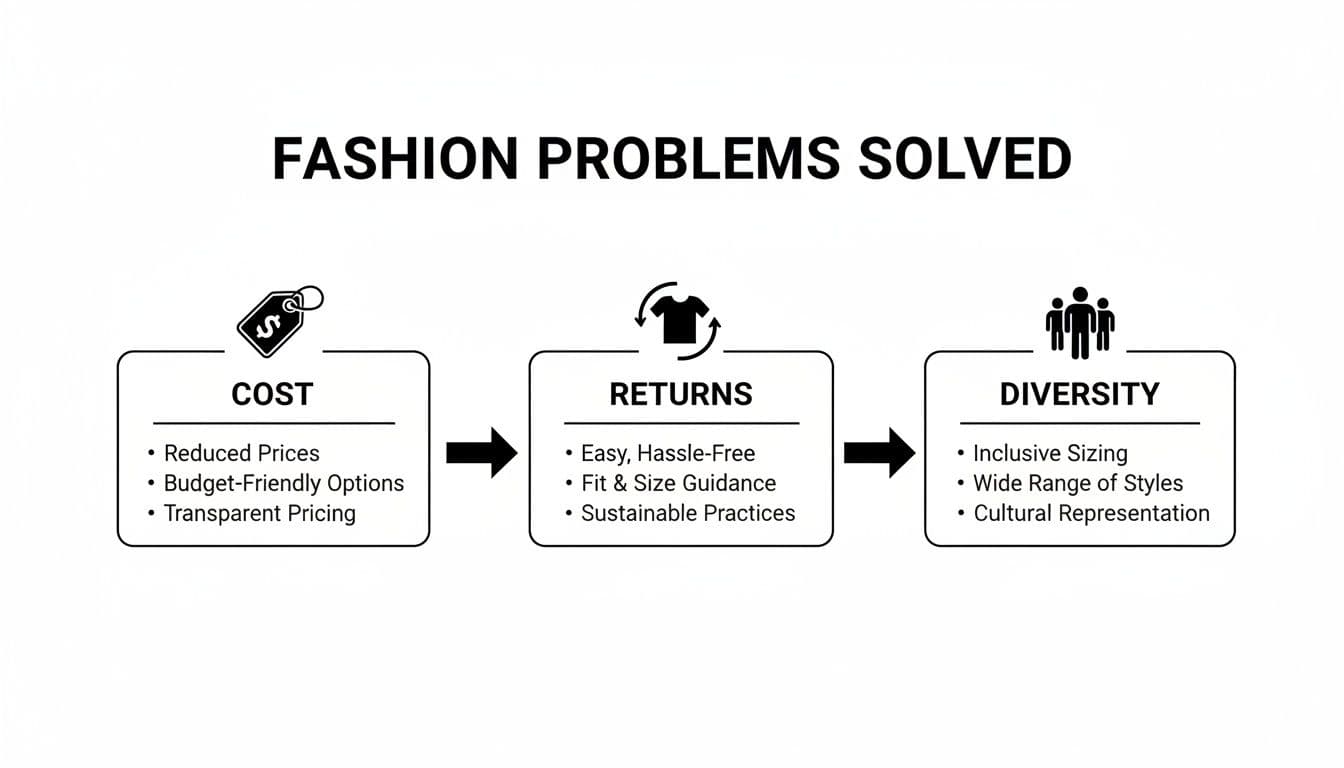
Flowchart detailing how fashion problems are solved regarding cost, returns, and diversity with specific solutions.
Each of those pain points—sky-high costs, frustratingly high return rates, and a genuine struggle to show diversity—is precisely what modern fashion tech is built to fix.
What This Looks Like on Your Balance Sheet
When a brand adopts a tool like this, the numbers can be genuinely shocking. We've seen brands report a 90% cost reduction in their content production budget. It's a game-changer. A process that once took weeks of coordination, booking, and shooting is now done in minutes. This not only slashes expenses but gets your products in front of customers faster, freeing up cash for things that actually grow the business.
And it’s not just about static images. The best platforms arm you with a whole marketing arsenal. An AI Video Generator can spin a single product photo into a slick, dynamic video clip perfect for TikTok or Instagram ads, all without a camera crew. Other features ensure your chosen model stays consistent across an entire campaign, giving you a cohesive, professional look that used to cost a fortune. If you want to see how these stack up, our guide on the best AI tools for e-commerce breaks it down.
The core value of a fashion tech company is its ability to use complex technology to deliver measurable efficiency, creative freedom, and a clear return on investment. It's about turning operational headaches into competitive advantages.
To put it simply, these platforms level the playing field. They give smaller brands the power to create visuals that compete with the big industry players, without the massive budget. It’s a perfect example of a fashion tech company delivering practical, scalable solutions that drive real growth and help brands move faster in a ridiculously crowded market.
Comparing Traditional Photoshoots vs AI Platforms
To see just how different the two approaches are, let's break down the old way versus the new way. The contrast in cost, time, and creative control is stark.
| Factor | Traditional Photoshoots | AI-Powered Platform |
|---|---|---|
| Cost | $1,000 - $10,000+ per shoot (models, studio, photographer, editing). | $19 - $99 per month for hundreds of images. |
| Time | 2-6 weeks from planning to final edited images. | Under 5 minutes from product photo to final marketing assets. |
| Diversity | Limited by local model availability and casting budget. | Instantly generate images on an unlimited range of ethnicities, ages, and body types. |
| Revisions | Costly and time-consuming reshoots required for changes. | Generate a new variation in seconds at no extra cost. |
| Scalability | Every new product requires a new, expensive photoshoot. | Scale to hundreds of new products instantly with a consistent look. |
The table makes it clear: the traditional model is built on bottlenecks and high fixed costs. AI platforms, on the other hand, are designed for speed, flexibility, and efficiency, turning content creation from a major expense into a powerful, low-cost marketing engine.
Choosing the Right Fashion Tech Partner for Your Brand
With so many options popping up, picking the right fashion tech company can feel overwhelming. But the first step has nothing to do with browsing features or watching demos.
It starts with you. What’s the single biggest headache in your business right now? Are you bleeding money on content creation? Are sky-high return rates eating your margins? Or are you struggling to give customers the personalized experience they expect?
A great partner doesn’t sell a one-size-fits-all tool; they offer a purpose-built solution to your specific problem. If content is the bottleneck that keeps you up at night, then a platform that automates photoshoots should be at the very top of your list.
Evaluate Usability and Integration
Once you’ve found a company that seems to solve your core problem, the next test is simple: how easy is it to actually use?
The best technology should feel like a natural extension of your team, not another beast of a system that requires a manual and a month of training. A truly effective platform slides right into your existing workflow, whether you’re on Shopify, Magento, or a custom-built site.
It shouldn’t take a dedicated IT squad to run. Your creative and marketing folks should be able to log in and get value from day one. This relentless focus on user experience is what separates a genuinely helpful tool from a frustrating one. You can get a feel for how modern tools are simplifying complex jobs by checking out a list of the best fashion design apps.
This kind of forward-thinking isn't just about software, either. Look at the smart clothing segment—it was valued at USD 2.15 billion and is projected to smash nearly USD 10 billion by 2034, growing at a blistering 15.78% CAGR. This growth is all about embedding tech directly into the product to serve the massive U.S. apparel market, which is worth over $365 billion. You can explore more insights on the smart clothing market to see just how fast this space is moving.
Demand Proof of Performance
Finally, don’t fall for slick sales pitches and vague promises. Demand proof. Any fashion tech company worth its salt will be excited to show you how they’ve delivered tangible results for brands just like yours.
A true partner doesn't just sell you software; they provide a clear roadmap to value. They should be able to demonstrate exactly how their technology translates into measurable business outcomes, from cost savings to conversion lifts.
Ask for detailed case studies, look for client testimonials, and insist on seeing the hard data. You’re looking for clear, undeniable evidence of ROI.
- Reduced Operational Costs: Can they show you a real percentage decrease in content production expenses for a similar brand?
- Increased Conversion Rates: Do they have A/B test results proving a lift in sales?
- Lower Return Rates: Is there data showing their sizing or virtual try-on tools actually work to keep products from coming back?
Choosing the right partner means finding a company that’s as invested in your success as you are. They win when you win.
The Future of Fashion is an Intelligent, Connected Ecosystem
The romance between fashion and technology is over—now it’s a full-blown marriage, and it’s the new foundation of the industry. Looking ahead, the line between what happens on a screen and what happens in a store will completely dissolve, all thanks to tools that are more deeply connected than ever before.
We're about to see generative AI, smart clothing, and on-demand manufacturing completely reshape how brands operate. These shifts will empower companies to be more data-driven, quicker on their feet, and almost telepathically in sync with what their customers want. It's a move away from guessing games and reactive sales cycles toward predictive creation.
The Rise of the Brand's "Operating System"
The winning fashion tech company of tomorrow won’t be selling a single, shiny tool. Instead, it will offer a complete ecosystem—a central nervous system where design, marketing, and sales all talk to each other through intelligent, automated platforms.
Imagine a world where data from customer try-ons flows directly into the next design sprint without a single human having to run a report. For instance, a platform could analyze which styles are killing it in virtual try-on sessions and automatically whip up suggestions for new colorways or variations for the design team. This creates a tight feedback loop that cuts risk and dials up relevance.
For any brand paying attention, getting on board with this today isn't just about keeping up. It's about building a tougher, smarter, and more competitive business for the long haul. You're not just buying another piece of software; you're installing a unified operational brain.
Key Trends Pulling Fashion into the Future
A few massive shifts are driving the industry toward this deeply integrated reality:
- Generative AI as a Creative Partner: AI is stepping out of the marketing department and into the design studio. It's becoming a true creative collaborator, helping designers spin up new concepts, dream up patterns, and even sketch out entire collections based on hard trend data and the brand's unique DNA.
- On-Demand Everything: Tech is finally making it possible to shift from "make it all and hope it sells" to "make it when it's ordered." This is huge. It has the potential to slash waste and wipe out the mountains of excess inventory that drain cash from the industry.
- Hyper-Personalization That Actually Works: Forget basic "you might also like" recommendations. We're talking about AI-powered shopping assistants and conversational search that guide customers to products that perfectly match their style, fit, and even what they're doing that weekend.
At the end of the day, the future of fashion is one where technology isn't just a feature—it’s the core operating system. The brands that don't just survive but actually thrive will be the ones who weave this intelligent, integrated approach into every single thread of their business.
Still Have Questions About Fashion Tech?
Jumping into the world of fashion tech can feel like learning a new language. Let's break down a few of the most common questions brands ask when they're thinking about bringing these powerful tools on board.
What’s the Real Payoff of Working with a Fashion Tech Company?
When you boil it all down, the wins usually stack up in three major areas. The first is a massive drop in costs, especially around creating content and marketing materials. Second is a huge boost in your speed-to-market, letting you get new collections live way faster. Finally, you can create a much cooler customer experience with tools like virtual try-on.
It all funnels down to running a smarter, more efficient business with a healthier bottom line. For instance, a brand that swaps traditional photoshoots for an AI platform can slash its content budget by up to 90% and get final images in minutes, not weeks.
Is This Stuff Only for the Big Players?
Not at all. In fact, one of the best things about today's fashion tech is how it puts enterprise-level tools into everyone's hands. Many of the best solutions are built on a SaaS (Software as a Service) model, which means flexible, affordable monthly plans perfect for DTC startups, indie designers, and online sellers.
It's a genuine leveler for the industry, giving smaller businesses the power to produce incredible visual content and build slick customer experiences without needing a six-figure budget. It’s about making the tools for success available to everyone.
How Hard Is It to Plug These Tools into My Online Store?
Most modern fashion tech company solutions are designed to be incredibly simple. Many are just web apps that don't require any tricky integration. You create your assets—like model photos or videos—on their platform, download them, and then upload them to your e-commerce site just like you would any other picture or video file.
Some might offer direct plugins for platforms like Shopify or BigCommerce, but the best partners always provide clear instructions and solid support to make sure your workflow stays smooth and uninterrupted.
The whole point of a good fashion tech solution is to remove friction, not create more of it. It should feel like a natural part of your process, giving your team the ability to work faster and more creatively without a huge learning curve.
What Kind of ROI Can I Actually Expect?
The return on your investment shows up in a couple of key ways. On the financial side, you see direct savings from cutting operational expenses (goodbye, expensive photoshoots!) and a revenue bump from higher conversion rates and better-performing ads.
But the strategic ROI is just as important. It comes from being able to launch products faster, test out more styles with less financial risk, and represent your brand with a much wider range of diversity. The key numbers to watch are your conversion lift, any drop in return rates, and lower customer acquisition costs.
As we look to the horizon, it's clear that the industry is becoming more integrated and intelligent every day. New technologies are constantly reshaping the future of fashion, making it an exciting space to watch.
Ready to see how AI can completely change your fashion photography process? With WearView, you can generate studio-quality, on-model images in just minutes, crushing costs and getting you to market faster than ever. Explore WearView's AI-powered platform and start creating your best content today.

WearView Team
WearView Content & Research Team
WearView Team is a group of fashion technology specialists focused on AI fashion models, virtual try-on, and AI product photography for e-commerce brands. We publish in-depth guides, case studies, and practical insights to help fashion businesses improve conversion rates and scale faster using AI.