January 18, 2026•19 min read
A Modern Guide to Photo Shoot Modelling
Discover the essentials of photo shoot modelling. Learn to navigate traditional workflows, compare costs, and see how AI is transforming the industry.
A Modern Guide to Photo Shoot Modelling
At its core, photo shoot modelling is about using people to tell your brand’s story. It's the art of creating an emotional shortcut between your product and your customer. This process transforms a simple item into an aspirational experience, showing potential buyers not just what an item is, but who they could be when they own it.
What Photo Shoot Modelling Means for Your Brand
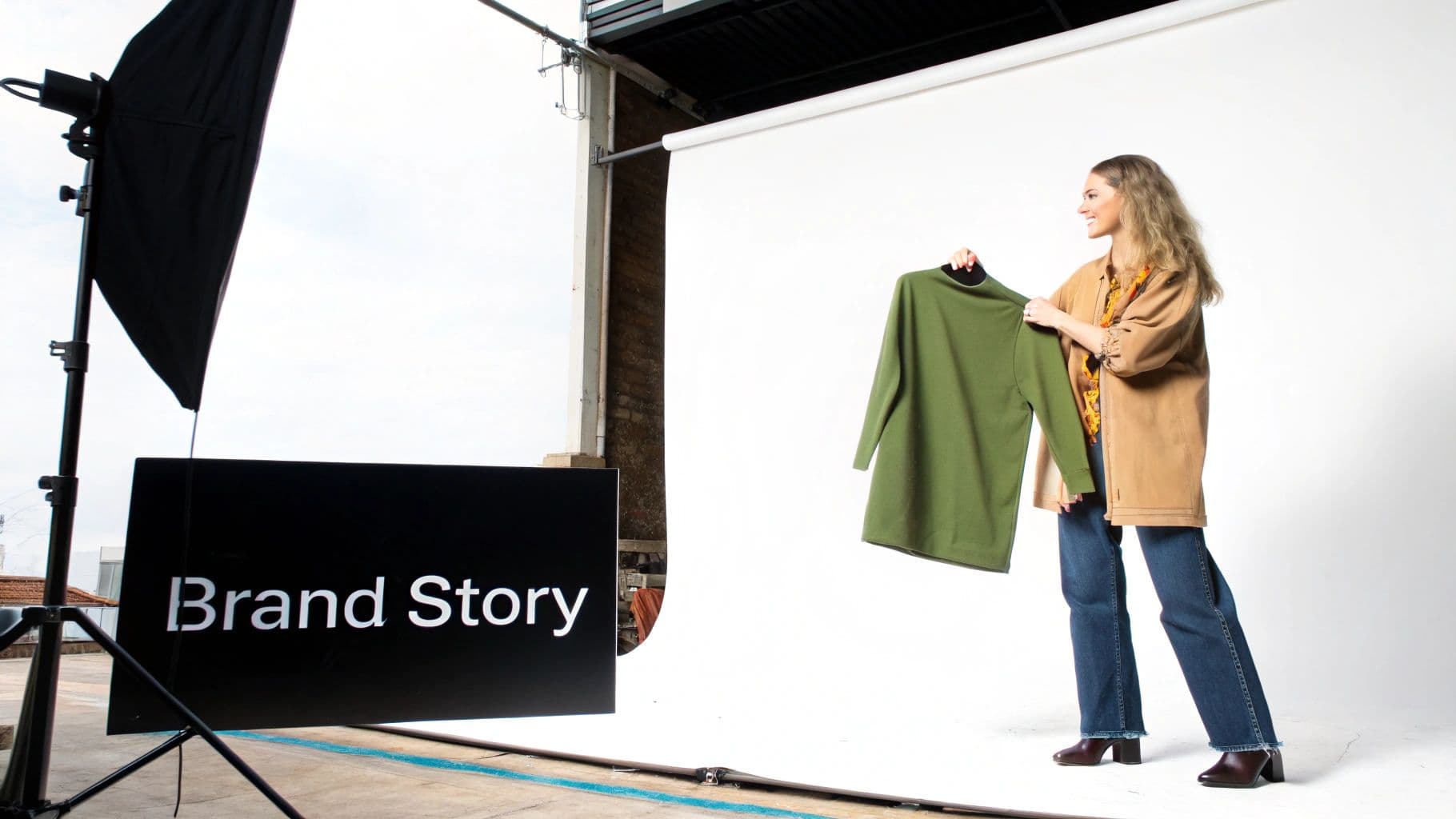
A smiling woman holds a green sweater during a fashion photoshoot in a studio with a 'Brand Story' sign.
Think of a great photo shoot as your brand’s most important story. It’s where your product moves from a warehouse shelf into a real-world context, brought to life through carefully crafted visuals. If your product is the hero of that story, the model is the guide who shows the audience why they should care.
This isn’t just about taking pretty pictures. It's a strategic investment in carving out your brand's identity. The right imagery communicates your values, defines who you’re talking to, and helps you stand out in a ridiculously crowded market.
The Foundation of E-commerce Success
For any e-commerce brand, especially in fashion, high-quality visuals aren’t just nice to have—they are the engine of your sales. Customers can't touch, feel, or try on products online, so they rely entirely on the images you provide to make a decision. That visual language has to be compelling, clear, and aspirational.
It's no surprise that the global fashion industry spends over $10 billion every year on professional photography. This massive spend is fueled by the need for 50-100 images per product just to drive online conversions, which often stall at a measly 2-3% without strong visuals.
More Than Just a Product Photo
When done right, photo shoot modelling does several jobs at once. It’s a multi-faceted tool that builds brand equity while directly impacting your bottom line.
- Builds Emotional Connection: Models help customers see themselves using the product, forging a powerful link that a simple product shot can't.
- Drives Aspirational Value: It sells a lifestyle, turning a simple garment into a piece of a larger, more desirable identity.
- Increases Perceived Quality: Professional, well-executed shoots instantly elevate the perceived value of your products.
A photo shoot is the bridge between your product and your customer’s imagination. It’s where you get the chance to make them feel something, not just see something.
To really grasp the impact and value that professional visuals bring to the table, it’s worth understanding why high-quality media is crucial for digital advertising. For any modern brand, getting this foundational piece right isn't just an expense; it’s a high-stakes investment in your future.
The Old Way: Unpacking the Traditional Photo Shoot Process
Ever wondered what really goes into a traditional fashion photo shoot? It’s a lot more than just a model and a camera. Think of it as a complex dance with dozens of moving parts, a process that demands a massive amount of planning, a whole crew of skilled people, and a serious budget—long before a single photo is ever taken.
It all kicks off with the creative concept. This is the seed of the entire project, where the brand's big idea gets translated into a concrete plan, usually in the form of a mood board. This isn't just a pretty collage; it's a visual bible for the entire team, dictating the lighting, poses, color palette, and the overall vibe the images need to scream. Getting this right ensures everyone is on the same page from day one.
Assembling the A-Team
Once the vision is locked in, it's time to build the dream team. This is where you hand-pick the talent who can actually bring that mood board to life.
- Model Casting: This is about finding the face (and body) of the brand. It means sifting through agency portfolios, holding casting calls, and finding models who don’t just wear the clothes well, but truly embody the brand’s personality.
- Hiring a Photographer: The photographer is the director of this show. Their unique style has to align perfectly with the brand’s aesthetic, and their know-how in lighting, composition, and wrangling talent is what makes or breaks the entire shoot.
- Securing Stylists and Artists: You can't forget the glam squad. A team of wardrobe stylists, makeup artists, and hair stylists is what creates that polished, professional look you see in magazines and on billboards.
With the team in place, the logistical marathon begins. This means scouting and booking the perfect location, whether it's a professional studio or a windswept beach. For a closer look at what setting up a studio involves, our guide on building an e-commerce photo shoot studio breaks it all down. Every choice, from permits to travel, adds another layer of cost and complexity.
The Grind of Production and Post-Production
On shoot day, every second is meticulously planned to maximize the daylight, the studio rental time, and the crew’s energy. But even the most iron-clad plans can go sideways. Scheduling conflicts pop up, and if you’re shooting outdoors, you’re completely at the mercy of the weather, which can lead to expensive delays and reshoots.
And the work is far from over when the camera clicks off. The post-production phase—where thousands of images are culled, retouched, and color-graded—can easily stretch on for weeks. This adds a huge delay before you even have the final assets ready for your marketing campaigns.
This entire drawn-out process, from that first spark of an idea to the final image delivery, shows exactly why traditional photo shoots are so incredibly resource-heavy. The sheer coordination of people, places, and schedules creates a long, expensive pipeline—and it’s precisely this inefficiency that has modern brands searching for a better, faster way to create their visuals.
Comparing Traditional Shoots with AI-Generated Imagery
The world of fashion imagery has hit a major fork in the road. On one side, you have the classic, time-tested tradition of the physical photo shoot. On the other, the disruptive power of AI-generated visuals. While both are trying to do the same thing—create images that make people want to buy your product—the way they get there couldn't be more different.
Think of it this way: a traditional shoot is like staging a Broadway play. It’s a massive logistical dance of people, places, and equipment. An AI workflow? That’s more like directing a movie inside a computer, where you have total control over every pixel.
Let’s say you’re launching a new 30-piece collection. The old way means weeks of coordinating models, photographers, stylists, and studio time, with a budget that can easily creep into the tens of thousands before you even see a single finished photo. With an AI solution, you could generate hundreds of unique, on-model images for that same collection in a single afternoon, all for less than the cost of the catering on a traditional set.
This turns a huge operational headache into a simple, repeatable task.
The traditional process is notoriously front-loaded with complexity and cost. Every step is a potential bottleneck.
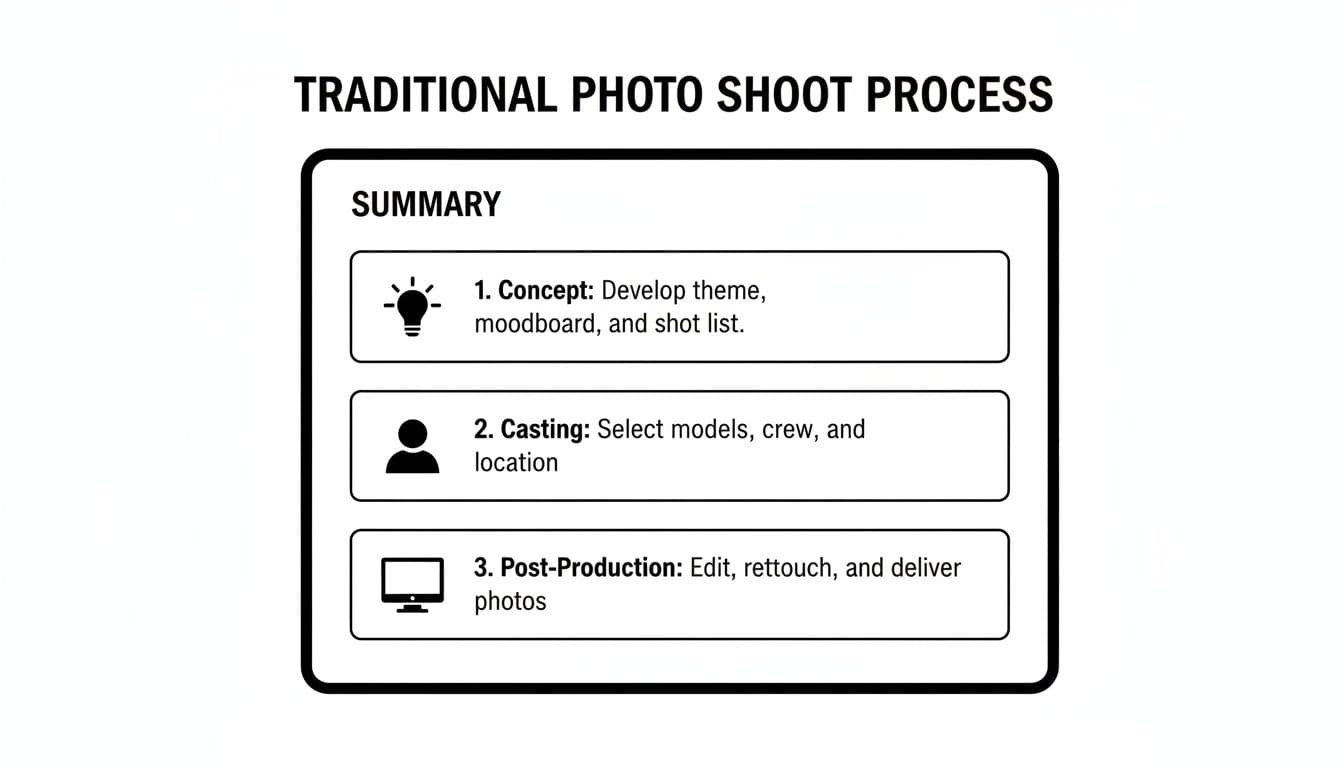
A diagram outlining the three traditional photo shoot process steps: Concept, Casting, and Post-Production.
From locking down a concept to casting the right talent and then waiting on post-production, each phase drains time, money, and coordination.
The Real-World Impact on Your Business
Let's cut to the chase and compare the two approaches on the metrics that actually matter for a growing brand. The differences aren't just small tweaks; they're game-changing.
- Cost: Traditional shoots are loaded with heavy fixed costs. You're paying for the studio, the photographer's day rate, model agency fees, stylists, and maybe even travel. AI simply erases most of these, often slashing the cost per image by up to 90%.
- Speed: A standard photo shoot workflow, from the first planning meeting to getting your final assets, can easily take 4-6 weeks. An AI platform can spit out ready-to-use visuals in minutes. Your time-to-market shrinks from over a month to just a few hours.
- Scale: Want to scale up a traditional shoot? That means booking more models, adding more shoot days, and watching your budget balloon. With AI, scaling is practically effortless. Generating 1,000 images takes only a little more time than generating 10.
This isn't just about making the old process cheaper. It’s about unlocking a new level of business agility. Brands can now test more product variations, refresh their website content constantly, and jump on new trends at a speed that was once unimaginable.
Traditional Photo Shoot vs AI-Powered Visuals
To put it in black and white, here’s a direct comparison of how these two approaches stack up when it comes to creating your product imagery.
| Metric | Traditional Photo Shoot | AI-Powered Solution (e.g., WearView) |
|---|---|---|
| Cost | $5,000 - $20,000+ per shoot | $20 - $100 per month for hundreds of images |
| Time | 4-6 weeks from concept to final images | Minutes from upload to final images |
| Scale | High cost and complexity to scale | Effortless and inexpensive to scale |
| Diversity | Limited by model availability and budget | Unlimited, instant access to any demographic |
| Flexibility | Rigid; locked into one location/style per shoot | Limitless; change models, backgrounds, and styles on the fly |
| Revisions | Requires expensive and time-consuming reshoots | Instant and free; just generate a new image |
The table makes it clear: for the core task of getting products on models, the operational advantages of AI are overwhelming.
Creative Flexibility and True Diversity
Beyond the numbers, the creative gulf is enormous. Traditional photo shoot modelling is stuck in the physical world. You're limited by the models you can actually book, the locations you can afford to get to, and even the weather on the day of the shoot.
AI has none of these handcuffs.
Want to see how your new line looks on models with a wide range of ethnicities, ages, and body types to make your brand feel truly inclusive? You can generate them instantly. Need to place your product in a sun-drenched café in Paris or a neon-lit street in Tokyo without leaving your office? Done. This freedom is also a great complement to other AI tools, like the AI Headshot Generator tools that are changing how professionals create their own visual assets.
This shift transforms product photography from a rigid, high-stakes project into a fluid, dynamic creative playground. It puts brands—not budgets and logistics—back in complete control of their visual identity.
Meeting the Demand for Diversity and Inclusivity in Fashion
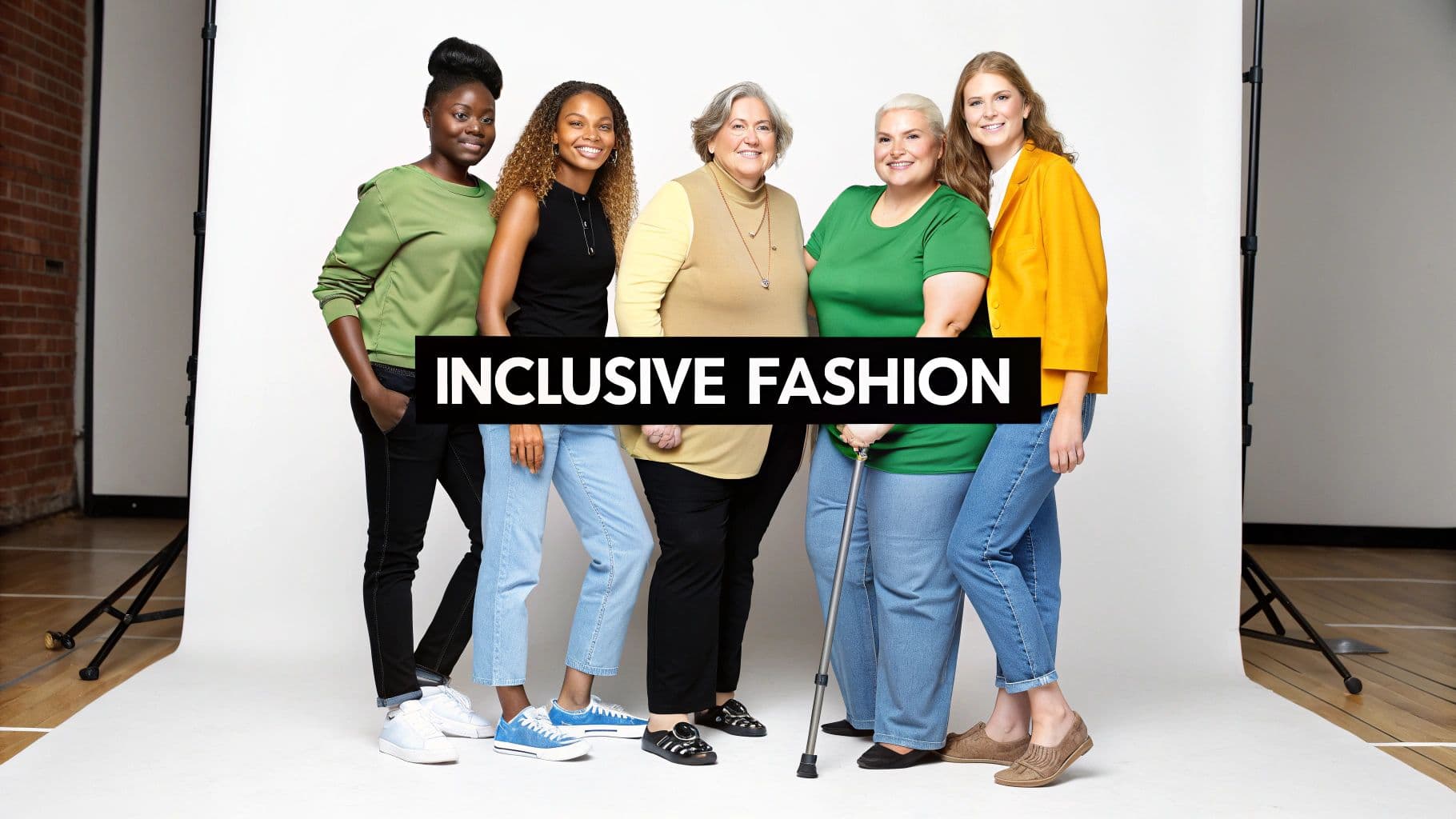
Five diverse women of different ages and body types smiling, promoting inclusive fashion.
Let's be honest: today’s customers want to see more than just your products. They want to see themselves. The days of relying on a single, narrow standard of beauty are officially over, and brands that haven't caught on are already falling behind.
This isn’t just about feeling good; it's a powerful shift in the market. When you showcase a genuine range of models—across different ethnicities, body sizes, ages, and abilities—you’re not just being inclusive. You're building a deeper, more authentic connection with a much bigger audience. That's the fast track to real customer loyalty.
The Business Case for Inclusion
The numbers don't lie. A recent study found that a staggering 62% of global shoppers actively prefer buying from brands that feature inclusive models. Better yet, those inclusive campaigns boosted sales by an average of 22%. You can dig deeper into the data yourself in The State of Fashion report.
This is about more than just checking a box on a marketing plan. It’s about reflecting the reality of who your customers are. When shoppers see people who look like them wearing your clothes, they feel seen and understood. That feeling is what turns a one-time buyer into a loyal advocate.
True inclusivity in photo shoot modelling isn't just a marketing tactic; it's a reflection of a brand's core values. It tells customers, "We see you, we celebrate you, and we design for you."
The Traditional Casting Challenge
So, why isn't every brand's website a perfect picture of diversity? Because achieving it the old-fashioned way is incredibly difficult and expensive.
Trying to build an inclusive campaign through traditional photo shoots means hitting some serious roadblocks:
- Limited Talent Pools: Finding models representing a wide range of body types, ages, and backgrounds can be a huge headache, especially if you're not in a major fashion hub.
- Sky-High Agency Fees: The more specific your casting needs, the higher the agency fees. Sourcing diverse talent often comes with a premium price tag that blows up the budget.
- Logistical Nightmares: Trying to coordinate schedules, travel, and fittings for a large, diverse group of models adds layers of complexity. One small delay can have a costly domino effect.
These real-world obstacles often force brands to compromise, watering down their inclusivity goals and failing to truly connect with their audience. This is exactly where modern tools are changing the game. AI-powered platforms can now generate inclusive, on-brand model imagery in an instant, finally making it possible for your visuals to reflect the beautifully diverse world we live in.
Your Practical Planning Checklist for Better Visuals
A killer photo shoot, whether it's on a real set or powered by AI, doesn't just happen. It’s the result of smart planning. Think of it like cooking a great meal: forget a key ingredient or mess up a step, and the whole thing falls apart. This checklist is your recipe, making sure your final images actually hit the mark for your brand.
Every successful campaign starts with a crystal-clear vision. Without one, you’re just snapping pictures. A solid creative brief is your guide, the document that keeps everyone—from the model to the editor—pointed in the same direction.
For a Traditional Photo Shoot
When you’re juggling real people, locations, and gear, getting organized is everything. This part of the checklist is all about nailing the logistics and managing the budget to dodge those expensive, last-minute headaches.
- Define Your Creative Brief: Before you do anything else, nail down your concept. Who are you trying to reach? What's the vibe? A tight brief gets the photographer, stylist, and model all on the exact same page.
- Lock Down Your Budget: You have to account for everything. Photographer and model fees, studio rental, gear, styling, and all the post-production work. A line-by-line budget means no nasty surprises when the invoices roll in.
- Create a Detailed Shot List: This is non-negotiable. List every single shot you need, down to the angles, poses, and specific products. This makes your time on set hyper-efficient and guarantees you walk away with every asset you planned for.
- Clarify Post-Production Needs: Be specific about retouching, color grading, and how you need the final files formatted. Figuring this out upfront can save you weeks of painful back-and-forth later on.
A well-planned shoot respects everyone's time and money. The more work you put in beforehand, the smoother the shoot day will be. And smoother shoots always produce better, more powerful images.
For an AI-Driven Workflow
Switching to an AI process for photo shoot modelling means your prep work looks a little different. Instead of managing people and places, you're focused on prepping digital assets and giving the AI super-clear instructions. This is where the efficiency kicks in.
- Prepare High-Quality Garment Photos: Your AI images will only ever be as good as the photos you feed them. You need clean, well-lit shots of your clothes, either on a hanger, laid flat, or on a mannequin. For a deep dive, check out our guide on clothing brand photography.
- Define Your Ideal Model Personas: Who is your dream customer? Write detailed descriptions of the models you want the AI to create. Think ethnicity, age, hairstyle, and the overall attitude they should have.
- Establish Brand Aesthetic Guidelines: Write down your brand's visual DNA. Specify the types of backgrounds, the lighting style, and the overall mood you're after. This ensures the AI spits out images that are consistently on-brand.
- Plan Asset Distribution: Know exactly where these images are going to live—product pages, social media feeds, email newsletters, or digital ads. This helps you generate images with the right aspect ratios and compositions right from the start, saving you a ton of cropping and resizing headaches later.
This kind of prep work ensures you're squeezing every last drop of value out of the technology.
When Should AI Be Part of Your Photo Shoot Strategy?
Figuring out when to use AI versus a traditional photo shoot isn't a one-and-done decision. The smartest brands aren't choosing one over the other; they're choosing the right tool for the right job, and integrating AI is a tactical move that can give you a serious edge in the right situations.
Think of it like this: a traditional shoot is your blockbuster movie. It's perfect for a flagship campaign that needs a singular, artistic vision and has a budget to match. AI, on the other hand, is your agile, in-house production studio—built for speed and volume, churning out high-quality, targeted content without the massive overhead.
When AI Is the Obvious Choice
Some business needs are tailor-made for an AI-first approach. These are the moments where speed, cost, and the sheer volume of content are your top priorities, and the logistics of a physical shoot would just bog you down.
AI is the clear winner when you need to:
- Fill Huge E-commerce Catalogs: Got hundreds or thousands of products? Instead of an endless string of photoshoots, AI can generate consistent, on-model images for every single SKU. This completely changes the game for large inventories. (We dive deep into this process in our guide to AI product photography.)
- Rapidly A/B Test Ad Creative: Ever wonder if your new jacket sells better on a blonde model or a brunette? Or with a city background versus a beach? AI lets you create dozens of ad variations in minutes, so you can test what actually resonates with your audience instead of just guessing.
- Target Global Markets: Launching in a new country? You can instantly generate model imagery that reflects the local customer base, making your brand feel relevant and familiar from day one. No need to fly a crew to another continent.
- Constantly Fuel Social Media Feeds: To stay relevant on social media, you need a constant stream of fresh visuals. AI lets you generate a nearly endless supply of new model shots, keeping your feeds engaging without the cost or hassle of monthly photoshoots.
The real magic of AI in photo shoot modelling is its ability to transform logistical headaches into simple, creative tasks. It just removes the bottlenecks that have always held brands back.
Now, does this mean traditional shoots are dead? Absolutely not. For that one-of-a-kind hero campaign featuring a specific celebrity, or a highly conceptual shoot that requires a uniquely human touch, nothing beats the real thing. By understanding when to use each, you can build a smarter, more efficient, and far more powerful visual content strategy.
Got Questions About Photo Shoot Modelling? We've Got Answers.
Jumping into the world of modern visual creation can feel like a lot to take in. Below, we're cutting through the noise to give you direct answers to the most common questions brands have, especially when weighing traditional shoots against newer AI-powered options.
How Does AI Image Quality Really Stack Up Against Photography?
Let's be honest, this is the big one. The latest AI platforms are now creating photorealistic, high-resolution images that are often genuinely hard to tell apart from a professional camera shot. For the bread and butter of e-commerce—product pages, digital ads, social media posts—these visuals are more than ready for prime time. They deliver clean, consistent results without the headaches and variables of a physical set.
The tech has gotten incredibly good at mimicking believable textures, accurate lighting, and natural-looking models that blend perfectly with your products.
For most commercial needs, the quality isn't just comparable—it's been fine-tuned for digital screens, ensuring your visuals pop and engage, no matter where they're seen.
Is It Expensive to Get Started With AI for Photo Shoots?
Not at all. In fact, it’s one of the biggest reasons brands are making the switch. AI solutions completely sidestep huge costs like model fees, studio rentals, location permits, and a photographer's day rate. This finally puts top-tier photo shoot modelling within reach for startups and smaller brands who just don't have a massive marketing budget.
Most AI platforms run on a subscription or pay-per-image basis. This flips a large, unpredictable one-off cost into a small, manageable monthly expense, letting you churn out a huge volume of images for less than the cost of a single traditional photo shoot.
Can AI Create Models That Actually Fit My Brand's Vibe?
Absolutely. This is where it gets fun. The best AI platforms give you granular control to generate models who are a perfect match for your brand’s specific identity. You can dial in the details—from specific ethnicities and ages to hair styles and the overall aesthetic you're going for.
This level of pinpoint control means the models in your images aren't just generic faces; they genuinely reflect your target customer and strengthen your brand's unique look. It completely bypasses the limits of casting calls, giving you an almost infinite lineup of on-brand talent, ready in an instant.
Ready to create stunning, on-brand model imagery in minutes, not weeks? With WearView, you can generate thousands of unique visuals at a fraction of the cost of a traditional shoot. Get started with WearView today and see the difference for yourself.
WearView Team
WearView Content & Research Team
WearView Team is a group of fashion technology specialists focused on AI fashion models, virtual try-on, and AI product photography for e-commerce brands. We publish in-depth guides, case studies, and practical insights to help fashion businesses improve conversion rates and scale faster using AI.