February 23, 2026•19 min read
8 Essential Model Poses Fashion Brands Should Master in 2026
Discover 8 essential model poses fashion brands use to boost sales. Learn how to execute each pose for lookbooks, e-commerce, and social media.
8 Essential Model Poses Fashion Brands Should Master in 2026
In the competitive landscape of fashion e-commerce, a compelling image does more than just display a product—it tells a story, evokes an emotion, and drives a purchase. The difference between a product that languishes and one that sells out often comes down to a single, critical detail: the pose. The right model poses fashion not just as clothing, but as an experience, a lifestyle, and an identity. From the classic 'S-Curve' that accentuates a silhouette to the dynamic 'Walking Stride' that breathes life into activewear, each pose serves a strategic purpose. If you want the fundamentals first, start with mastering the fashion model pose.
This guide breaks down 8 foundational poses used by top brands, providing actionable insights into how to execute them, match them to specific garments, and even generate them instantly using AI tools. We'll analyze why each pose works, offering tactical takeaways to help you create stunning, high-converting imagery that stops the scroll and captures your audience's attention. While static images are powerful, a complete visual strategy often includes motion; to truly understand how visual impact drives sales, consider learning how to create compelling product videos that highlight your fashion items effectively. Ultimately, this article will help you transform your product visuals from simple pictures into powerful sales assets.
1. The S-Curve Power Pose
A cornerstone of model poses fashion, the S-curve is a timeless stance that creates a fluid, dynamic silhouette. Its power comes from contrapposto, an artistic principle where the model’s weight is shifted onto one leg, causing the hips and shoulders to rest at opposite angles. This creates a gentle 'S' shape through the torso, which simultaneously elongates the body and highlights the garment's fit and flow.
This pose is a go-to for luxury brands like Chanel and high-fashion e-commerce platforms such as Net-a-Porter because it conveys elegance and confidence. The S-curve works exceptionally well for form-fitting apparel, including dresses, tailored suits, and bodysuits, as it accentuates the body's natural lines without appearing stiff or unnatural. The subtle tilt of the hips and torso draws the eye across the product, encouraging a longer, more engaged look.
Strategic Application & Tips
To implement this pose effectively, focus on subtle execution. The goal is a relaxed, asymmetrical posture rather than an exaggerated curve.
- Garment Focus: Ideal for showcasing the waistline of a dress, the drape of a long coat, or the sharp tailoring of a blazer.
- Arm Placement: Keep arms soft and natural. One hand can rest lightly on the hip, in a pocket, or hang loosely at the side to avoid a rigid appearance.
- Vary the Intensity: A slight curve works for minimalist or casual brands, while a more pronounced S-shape fits a dramatic, high-fashion aesthetic.
For e-commerce brands aiming for consistency across diverse collections, AI tools can standardize this pose. A dedicated pose control ai system allows you to define the exact degree of the curve, ensuring every AI-generated model aligns with your brand’s visual identity.
2. The Over-the-Shoulder Back Look
A powerful pose for editorial and e-commerce, the over-the-shoulder look creates intrigue while directing focus to the back details of a garment. The model faces away from the camera and glances back, a motion that feels both candid and deliberate. This pose is a staple in model poses fashion because it reveals construction elements like intricate seams, zippers, cutouts, or draping that are invisible from the front.
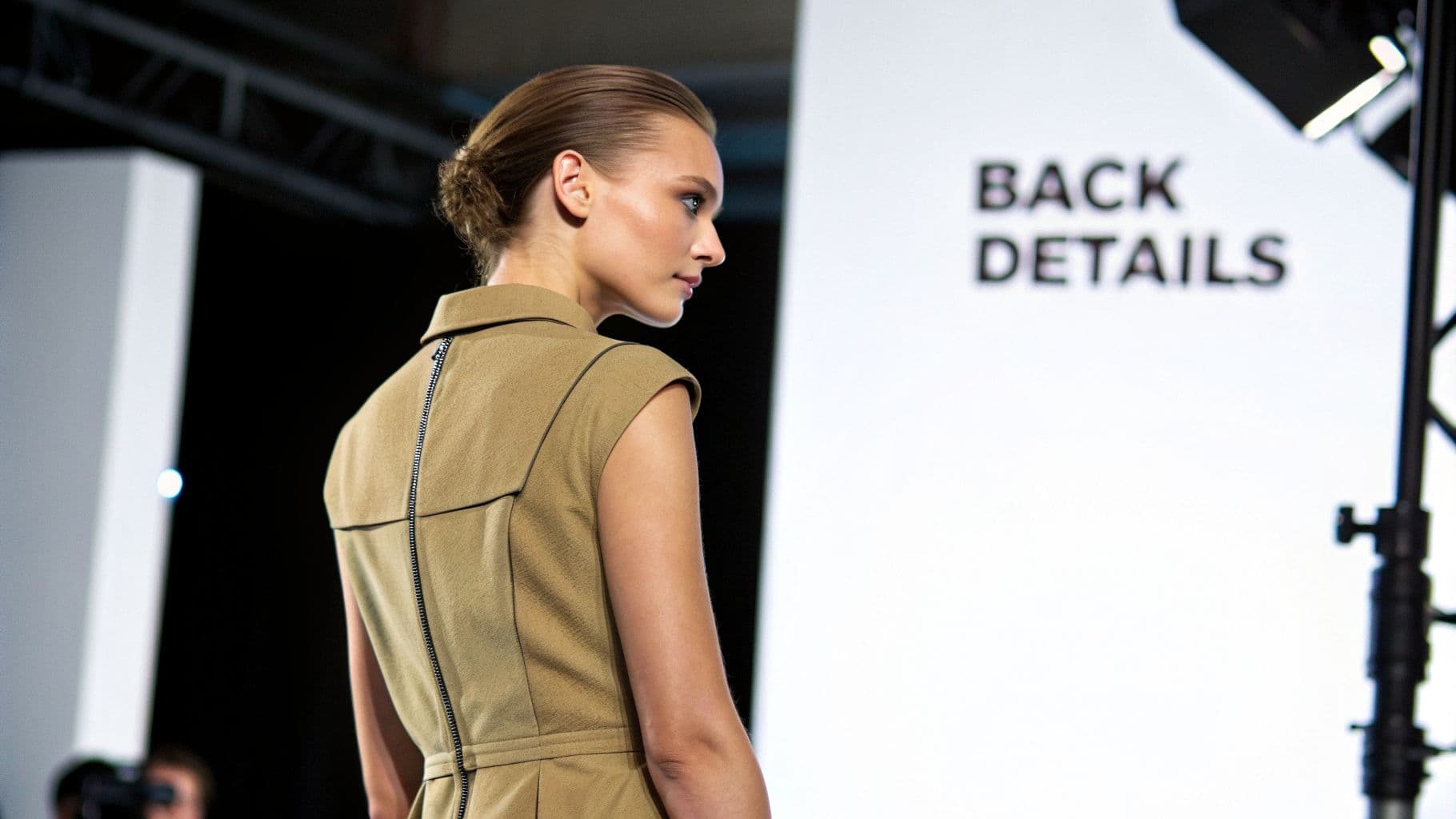
A model in a tan sleeveless dress, showing back zipper details, looks left at a fashion event.
This stance is favored by high-end brands like Alexander McQueen and wedding dress designers who need to communicate superior craftsmanship. For e-commerce, it adds a layer of visual information that can justify a premium price point. By showcasing the 360-degree design of a piece, it tells a more complete product story, moving beyond a simple front-facing shot to offer a sense of discovery and sophistication.
Strategic Application & Tips
Effective execution of this pose depends on the garment's specific features and the desired mood. The turn of the head and shoulders should feel natural, not forced.
- Garment Focus: Essential for gowns with open backs, blouses with button-down details, or jackets with unique structural elements. It also works well to highlight the fit of denim or trousers from behind.
- Shoulder Angle: A slight angle of the shoulders toward the camera can reveal the side profile and seam work, providing even more product information.
- Create a Narrative: Pair this pose with a forward-facing shot in your product gallery to give shoppers a comprehensive view of the item, answering questions about fit and design before they are asked.
For brands that need to show detailed craftsmanship, AI tools can create perfectly angled back views. A pose control ai platform enables you to specify the exact degree of the shoulder turn, ensuring every AI-generated model highlights the product’s back details with complete consistency.
3. The Walking/Striding Motion Pose
One of the most effective model poses fashion brands can use to inject energy into a campaign is the walking or striding motion. This dynamic pose captures the model mid-stride, creating a powerful illusion of movement that conveys confidence, purpose, and a lifestyle in action. It transforms a static image into a narrative moment, making the clothing feel functional and aspirational.
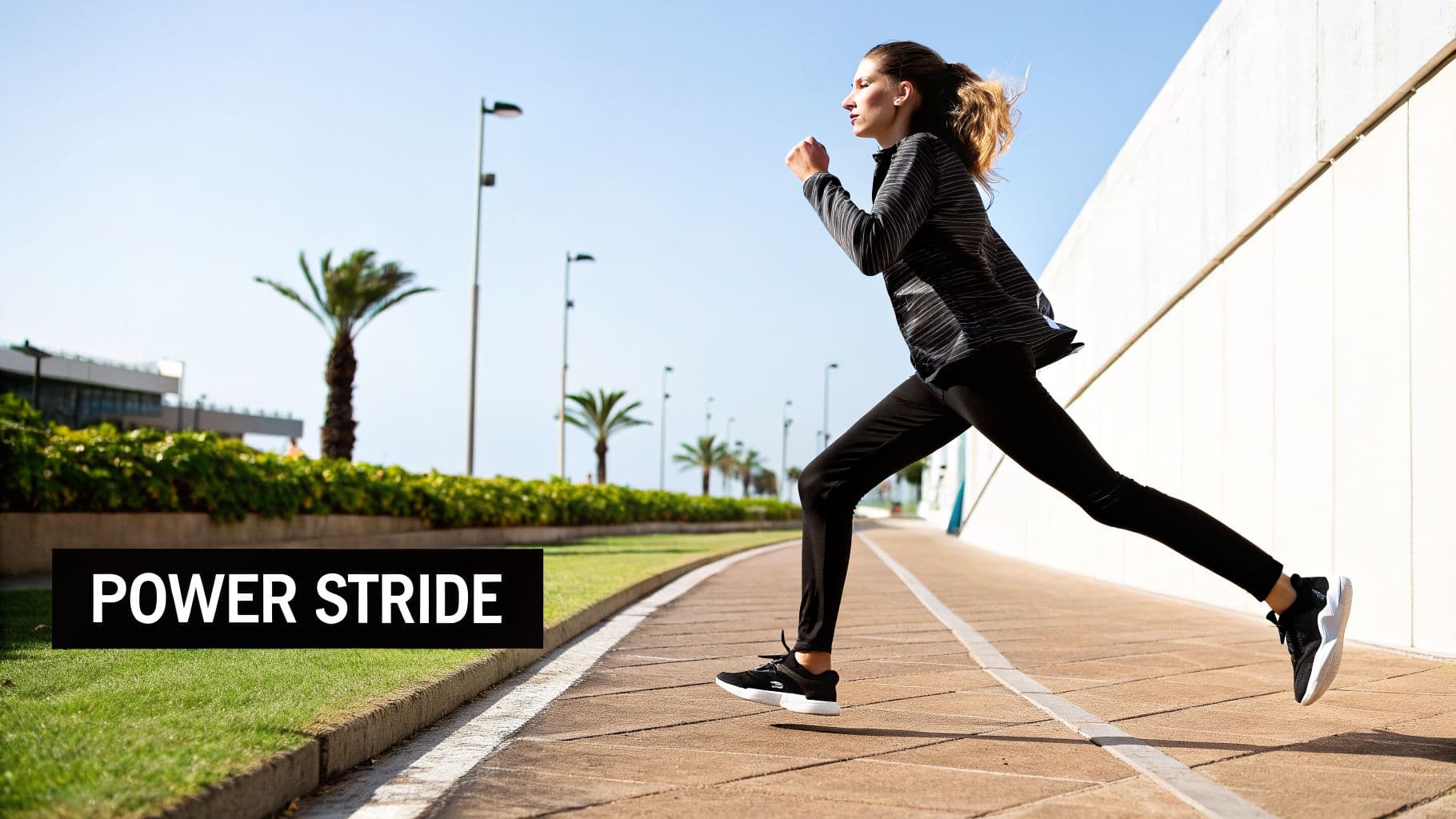
A young woman jogs purposefully on a sunny day along a path lined with palm trees and green foliage.
This pose is a staple for athletic and lifestyle brands like Lululemon and Nike, as it naturally showcases the performance and flexibility of activewear. However, its application extends to luxury casualwear and street style, where it helps garments appear less staged and more integrated into daily life. The striding motion naturally elongates the legs and torso, creating a flattering line that highlights the cut and flow of everything from trousers and skirts to outerwear.
Strategic Application & Tips
To make the walking pose look authentic, the entire body must reflect the motion, not just the legs. The goal is to capture a candid, unforced moment that feels both energetic and graceful.
- Garment Focus: Excellent for demonstrating the movement of fabrics, such as the swing of a coat, the stretch of leggings, or the drape of a dress. It is also perfect for highlighting footwear.
- Authentic Movement: Ensure arms swing in natural opposition to the legs (e.g., right leg forward, left arm forward). A slight forward tilt of the torso and hip rotation adds to the realism.
- Background Synergy: Pair this pose with lifestyle-appropriate backgrounds like city streets, parks, or running tracks to reinforce the story and create a more immersive brand experience.
For brands creating video content for platforms like TikTok or Instagram Reels, animating this pose is key. An AI video generator can take a static AI-generated model in a walking pose and create a seamless motion clip, bringing lifestyle campaigns to life without the need for live video shoots.
4. The Hand-in-Pocket Casual Stance
A staple in modern model poses fashion, the hand-in-pocket stance projects a casual, approachable energy. This relaxed posture involves the model placing one or both hands into the pockets of their pants, jacket, or even a dress, creating a look that is effortlessly cool and authentic. Its value lies in its ability to break down the formal barrier often seen in high-fashion photography, making garments feel more wearable and relatable to the everyday consumer.
This pose is heavily favored by brands built on an accessible, lifestyle-focused identity, such as Levi's, Everlane, and Uniqlo. It is particularly effective for showcasing denim, outerwear, and casual separates, as it naturally draws attention to the garment's construction, fit, and practical features like pocket depth. The gesture suggests comfort and ease, resonating strongly in social commerce contexts where authenticity drives connection and conversion.
Strategic Application & Tips
To master this pose, the key is to maintain a sense of genuine ease. The action should look like a natural habit rather than a staged position, helping customers envision themselves wearing the clothing.
- Garment Focus: Perfect for demonstrating the fit of jeans or trousers around the hips, the structure of a casual blazer, or the relaxed drape of a hoodie.
- Expression is Key: Pair the pose with a genuine smile or a relaxed, neutral facial expression to amplify the feeling of authenticity and approachability.
- Vary Hand Placement: Alternate between placing just the thumb in the pocket, showing the entire hand going in, or hooking fingers over the pocket's edge. This adds subtle variety to product shots.
For direct-to-consumer brands that rely on building a consistent, relatable visual identity, this pose is a powerful tool. Using AI to generate a series of images featuring the same model in this stance across different products can build brand familiarity and create a cohesive, lifestyle-oriented shopping experience.
5. The Cross-Body Arm Position
A staple in model poses fashion, the cross-body arm position creates a composed, self-assured aesthetic that is both accessible and elegant. This pose involves one arm crossing the torso while the other rests naturally, drawing attention to the garment's texture and fit across the chest and waist. It establishes a subtle triangular composition that narrows the silhouette and adds a touch of thoughtful introspection to the model's presence.
This pose is frequently seen in campaigns for luxury knitwear brands like Loro Piana and contemporary retailers such as COS and Everlane. Its appeal lies in its ability to appear both styled and candid, making it perfect for showcasing cozy sweaters, structured blazers, and layered outfits. The gesture suggests comfort and confidence, allowing customers to envision themselves wearing the piece in their own daily lives while still maintaining a high-fashion sensibility.
Strategic Application & Tips
Effective execution of the cross-body arm position relies on maintaining a relaxed and natural posture, avoiding any sense of stiffness or discomfort.
- Garment Focus: Excellent for highlighting the texture of knitwear, the fit of a button-up shirt, or the structure of a blazer's lapels.
- Arm Placement: Position the crossing arm at or near the natural waist to maintain balanced proportions. Let the other hand rest in a pocket or hang loosely at the side.
- Vary the Look: Pair the pose with a gentle head tilt to add elegance, or have the model look slightly away from the camera for an editorial feel.
- Create Cohesion: Use this pose consistently for 10-20% of your product catalog to build a recognizable brand image without becoming repetitive.
For brands digitizing their collections, replicating this pose's subtle variations is key. Using a product to model ai service, teams can adjust the exact angle and height of the arm cross, ensuring every image perfectly captures the desired mood, from casual to highly stylized.
6. The Seated/Sitting Down Pose
The seated pose introduces a grounded, approachable aesthetic to model poses fashion, shifting the focus from high-fashion drama to real-world context. By having the model sit on a chair, stool, or implied surface, brands can create an intimate connection with the viewer, mirroring how consumers often browse products on mobile devices. This pose is especially effective for showcasing lower-body garments and footwear with a relaxed confidence.
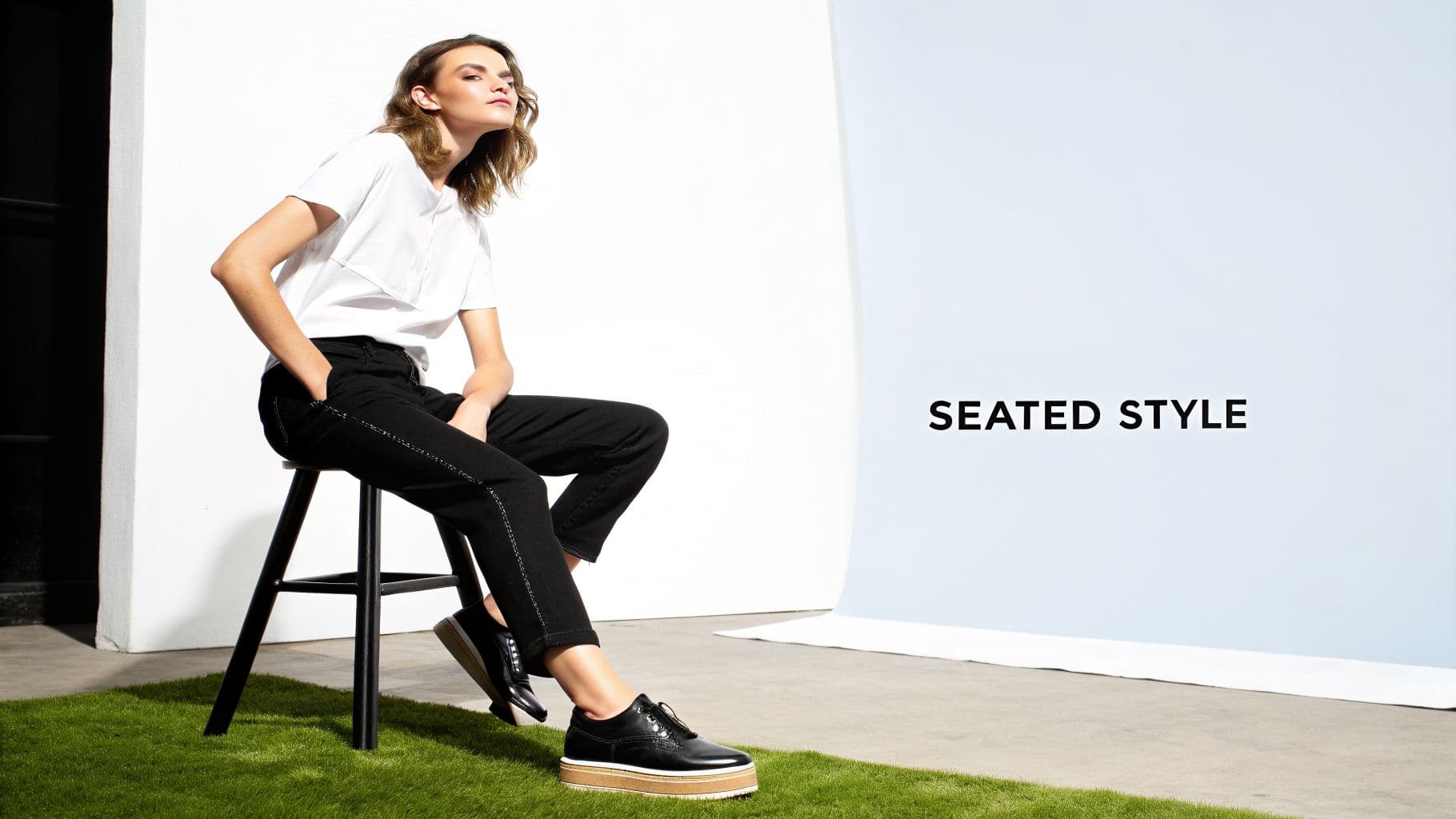
A stylish woman in a white t-shirt and black jeans poses on a stool with platform shoes.
This approachable stance is widely used by contemporary e-commerce platforms like ASOS and Zara, which blend lifestyle and product photography. The seated pose removes formality, making it easier for customers to envision themselves wearing the clothes in everyday life. It’s also a powerful tool for demonstrating the comfort and fit of pants, skirts, and shorts, as the fabric drapes and settles naturally around the body in a way that standing poses cannot fully capture.
Strategic Application & Tips
Effective execution of the seated pose relies on intentional positioning and context to highlight specific product features while telling a subtle story.
- Garment Focus: Perfect for drawing attention to footwear, the hemline of a skirt, or the silhouette of tailored trousers and denim.
- Limb Placement: Position feet and legs deliberately. Crossing legs at the ankles creates an elegant line, while placing one foot forward flatters a shoe's design.
- Vary the Scenery: Use different seating heights, from low stools to high chairs, to alter the composition and mood. Incorporating contextual elements like a book or a laptop can add a layer of storytelling.
For a complete product gallery, combine seated poses with standing shots at a 30/70 ratio. This gives customers a comprehensive view of the garment’s fit and drape in different situations, addressing potential buying hesitations before they arise.
7. The Profile/Side Angle Shot
A critical tool in the model poses fashion arsenal, the profile shot showcases a garment's complete silhouette from the side. This perspective offers a unique view that reveals the precise cut, seam placement, and overall construction that front and back angles often miss. It’s an essential pose for communicating the quality and architectural integrity of a piece.
This angle is heavily favored by luxury tailoring brands like Thom Browne and high-fashion editorials because it speaks to craftsmanship and attention to detail. The profile shot is exceptionally effective for structured garments, including tailored blazers, fitted trousers, and couture gowns. By presenting the garment's side view, brands can highlight its true shape, the curve of a lapel, or the exact fit along the back, which justifies a premium price point.
Strategic Application & Tips
To use this pose effectively, the focus must be on precision and posture. The goal is to present an authentic and flattering view of the garment’s engineering.
- Garment Focus: Reserve this pose for structured, tailored items where the side view reveals important design features, like darting, seam work, or the fall of the fabric.
- Posture is Key: The model must maintain perfect, straight posture to display the garment as the designer intended. Any slouching can distort the fit.
- Create a 360° View: Always pair profile shots with front and back views on product detail pages to give customers a complete understanding of the item.
- Lighting and Expression: Use lighting to emphasize textures and construction lines. A neutral expression or subtle smile keeps the focus on the product and maintains an editorial feel.
For brands that value precision, using a custom-generated AI fashion model can ensure flawless posture and consistent angles across all profile shots, reinforcing a message of quality and meticulous design.
8. The Elevated/Hands-Up Pose
A dynamic and expressive stance, the elevated or hands-up pose involves raising the arms overhead, resting hands on the head, or lifting them to shoulder height. This movement creates an open, confident silhouette that is central to many model poses fashion catalogs. The pose naturally elongates the torso, defines the waistline, and directs attention to the garment’s fit across the shoulders, chest, and arms, making it exceptionally versatile for showcasing full-body proportions.
This pose is favored by lifestyle and swimwear brands like Aerie and athleisure retailers because it communicates a sense of freedom, joy, and energy. By opening up the body, it effectively displays sleeve details, armhole construction, and the overall drape of tops and dresses. The upward motion draws the viewer's eye vertically, creating a flattering, aspirational image that resonates strongly on social media and in video content.
Strategic Application & Tips
To make this pose feel authentic, the focus should be on creating a relaxed, powerful, and unforced look. The arm position should complement the garment and the overall brand message.
- Garment Focus: Perfect for swimwear, summer dresses, tank tops, and activewear. It highlights sleeveless designs and the fit of athletic apparel during movement.
- Arm Placement: Vary the arm positions to avoid a static feel. One arm can be fully extended while the other is bent, or both can be loosely placed behind the head to create different lines and moods.
- Vary the Intensity: A soft, gentle lift suits a serene, lifestyle-focused shoot, whereas a more dynamic, high-energy extension is perfect for fitness or festival wear campaigns.
For engaging video content, especially for platforms like Instagram Reels and TikTok, this pose can be animated to show the garment in motion. An AI Video Generator can create short clips of AI models fluidly raising and lowering their arms, giving customers a 360-degree view of the product’s fit and fabric movement.
8-Point Fashion Pose Comparison
| Pose | Implementation Complexity 🔄 | Resource Requirements ⚡ | Expected Outcomes ⭐📊 | Ideal Use Cases | Key Advantages 💡 |
|---|---|---|---|---|---|
| The S-Curve Power Pose | Low–Medium — easy weight shift and tilt | Minimal studio setup; AI-friendly for consistent replication | ⭐ High perceived value; improves 3D garment dimension | Fitted dresses, tailored jackets, e‑commerce product grids | Versatile, universally flattering; consistent AI replication |
| Over-the-Shoulder Back Look | Medium — precise shoulder/head angle needed | Simple set + directional lighting; may need multiple angles | ⭐ Highlights back details; elevates editorial quality | Open-back dresses, garments with seam/zippers, bridal | Differentiates imagery; showcases hidden craftsmanship |
| Walking / Striding Motion Pose | Medium–High — timing and natural swing required | Space for movement; multi-frame capture or video/AI animation | ⭐ Strong engagement; conveys energy and lifestyle (high mobile lift) | Activewear, sneakers, lifestyle campaigns, social content | Conveys motion/confidence; highly engaging on social platforms |
| Hand-in-Pocket Casual Stance | Low — simple, natural stance | Minimal props; everyday/street-style settings work best | ⭐ High relatability and social engagement | Denim, casualwear, DTC lifestyle brands | Showcases functionality (pockets); approachable, relatable tone |
| Cross-Body Arm Position | Low–Medium — careful arm height/placement | Minimal studio needs; works well in close and full shots | ⭐ Flattering torso fit; improves focus on sleeves/shoulder fit | Knitwear, sweaters, blazers, layered looks | Frames the body; highlights sleeve fit and creates focal point |
| Seated / Sitting Down Pose | Medium — requires seating choice and leg positioning | Seating props and varied heights; careful composition | ⭐ Strong for footwear/lower-body; increases mobile engagement | Footwear, pants/skirts, plus-size, storytelling content | Demonstrates real-world wearability; allows prop integration |
| Profile / Side Angle Shot | Medium–High — demands perfect posture/alignment | Minimal props but precise lighting to show seams/proportions | ⭐ Essential for fit accuracy; highlights silhouette & construction | Tailoring, suiting, structured dresses and premium garments | Reveals true proportions and seam placement; highly informative |
| Elevated / Hands-Up Pose | Medium — arm placement affects naturalness | Minimal setting; benefits from video for motion/engagement | ⭐ Flattering torso/waistline; high aspirational engagement | Swimwear, summer wear, athleisure, social/video content | Elongates silhouette; conveys confidence and energetic lifestyle |
From Poses to Profits: Automating Your Visual Strategy
Throughout this guide, we've broken down the eight foundational model poses fashion brands use to create compelling, high-converting imagery. From the dynamic S-Curve to the casual Hand-in-Pocket Stance, each pose serves a specific strategic purpose: to highlight garment features, evoke a mood, and ultimately, connect with the customer. Mastering these poses is no longer just a creative exercise; it's a commercial necessity for anyone selling apparel online.
The core takeaway is that a pose is more than just a model's position; it is a storytelling tool. The choice between a powerful Walking Motion shot and a contemplative Seated Pose can completely alter how a potential buyer perceives a product. Understanding this allows you to build a visual narrative that aligns with your brand identity and speaks directly to your target audience. Your product detail pages will convert better, your lookbooks will feel more cohesive, and your social media content will stop scrolls.
Moving Beyond Manual Execution
The real challenge for modern brands isn't a lack of knowledge, but a bottleneck in execution. Traditional photoshoots are costly, time-consuming, and logistically complex. Arranging for models, photographers, studios, and stylists for every new collection can drain resources that could be better spent on marketing and growth. This is where the strategic application of technology becomes a significant advantage.
By integrating an AI-powered workflow, brands can bypass these traditional hurdles. Imagine having the ability to generate a diverse array of on-model images from a single flat-lay photo, instantly applying any of the poses we've discussed. You can produce a complete set of visuals, from detailed e-commerce shots to aspirational lookbook images, in a fraction of the time and cost. This approach ensures visual consistency and gives you the agility to react quickly to market trends. To truly transform your eCommerce sales and ensure your visual strategy drives maximum impact, consider partnering with a specialized conversion rate optimisation agency. These experts can help refine your entire customer journey, making sure your stunning new visuals lead directly to increased sales.
The Future is On-Demand Visuals
Ultimately, success in fashion e-commerce depends on your ability to present your products in the best possible light, consistently and at scale. Knowing the right model poses fashion photographers use is the first step. The next is to build a system that allows you to deploy them efficiently. By embracing AI tools, you shift your focus from managing logistical headaches to making high-level creative and strategic decisions. This not only elevates your brand's visual presentation but also frees up critical resources, empowering you to build a more resilient and profitable business.
Ready to turn your product flats into a full gallery of on-model photoshoots? With WearView, you can generate every pose discussed in this article in seconds, using AI to create high-quality, brand-aligned imagery on demand. Stop coordinating shoots and start creating with WearView.
WearView Team
WearView Content & Research Team
WearView Team is a group of fashion technology specialists focused on AI fashion models, virtual try-on, and AI product photography for e-commerce brands. We publish in-depth guides, case studies, and practical insights to help fashion businesses improve conversion rates and scale faster using AI.