February 20, 2026•23 min read
The Complete Guide to Finding Models and Running Your First Photoshoot
Discover how to plan and execute a professional model photoshoot. Our guide covers finding models, budgeting, and mastering the technical side for your brand.
The Complete Guide to Finding Models and Running Your First Photoshoot
At its core, a model photoshoot is the art of telling a story with a person, a product, and a camera. For any fashion or e-commerce brand, it’s how you take an item off the rack and place it into a customer's life, helping them see not just the product, but the person they could be while wearing it.
What a Model Photoshoot Can Do for Your Brand
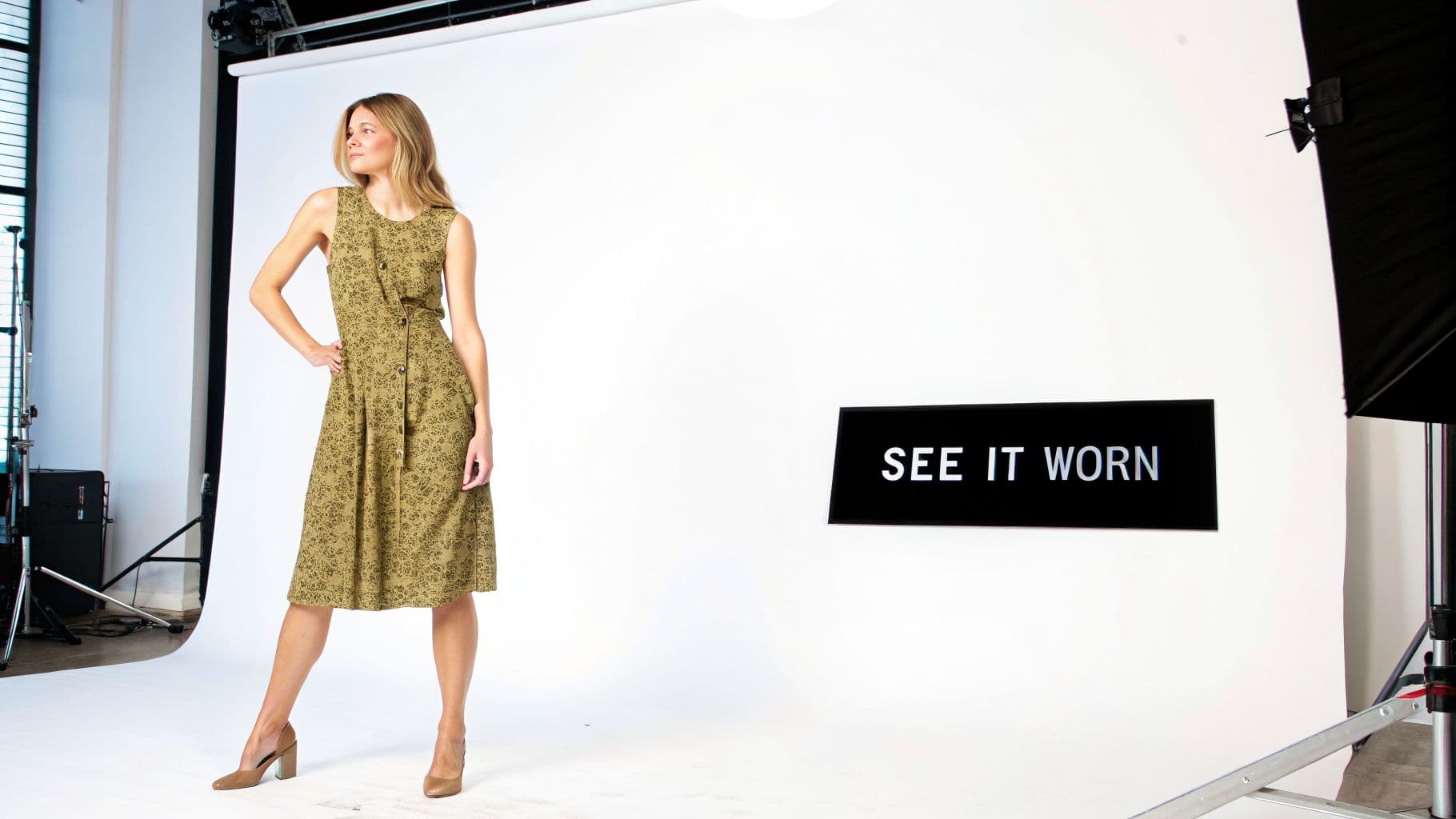
A blonde woman in a floral olive green midi dress and heels posing in a photo studio with a 'SEE IT WORN' sign.
Simply put, on-model photography is the bridge between your product and your customer’s imagination. It’s what separates a static picture of a shirt from a living, breathing narrative that lets a shopper envision themselves in that shirt.
One shows fabric and stitching. The other shows a lifestyle. That emotional connection is what builds a brand identity that truly sticks.
The Power of Visualization and Context
Online shoppers can't touch or try on your products, so they rely on images to answer crucial questions a flat lay on a white background just can't.
- It demonstrates fit and drape. Images show how fabric actually moves and hangs on a human body, giving a much clearer idea of the silhouette and sizing.
- It establishes scale. For accessories like handbags or jewelry, a model gives an instant, intuitive sense of scale that measurements alone can't capture.
- It creates aspiration. A great photoshoot builds a world around your product, giving it a mood and a feeling that makes it far more desirable.
This ability to visualize is a massive driver in online purchasing. When a customer can clearly picture themselves wearing your dress to an event or taking your bag on vacation, their confidence to click "add to cart" skyrockets.
A model photoshoot does more than sell a product; it sells an experience. It’s the tool that transforms a simple e-commerce listing into a compelling brand story, helping customers not just see the item, but feel what it’s like to own it.
Boosting Sales and Building Trust
High-quality, on-model photos have a direct impact on your bottom line. They’re a powerful signal of professionalism and investment, which immediately builds trust with anyone landing on your site. A polished and consistent visual identity tells shoppers you're a serious brand that cares about quality.
The principle holds true across all platforms. For instance, effective product photography is one of the biggest factors in boosting conversion rates on massive marketplaces like Amazon. The logic is simple: clear, appealing images lead to better engagement and more sales.
When you invest in a model photoshoot, you’re doing more than just creating marketing assets. You're crafting a visual language for your brand—one that communicates value, builds customer trust, and ultimately fuels your growth. It’s one of the most powerful investments you can make.
Choosing the Right Type of Model Photoshoot
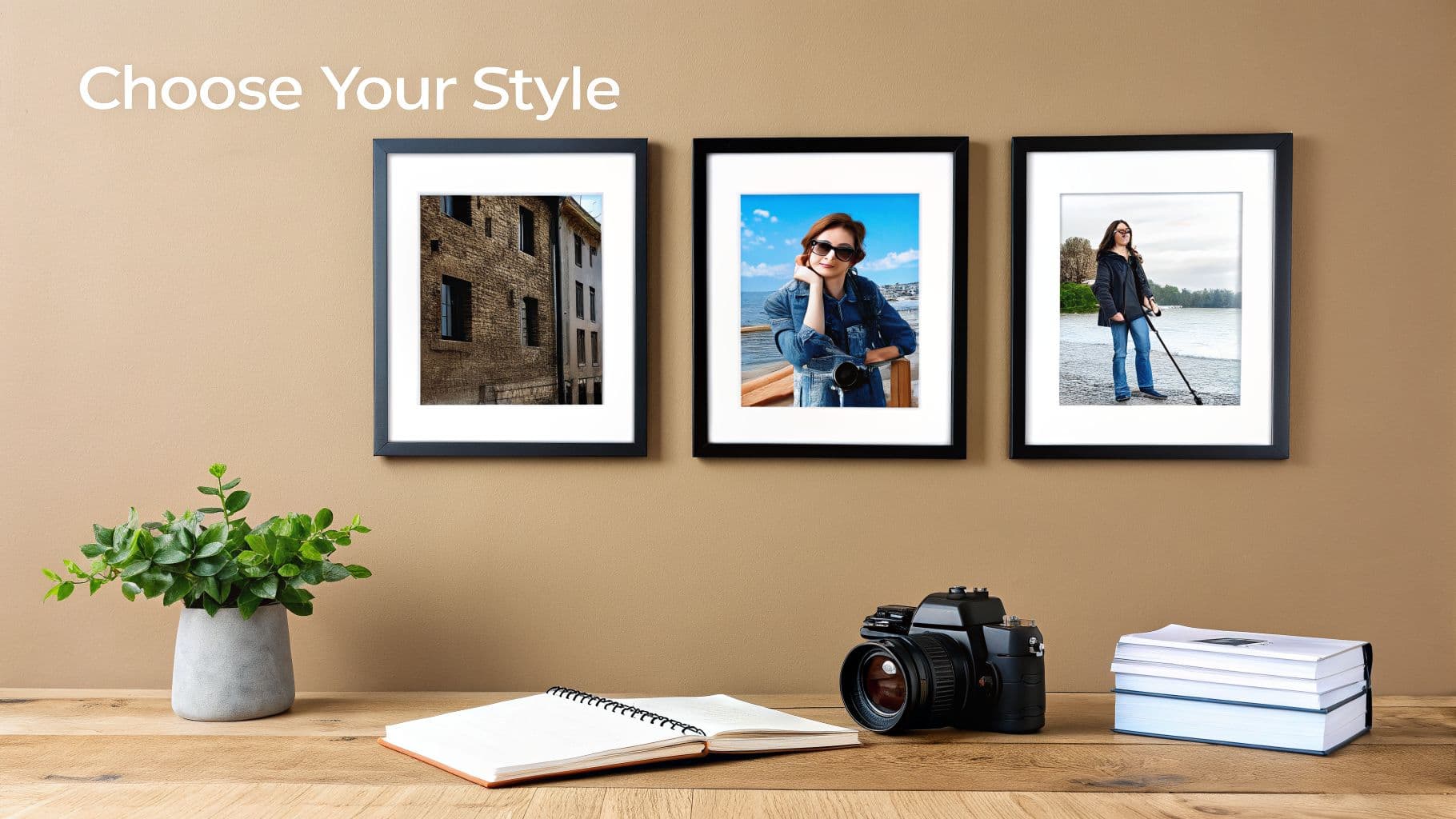
Three framed photos showcasing different styles hang above a desk with a plant and camera.
Planning a model photoshoot without a clear goal is like setting sail without a destination. You’ll definitely get pictures, but they might not take your brand where it needs to go. The most effective shoots are razor-focused, with every creative choice—from the model to the lighting—tied directly to a specific business objective.
So, before you even think about booking a studio or casting talent, you have to define what success looks like. Are you trying to drive immediate sales on a product page? Build brand prestige in a high-fashion magazine? Or are you creating relatable content that will pop on social media? Each of these goals demands a completely different visual language.
E-commerce Photoshoots
Think of e-commerce photoshoots as the engine room of online retail. They're all about clarity, consistency, and conversion. Their main job is simple: show the product accurately and from every conceivable angle so customers can make an informed purchase.
These shoots almost always happen against a clean, neutral background, typically white or light gray, to eliminate any distractions. The lighting is bright and even, the poses are straightforward, and the entire focus is on the garment’s fit, texture, and key details.
E-commerce photography is the digital equivalent of a fitting room. Its job is to answer every potential question a customer has about the product—from how it drapes to the exact shade of color—before they even have to ask.
In the cutthroat world of fashion e-commerce, this isn't just an option; it's the standard. A staggering 95.6% of leading brands use on-model e-commerce shots to showcase their products. On average, these brands feature 5.57 on-model images per item. You'll see sportswear brands push that up to eight images to demonstrate movement, while high-end fashion usually hovers around six.
Editorial Photoshoots
If e-commerce shoots are about showing the product, editorial shoots are about telling a story. These are the highly conceptual, artistic photos you see splashed across the pages of magazines like Vogue or on massive campaign billboards. Their goal isn’t to sell a single sweater but to sell an idea, a mood, or a brand identity.
Editorial shoots are where creativity runs wild. They often feature dramatic lighting, unique and unexpected locations, and avant-garde styling. The focus is on creating a powerful, memorable image that provokes emotion and elevates how people see the brand. While they might not lead to a direct click-to-buy, they build immense brand equity and prestige.
Lifestyle Photoshoots
Lifestyle photoshoots perfectly bridge the gap between the clean, commercial look of e-commerce and the high-concept world of editorial. Here, the goal is to show the product in a real-world context, making it feel relatable, authentic, and aspirational to your target customer.
Picture a model wearing your brand’s sundress while walking on a sunny beach or enjoying a coffee at a trendy café. These images are gold for social media, blogs, and email marketing. They help customers literally envision themselves using your products in their own lives, feeling less like an ad and more like a glimpse into a desirable reality.
If you're stuck for ideas, our post on creative photoshoot ideas for models has tons of concepts you can adapt for a lifestyle shoot.
Lookbook Photoshoots
A lookbook is a curated collection of photos that presents a brand’s latest line in a cohesive, stylish way. It’s more artistic than a standard e-commerce grid but more product-focused than an editorial story. It’s all about showing how different pieces in a new collection can be styled together.
Lookbooks often feature a consistent theme, location, or model to tie the whole collection together visually. They act as a style guide for both consumers and wholesale buyers, defining the season’s aesthetic and highlighting the must-have pieces.
How to Choose Your Photoshoot Style
Feeling a bit lost? Don't worry. Choosing the right style comes down to understanding your core objective. This table breaks down each type to help you pinpoint the best strategy for your brand's immediate needs.
| Photoshoot Type | Primary Goal | Common Use Case | Creative Style |
|---|---|---|---|
| E-commerce | Drive direct sales | Product detail pages (PDPs), online stores | Clean, uniform, product-focused |
| Editorial | Build brand image & prestige | Magazine features, ad campaigns, billboards | Artistic, high-concept, narrative-driven |
| Lifestyle | Create relatable content | Social media, blogs, email marketing | Authentic, aspirational, in-context |
| Lookbook | Showcase a full collection | Seasonal launches, wholesale catalogs | Cohesive, thematic, style-focused |
Ultimately, many brands use a mix of these styles. They'll rely on clean e-commerce shots for the product pages, engaging lifestyle content for Instagram, and a stunning lookbook to announce the new season. The key is to be intentional and match the visual strategy to the business goal.
Your Pre-Production Checklist for a Flawless Shoot
Here’s a secret every seasoned creative director knows: the most important work for a photoshoot happens weeks before anyone steps on set. A great shoot isn’t won with fancy cameras or last-minute heroics; it’s won in pre-production.
Think of it as the difference between building a house with a detailed architectural blueprint versus just a pile of lumber. Meticulous planning is what separates a chaotic, expensive day that misses the mark from a smooth, efficient session that delivers exactly the images you had in your head.
Crafting Your Creative Brief and Mood Board
If you do nothing else, get this part right. The creative brief is the single most important document you’ll create. It’s the North Star for the entire project, outlining everything from the campaign’s goals to the specific feeling you want the final images to evoke. A tight brief kills confusion before it starts.
The mood board is the brief’s visual counterpart. It’s a collage of inspiration—lighting styles, color palettes, model poses, and overall vibe—that translates your written goals into a concrete aesthetic. This isn’t just for you; it’s a critical tool for getting the photographer, stylist, and model all on the same page.
Here’s what your brief and mood board absolutely must cover:
- The "Why": What’s the goal here? Are you selling a new collection, building brand awareness for social media, or refreshing your website?
- The "Who": Who are you talking to? Pinpointing your target audience dictates everything from the model you cast to the clothes they wear.
- The Vibe: Jot down keywords that capture the feeling. Are we talking "moody and nostalgic," or "bright and energetic"?
- Visual Guardrails: Pull reference images that nail the photography style, color schemes, and poses you’re after.
A mood board isn’t just a collection of pretty pictures. It’s a communication tool that guarantees visual consistency, aligning everyone’s creative expectations before the expensive part—the shoot day—even begins.
The Art and Science of Casting
Casting is where your brand's story gets a face. The right model doesn’t just wear the clothes; they connect with your audience on an emotional level, making your products feel relatable and aspirational. You’re not just looking for a certain look—you’re casting an attitude.
Finding that perfect person can feel like a huge task, but you’ve got options.
Where to Find the Right Models
You don’t always need to call a major agency, especially if you’re just starting out. Your casting strategy should match your project's scale and budget.
- Model Agencies: This is the traditional route for a reason. Agencies give you professional, experienced models and handle all the contracts and scheduling. It’s reliable and high-quality, making it the go-to for bigger campaigns where you can't afford any surprises.
- Social Media: Instagram is a goldmine for fresh, undiscovered talent. Search hashtags like
#[yourcity]modelor reach out to micro-influencers whose personal style already aligns with your brand. This approach often delivers a more authentic, "real person" feel that resonates incredibly well today. - Freelance Platforms: Websites built for creative freelancers can connect you with models directly. This opens up a huge pool of talent and is often a more budget-friendly option than going through a big agency.
- Local Fashion Schools: Get in touch with nearby design or art schools. You'll find tons of aspiring models who are hungry for experience and eager to build their portfolios. It's a fantastic way to find fresh faces while supporting emerging talent.
No matter where you find your model, a professional contract is non-negotiable. It needs to clearly outline compensation, exactly how and where you can use the images (usage rights), and the day's schedule. This protects both you and the talent from any misunderstandings down the road.
Finalizing Logistics: Styling, Props, and Location
With your creative direction locked and your model booked, it’s time to dial in the details. This is where your vision becomes a tangible reality.
Styling is more than just picking clothes. It’s about planning every single outfit, down to the last accessory and shoe, ensuring each look perfectly matches the mood board. Props are next—they should add context and enhance the story, not distract from it. Sometimes a simple stool is all you need; other times, an elaborate setup is required.
Location scouting is just as crucial. The environment sets the tone. A clean studio is perfect for crisp e-commerce shots, while a sun-drenched beach or a gritty urban street can bring a lifestyle campaign to life. Always have a backup plan, especially for outdoor shoots. Trust me, the weather will betray you when you least expect it. By ticking these boxes, you eliminate the chaos of last-minute scrambles and set the stage for a flawless photoshoot.
Mastering the Technical Side of Your Photoshoot
Once you’ve nailed down your creative vision and done all the prep work, it's time to get into the technical details. This is what separates a truly professional model photoshoot from someone just taking snapshots.
Even if you’re not the one behind the lens, having a solid grip on lighting, posing, and shot composition is a game-changer. It means you can talk to your photographer in their language and make sure the final images are exactly what you envisioned in your creative brief. Our guide to fashion model photography goes deeper on the shoot workflow.
The whole process is a series of building blocks, each one setting the stage for the next.
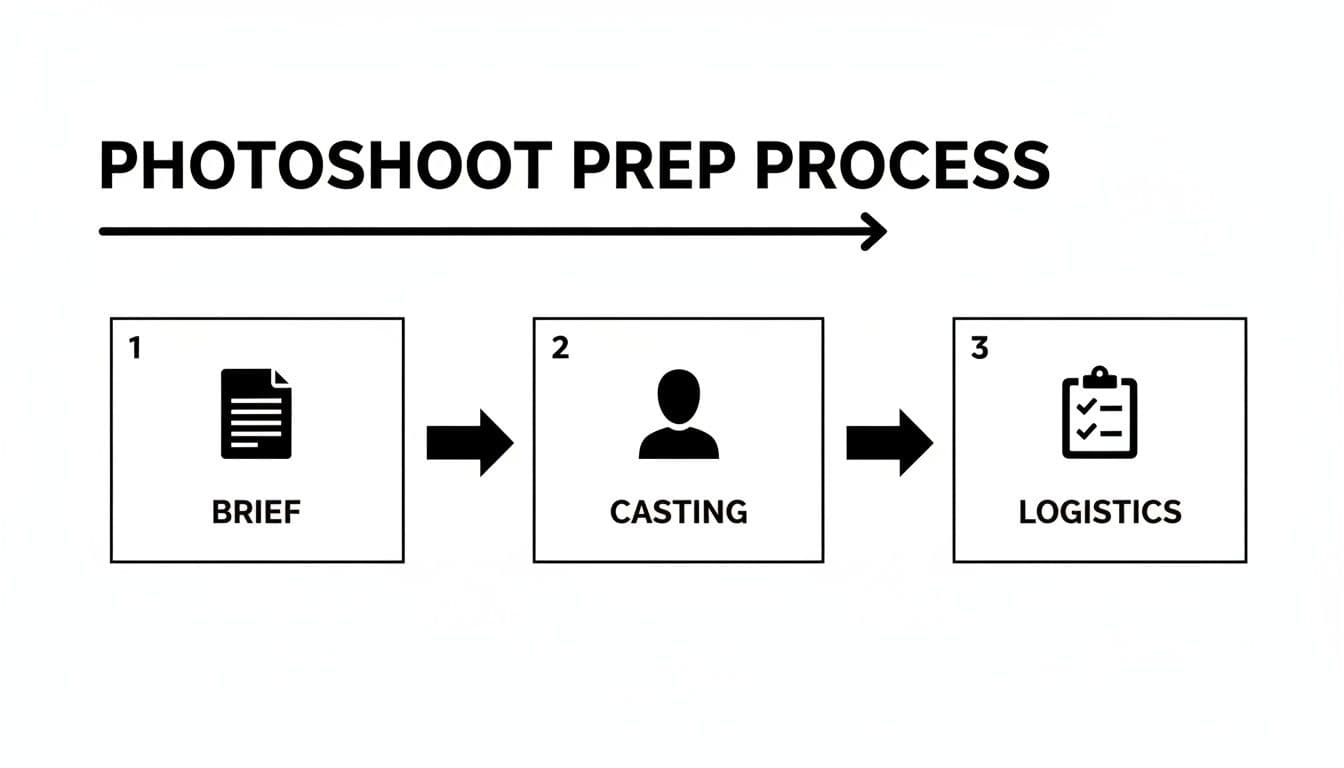
Flowchart showing the three-step photoshoot prep process: Brief, Casting, and Logistics.
This workflow shows how a clear brief leads to casting the right talent and sorting out the logistics. Get these foundational pieces right, and the actual shoot day becomes all about executing the technical details flawlessly.
Harnessing Light to Create Mood
Think of light as the most powerful tool you have. It carves out shapes, shows off textures, and single-handedly sets the entire vibe of an image. The lighting you choose needs to directly support the story you're trying to tell.
Lighting is basically the emotional soundtrack for your photos. Bright, even light feels clean and commercial, perfect for e-commerce. Soft, angled light creates shadows and a sense of drama or intimacy. The right light makes your audience feel something before they even process what they're seeing.
You don't need to be a lighting guru, but knowing the basic flavors helps you ask for what you want.
- Natural Light: This is your best friend for lifestyle shoots because it's often soft and incredibly flattering. An overcast day is a photographer’s secret weapon, giving you diffused, even light that kills harsh shadows. Direct sun is a different beast entirely—it creates high contrast for a more dramatic, punchy feel.
- Three-Point Lighting: This is the classic studio setup. It uses a key light (your main light source), a fill light (to soften shadows), and a backlight (to make the model pop from the background). It’s the gold standard for clean, professional e-commerce shots where the product has to be seen clearly.
- Hard vs. Soft Light: Hard light creates crisp, defined shadows, giving you an edgy, high-fashion look. Soft light, which you get from big light sources like a softbox or by bouncing light off a wall, wraps around the model for a much gentler, more forgiving effect.
Chat about these options with your photographer to make sure the lighting style matches your brand's aesthetic.
Directing Poses That Feel Authentic
Posing is a tricky dance. You need to give clear direction but also let the model’s personality come through. The goal is to get poses that look natural and confident, never stiff or awkward. A great pose flatters both the model and the clothes they're wearing.
Sometimes the simplest things work best. Asking a model to just walk back and forth can create beautiful, authentic movement that shows how a dress flows in real life. A hand casually tucked into a pocket or leaning against a wall can make a basic t-shirt and jeans look instantly more relatable and cool.
Remember, directing is a conversation, not a command. Keep the energy on set upbeat and encouraging. Instead of just telling the model what to do, explain the feeling you're going for. "Imagine you're waiting for a friend at your favorite café" will get you much more natural results than just saying, "Sit down and cross your legs."
Building a Comprehensive Shot List
Your shot list is your bible for the shoot day. It’s a detailed checklist that ensures you get every single image you need, preventing that sinking feeling of "Oh no, we forgot to get a close-up of the zipper!" It should specify the model, outfit, pose, and composition for each photo.
A good shot list is diverse, giving you a library of assets for all your different marketing channels.
- Full-Body Shots: Non-negotiable for product pages. Customers need to see the overall fit and silhouette.
- Three-Quarter Shots: Cropped from around the shins up, these are perfect for lookbooks and social media posts.
- Close-Ups and Detail Shots: This is where you highlight what makes your product special—the texture of the fabric, custom buttons, or intricate embroidery.
- Action and Movement Shots: Capture the model walking, turning, or interacting with a prop. These shots inject energy and life into your campaign.
By planning out your technical approach—from the mood of your lighting to the specifics of your shot list—you turn your creative ideas into a concrete, foolproof plan for a killer photoshoot. Stuck for concepts? A few fresh clothing photo ideas can jump-start your shot list.
How to Budget and Schedule Your Photoshoot
A professional model photoshoot is a serious investment in your brand’s visual identity. Like any smart investment, it needs a rock-solid plan for both money and time. Getting from a creative idea to a full gallery of amazing images means juggling a lot of moving parts, and each one has its own price tag and deadline. Nail this part, and you'll have a smooth-running shoot that stays on budget.
Figuring out these details upfront saves you from last-minute panic and ensures every dollar you spend is pushing your marketing goals forward. Without a clear plan, costs can balloon, deadlines get missed, and your exciting creative project turns into a logistical nightmare.
Breaking Down Your Photoshoot Budget
Building a realistic budget starts with knowing every single thing you might have to pay for. It's not just about hiring a photographer. A pro shoot is a team effort, with skilled experts all bringing something vital to the table. Your budget needs to cover every one of them.
Here are the main costs you’ll need to account for:
- Photographer Fees: This is usually the biggest slice of the pie. Rates swing wildly based on their experience, reputation, and how big the project is.
- Model Fees: Professional models usually charge by the hour or day. Their agency and experience level set the rate.
- Studio or Location Rental: You need a clean, well-lit space. No exceptions. We've got more tips on this in our guide to choosing an e-commerce photography studio.
- Hair and Makeup Artist (MUA): A pro MUA makes sure your model looks flawless and consistent under bright studio lights.
- Wardrobe Stylist: For bigger shoots, a stylist is your secret weapon. They pull together outfits, find the right accessories, and make sure every look is picture-perfect on set.
- Post-Production and Retouching: This is where the real magic happens after the cameras are off. This fee covers color correction, removing tiny blemishes, and giving the final images that professional polish.
- Props and Equipment: This can be anything from specialized lighting gear to furniture or background elements that bring your creative brief to life.
Think of your budget not as a cage, but as a compass. It forces you to decide what really matters for your brand's vision, making sure you put your money where it will have the biggest impact instead of spreading it too thin.
The total cost for a traditional model photoshoot can be a real eye-opener, often landing somewhere between $15,000 and $50,000. The big-ticket items are typically model fees ($2,000-$10,000) and photographer rates ($3,000-$15,000), plus all the other costs for the studio, styling, and editing. For new brands, these numbers can be a huge hurdle, adding weeks to the time it takes to get a product to market, as backed up by recent product photography statistics.
Creating a Realistic Photoshoot Timeline
Just as critical as the money is the clock. A well-planned timeline lets everyone on the team know what’s happening and when, preventing logjams and keeping the whole project moving forward. It’s the roadmap that takes you from a spark of an idea to your final delivered images.
A typical photoshoot schedule breaks down neatly into three main stages.
- Pre-Production (2-4 Weeks): This is where all the heavy lifting happens. It involves writing the creative brief, casting models, booking the crew, scouting locations, and gathering every last prop and piece of clothing.
- Production (1-3 Days): This is the actual shoot day (or days). If you did your pre-production homework, this phase should be smooth sailing—just executing the plan you already built in your shot list.
- Post-Production (1-2 Weeks): Once the shoot wraps, the photographer picks the best shots and dives into editing. This means retouching, color grading, and finally, delivering the polished, high-resolution files to you.
All in, a traditional model photoshoot can easily take a month or more from start to finish. By mapping out each step and setting clear deadlines, you can run the whole process like a pro and get your campaign launched right on time.
The Future of On-Model Imagery with AI
While a classic model photoshoot produces incredible results, the reality is that the high costs and long timelines are major roadblocks, especially for growing brands. The whole process, from casting models to weeks of post-production, is a massive drain on time and money.
But what if you could get those same stunning, on-brand model photos without all the logistical headaches?
This is where artificial intelligence is completely changing the game. Imagine taking a simple photo of your new dress on a hanger, and within minutes, generating an entire library of photorealistic images. Images featuring diverse models wearing your product, all perfectly lit and ready to go. This isn't science fiction anymore; it’s a reality that's reshaping how brands think about creating content.
Rethinking the Photoshoot Workflow
AI-powered platforms don't just speed up the old process—they flip it on its head. A multi-week marathon involving a dozen people can now be done with a few clicks from your laptop. This shift brings three huge advantages for any modern brand.
- Massive Cost Reduction: By cutting out the need for models, photographers, studios, and stylists, AI can slash production costs by up to 90%.
- Unmatched Speed: What used to take over a month can now be done in minutes. This dramatically shortens the time it takes to get a new collection live and selling.
- Limitless Scalability: You can create an endless variety of images—different models, backgrounds, and poses—all from a single product shot, without spending an extra dime.
Suddenly, professional-grade visuals aren't just for brands with six-figure marketing budgets. AI makes top-tier photography accessible to everyone.
AI isn't here to replace creativity; it's here to remove the barriers to it. It puts professional on-model photography in everyone's hands, letting brands focus on marketing and storytelling instead of juggling complex shoot logistics.
Achieving Consistency and Diversity on Demand
Beyond just saving time and money, AI gives you incredible creative control and a direct path to inclusivity. You can finally ensure every single product is shot with a consistent model, maintaining a seamless brand identity across your entire store.
Even better, this technology allows you to represent a diverse range of ethnicities, body types, and styles with zero friction. No more being limited by the casting pool in your local area.
And it gets even more powerful. Advanced features like AI pose control let you direct the "model" just like you would on a physical set, making sure every garment hangs and drapes perfectly. It’s the efficiency of technology fused with the creative eye of a traditional photoshoot.
As we look ahead, it's clear that AI is becoming a core part of the marketing toolkit. You can learn more about how AI will affect your brand and reshape your strategies. For fashion brands, this isn't just a trend—it's a new frontier for creating compelling, diverse, and cost-effective visual content at a scale we've never seen before.
Your Top Questions About Model Photoshoots, Answered
Planning your first model photoshoot can feel like stepping into a new world. Even with the best plan, you're bound to have questions. Here are the straight-up answers to a few common ones we hear from brands all the time.
How Much Should I Budget for My First Model Photoshoot?
There’s a massive range here. A professional shoot can run you anywhere from a couple of thousand dollars to over $50,000 for a big-time campaign. The major line items on your invoice will be the model, photographer, studio rental, stylist, and all the post-production work.
For brands that don't have a five-figure marketing budget, AI photography platforms are becoming a game-changer. They let you create stunning on-model images without the traditional costs tied to a physical shoot.
Where Can I Find Models Without Using an Agency?
Think outside the agency box. You can unearth incredible talent scrolling through Instagram or browsing creative freelance sites. Don't sleep on your local community, either—connecting with nearby fashion design or art schools can be a goldmine.
But here's the non-negotiable part: no matter where you find your model, always use a clear contract. This needs to spell out the pay, exactly how the images can be used, and what's expected of everyone. It’s the single best way to protect both you and the talent.
The single most critical piece of planning is the creative brief. It's the blueprint that aligns your entire team—from photographer to model—on the goals, mood, and shot list, ensuring the final images perfectly match your vision.
What Is the Most Important Part of Photoshoot Planning?
Hands down, the creative brief. Think of it as the North Star for your entire project.
A solid, detailed brief is your best defense against confusion and misaligned expectations. It makes sure every decision made on set—from the lighting to a model's expression—maps directly back to a clear, shared goal. It's what turns a concept in your head into a real, compelling image for your brand.
Ready to create stunning on-model visuals without the cost and complexity of a traditional photoshoot? WearView uses AI to generate photorealistic model imagery in minutes, not weeks. Get started with WearView today and scale your creative content effortlessly.
WearView Team
WearView Content & Research Team
WearView Team is a group of fashion technology specialists focused on AI fashion models, virtual try-on, and AI product photography for e-commerce brands. We publish in-depth guides, case studies, and practical insights to help fashion businesses improve conversion rates and scale faster using AI.