February 14, 2026•19 min read
10 Creative Photoshoot Ideas for Models to Inspire Your 2026 Campaigns
Discover 10 creative photoshoot ideas for models that will elevate your brand. From lifestyle shots to inclusive campaigns, get actionable tips now.
10 Creative Photoshoot Ideas for Models to Inspire Your 2026 Campaigns
In the crowded world of e-commerce fashion, a plain white background just doesn't cut it anymore. Your customers crave connection, authenticity, and inspiration. They want to see how your garments fit into their lives, not just hang on a rack. This means moving beyond static poses and sterile studios to embrace dynamic, story-driven visuals. But orchestrating consistently creative photoshoots is often a logistical challenge, demanding significant time, budget, and resources.
This guide presents actionable and creative photoshoot ideas for models, designed to captivate your audience and elevate your brand's narrative. For brand-level concepts, pair these with our clothing brand photoshoot ideas. We'll break down each concept with practical tips, styling advice, and shot lists, providing a clear blueprint for execution. For brands looking to scale their visual content efficiently, we'll also highlight how virtual photography tools can help execute these ambitious ideas in a fraction of the time and cost.
Forget the endless cycle of expensive, time-consuming shoots. Instead, learn how to produce compelling, diverse, and on-brand imagery that resonates deeply with your target customer. Let's redefine what's possible for your brand's visual identity and transform your product showcases from simple displays into powerful storytelling engines.
1. Lifestyle and Contextual Styling
Lifestyle photoshoots place products in authentic, real-world scenarios to show customers how they can integrate them into their daily lives. AI can generate these scenes fast; see the best AI lifestyle photo generators. Instead of a sterile studio, models are captured in relatable settings like a bustling city street, a cozy home, or an office, performing natural activities. This method is one of the most effective creative photoshoot ideas for models because it builds a narrative around the garment, helping customers envision themselves wearing it.
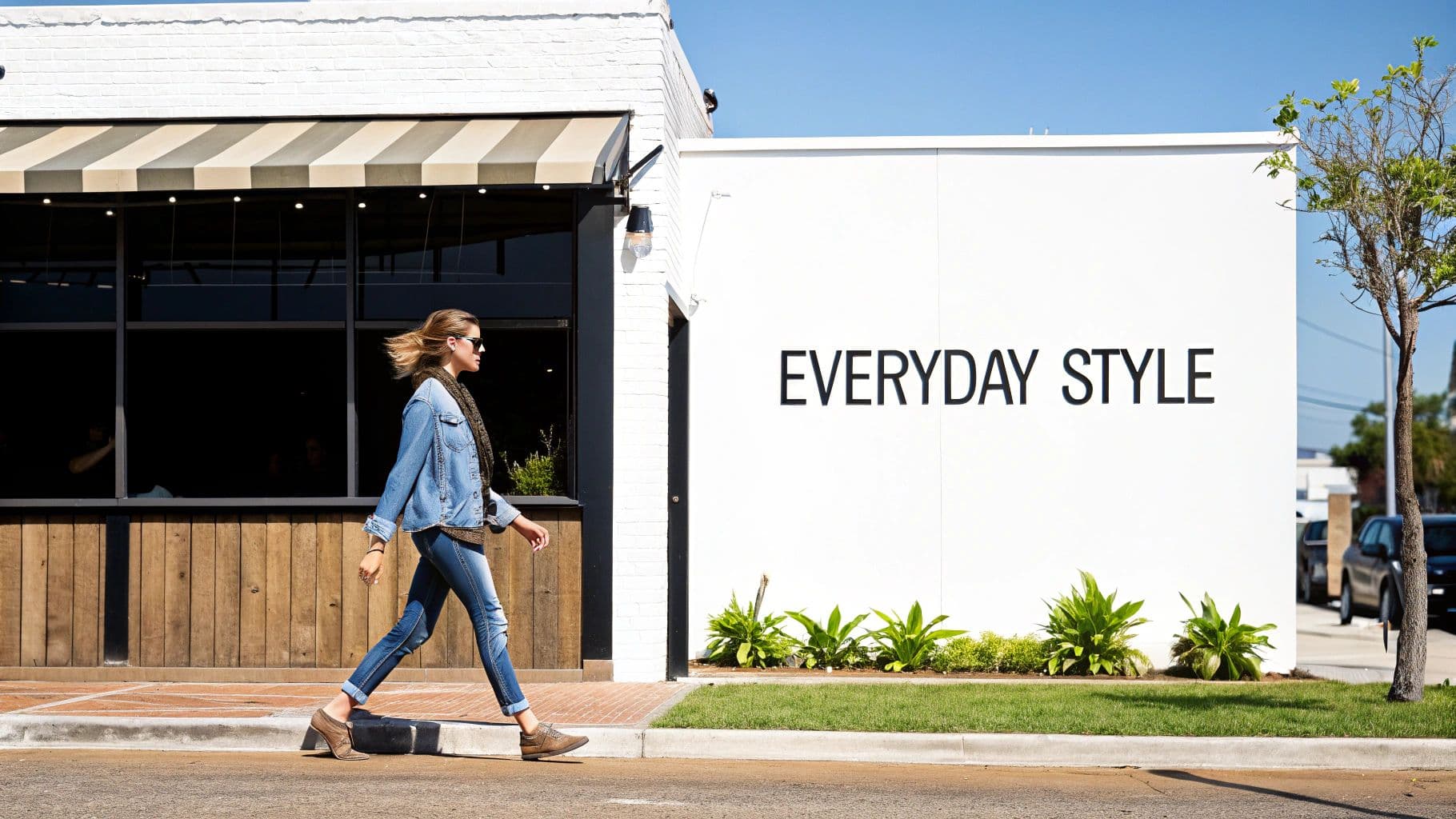
A stylish woman in a denim jacket and jeans walks past a white building with "EVERYDAY STYLE" signage.
Pioneered by direct-to-consumer brands like Everlane and Outdoor Voices, this approach connects with shoppers on an emotional level by selling an experience, not just a product. It answers the crucial customer question: "How will I look and feel wearing this?"
How to Execute This Concept
- Styling: Focus on creating complete, wearable outfits that reflect the target customer's lifestyle. Mix featured products with complementary pieces to show versatility.
- Props & Environment: Choose locations and props that reinforce the brand story. A laptop and coffee cup suggest a work-from-anywhere vibe, while a picnic basket and blanket imply leisurely weekends.
- Posing: Direct the model to interact naturally with the environment. Poses should be candid and action-oriented, such as walking down the street, reading a book, or hailing a cab.
Pro-Tip: Use a tool like WearView's AI Model Creation to generate diverse models in specific lifestyle settings, ensuring brand consistency across various campaigns without the logistical challenges of a physical shoot.
2. Size and Fit Inclusivity Showcase
This approach photographs the same garment on multiple body types, sizes, and shapes to demonstrate fit authenticity and inclusivity. By featuring diverse models across a full size range (e.g., XS to 3XL+), brands build trust and help customers accurately predict how pieces will fit their own bodies. This is one of the most powerful creative photoshoot ideas for models because it directly addresses a major consumer pain point and boosts conversion rates by increasing purchase confidence.
Pioneered by brands like Aerie and Savage X Fenty, this concept moves beyond aspirational marketing to practical, representative imagery. It shows a commitment to serving all customers, which resonates deeply and fosters brand loyalty. This transparency is no longer a niche strategy but a consumer expectation.
How to Execute This Concept
- Styling: Keep styling minimal and consistent across all models to ensure the focus remains on the garment's fit and drape on different body shapes. Use the exact same piece for each model.
- Props & Environment: A clean, neutral studio background is most effective, as it eliminates distractions and allows for easy side-by-side comparison on product pages. No props are necessary.
- Posing: Direct models to hold identical or very similar poses. This standardization makes it easier for shoppers to compare how the product fits across different sizes. Front, side, and back views are essential.
Pro-Tip: Use a tool like WearView's AI Model Creation to generate the same outfit across a dozen different body types and sizes instantly, creating a comprehensive fit guide without the logistical costs of hiring multiple models.
3. Color and Pattern Variation Gallery
A Color and Pattern Variation Gallery showcases a single garment style in all available colors and patterns on a diverse range of models. Instead of relying on flat lays or swatches, this approach displays each variant on a person, allowing customers to accurately compare how different options look when worn. This is one of the most practical creative photoshoot ideas for models in e-commerce, as it directly addresses customer uncertainty and boosts purchasing confidence.
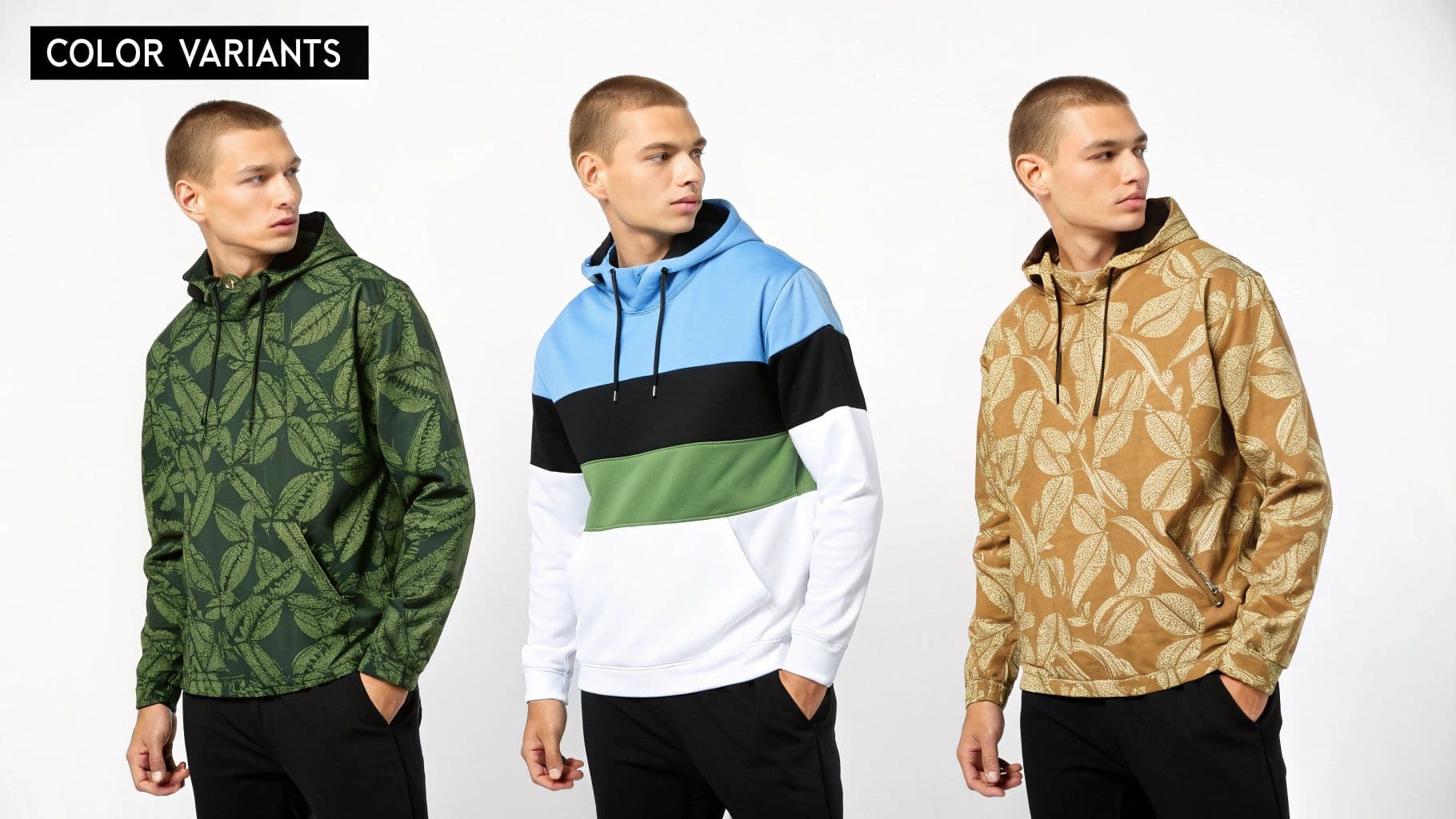
Three men's hoodies in different color and pattern variants: green leaf, color block, and tan leaf.
Popularized by brands like J.Crew and Uniqlo, this method removes guesswork for online shoppers. Seeing a product in multiple colorways on consistent models with identical lighting and poses makes it easier for customers to visualize their preferred choice and leads to fewer returns.
How to Execute This Concept
- Styling: Keep styling minimal and consistent across all color variations. The focus should be entirely on the garment's color or pattern, so use neutral, identical supporting pieces for each shot. Understanding which shades complement your models can make the product pop; you can learn more about how to find your perfect color palette to enhance the visual appeal.
- Props & Environment: Use a simple, neutral studio backdrop (like light gray or white) to ensure color accuracy. The environment should not distract from the product variations.
- Posing: Direct the model to hold the exact same pose for each colorway. This consistency is key for easy side-by-side comparison on a product detail page.
Pro-Tip: Streamline this process with WearView's Product-to-Model transformation. Upload a flat lay of one color, and the AI can generate the same garment in all its color and pattern variations on a consistent model, saving significant time and resources.
4. Seasonal and Trend-Based Collections
Seasonal and trend-based photoshoots align your products with specific times of the year, holidays, or current fashion movements. This approach capitalizes on consumer shopping habits by presenting collections in a timely and relevant context. Instead of generic studio shots, models are styled in weather-appropriate layers, festive attire, or trend-forward looks that resonate with what shoppers are actively seeking.
Popularized by fast-fashion giants like Zara and H&M, this strategy keeps brand imagery fresh and creates a sense of urgency. It effectively answers the customer's immediate need: "What should I wear for this season?" This is one of the most commercially effective creative photoshoot ideas for models as it directly links your collection to purchase-driven moments like changing weather or holiday gifting.
How to Execute This Concept
- Styling: Build outfits that tell a seasonal story. For autumn, focus on layering knits and jackets in warm tones. For a holiday collection, incorporate rich textures like velvet and sequins.
- Props & Environment: Use backdrops and props that scream "season." Think falling leaves for autumn, bright florals for spring, or a cozy fireplace setting for a winter campaign.
- Posing: Direct models into poses that reflect the seasonal mood. A joyful, celebratory pose works for holiday campaigns, while a relaxed, breezy stance is perfect for summer lookbooks.
Pro-Tip: Use a tool like WearView's AI Model Creation to generate on-brand models that fit specific seasonal aesthetics, from sun-kissed summer looks to cozy winter styles, ensuring your campaigns are always timely and relevant.
5. Styling Guides and Complete Outfit Narratives
This creative photoshoot idea for models moves beyond showcasing single items to presenting comprehensive styling guides. By photographing complete, curated outfits, brands demonstrate how individual pieces can be mixed, matched, and layered. This narrative-driven approach helps customers visualize the full potential of a garment, encouraging them to build entire looks rather than purchase isolated products.
Popularized by personal styling services like Stitch Fix and fashion editorial platforms, this method transforms product photography into valuable style advice. It effectively cross-sells complementary items and inspires customers, answering the question: "How can I wear this in a complete, stylish way?"
How to Execute This Concept
- Styling: Build cohesive outfits that reflect a specific theme, season, or occasion. Focus on balance in color, texture, and proportion to create visually appealing and wearable combinations.
- Props & Environment: Keep the background minimal to ensure the complete outfit is the hero. Simple studio backdrops or neutral settings work best to avoid distracting from the styling details.
- Posing: Direct models into poses that best display the entire look, from head to toe. Poses should highlight how the different pieces interact, such as putting a hand in a pocket to show off a jacket's fit or turning to feature a skirt's movement.
Pro-Tip: Generate endless outfit combinations without a physical shoot. Use a product-to-model tool to create consistent "shop the look" imagery, showing how a single pair of pants can be styled in five different ways with the same model.
6. Before and After Transformation Stories
This creative approach builds a compelling narrative by photographing models before and after being styled with a brand's garments. By showcasing authentic transformations like casual-to-professional or day-to-night looks, brands powerfully demonstrate the impact and versatility of their products. This psychological technique forges an emotional connection by highlighting the transformative power of fashion, making it a highly effective creative photoshoot idea for models.
Popularized by styling services and fashion content creators, this concept taps into the desire for personal improvement and reinvention. It effectively answers the customer's question: "How can this item elevate my personal style?" This method works exceptionally well for capsule wardrobe guides, makeover campaigns, or demonstrating how a single piece can create multiple distinct looks.
How to Execute This Concept
- Styling: Start with a simple, neutral "before" look. For the "after" shot, build a complete, aspirational outfit around the featured product to showcase its full potential and styling possibilities.
- Props & Environment: Maintain a consistent background and lighting between shots to ensure the focus remains entirely on the clothing's transformation. A clean, minimalist studio setting is ideal.
- Posing: Keep the model's pose nearly identical in both photos. This consistency creates a clear and direct comparison, making the styling change more dramatic and easier for the viewer to process.
Pro-Tip: Use a tool like WearView's Pose Control to generate visuals of the same model in an identical position while changing outfits. This ensures perfect consistency for compelling before-and-after sequences without needing a physical reshoot.
7. Dynamic Movement and Activity-Based Shots
Activity-based photoshoots capture models in dynamic motion such as walking, jumping, dancing, or running to showcase how garments move and fit during real use. This approach moves beyond static poses to demonstrate fabric drape, stretch, comfort, and functionality. It is one of the most effective creative photoshoot ideas for models because it adds energy and life to product images, making them far more engaging.
Popularized by activewear giants like Nike and Lululemon, this technique proves a garment's performance claims. By showing the product in action, you answer a critical customer question: "Will this be comfortable and functional for my active lifestyle?"
How to Execute This Concept
- Styling: Outfits should be styled for the specific activity. For a running shot, pair leggings with running shoes and a performance top. For a dance scene, choose flowy fabrics that accentuate movement.
- Props & Environment: Select locations that match the activity, like a running track, a dance studio, or a hiking trail. Props can include yoga mats, basketballs, or skateboards to add authenticity.
- Posing: Focus on capturing the peak of an action. Freeze-frame a jump, capture the extension in a dance move, or show the natural stride of a run. Poses should feel powerful and authentic.
Pro-Tip: Use a tool with pose control AI to generate models in specific dynamic actions like running or stretching. This allows you to create a sequence of motion shots while maintaining model and product consistency without a complex physical shoot.
8. Detailed Close-Up and Texture-Focused Photography
This approach moves beyond full-body shots to create high-impact close-up imagery that showcases a product’s finest details. It highlights fabric texture, stitching quality, hardware, and overall craftsmanship. This method is one of the most compelling creative photoshoot ideas for models because it tells a story of quality and justifies a product's price point through visual evidence.
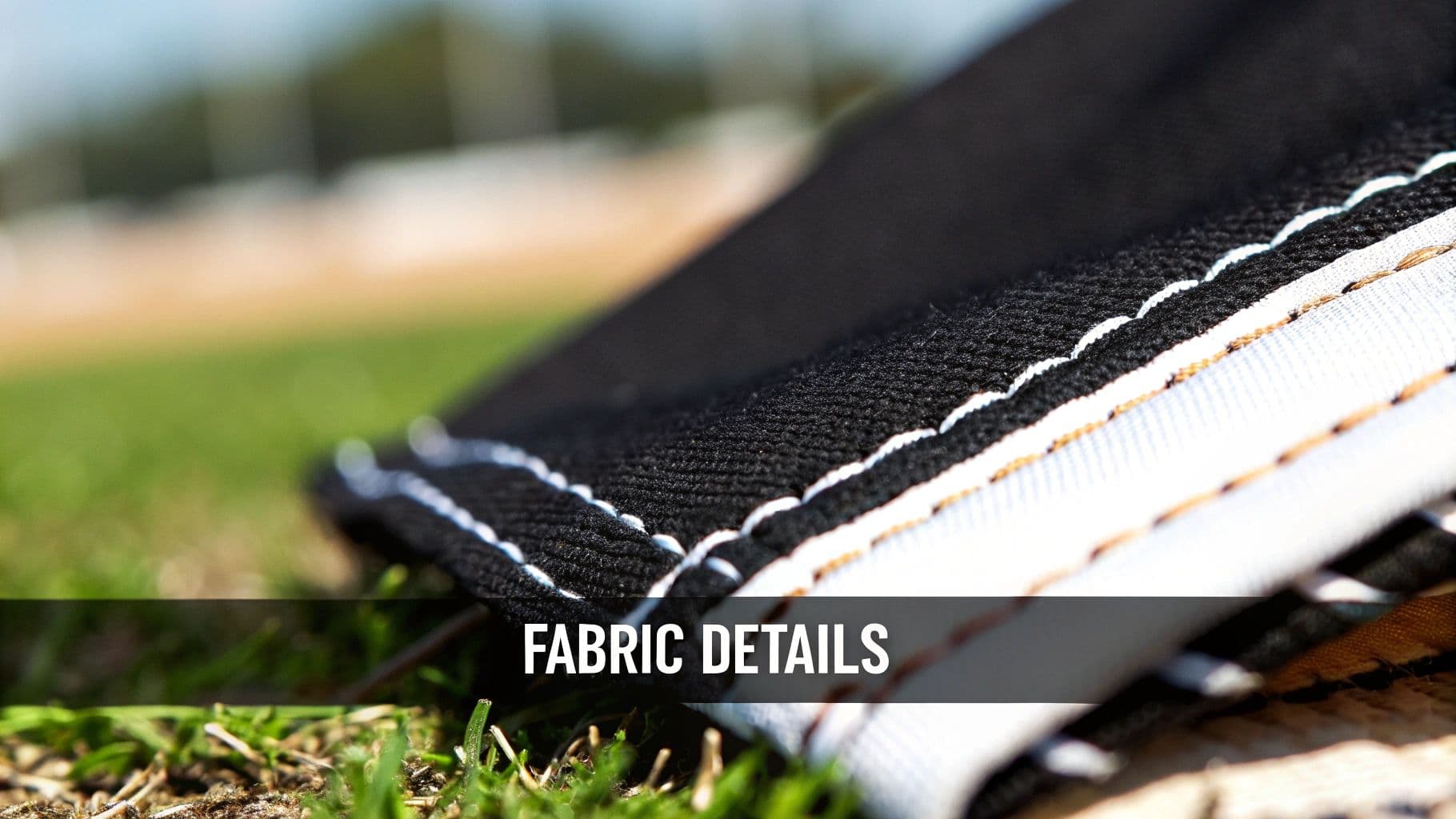
Close-up of black fabric with white stitching on green grass, highlighting textile details.
Popularized by luxury houses like Hermès and sustainable brands like Patagonia, this technique builds consumer trust by offering transparency. It visually communicates the value, care, and quality materials embedded in each item, answering the customer's silent question: "Why is this worth the price?"
How to Execute This Concept
- Styling: While the focus is on details, context matters. Style the garment on a model to show how a specific detail (like a cuff or collar) falls on the body, then zoom in.
- Lighting: Use lighting to accentuate texture. Side lighting or angled backlighting can make the weave of a fabric or the grain of leather pop, creating depth and dimension.
- Posing: Direct the model into poses that naturally feature the product's details. For example, have them adjust a sleeve to highlight button quality or run a hand over a pocket to show off its intricate stitching.
Pro-Tip: Combine on-body model shots with flat-lay close-ups for a complete product story. Using a service with AI model generation, you can place your detailed product shots onto realistic models, ensuring customers see both the craftsmanship and the fit in one cohesive gallery.
9. Diverse and Inclusive Representation Campaigns
This approach centers on featuring a wide spectrum of models across multiple dimensions, including age, ethnicity, body type, ability status, and gender identity. More than just a trend, inclusive representation is a powerful strategy that reflects modern brand values, significantly expands a brand's addressable market, and fosters deep loyalty among underrepresented customer groups who feel seen and valued.
Pioneered by brands like Rihanna's Savage X Fenty and ASOS, this concept moves beyond tokenism to embed diversity into the core of a brand's visual identity. It answers a critical consumer demand for authenticity and shows that a product is truly for everyone, making it one of the most socially relevant and commercially effective creative photoshoot ideas for models today.
How to Execute This Concept
- Styling: Ensure styling is authentic and respectful to each model's identity. Showcase how garments fit and flatter a variety of body shapes and sizes, helping customers make confident purchasing decisions.
- Casting & Sourcing: Intentionally cast models who genuinely represent your target demographics. Focus on creating a comprehensive library of models that reflects the real world, not just industry standards.
- Posing: Direct models in poses that are empowering and natural. Avoid stereotypes and focus on capturing individual personalities and confidence to create a powerful, unified campaign message.
Pro-Tip: Use a platform with AI-generated models to instantly create visuals featuring diverse body types, skin tones, and ethnicities. This allows you to produce inclusive content at scale, ensuring every customer can see themselves in your brand without the logistical hurdles of traditional casting.
10. User-Generated Content (UGC) Integration and Community Storytelling
This approach leverages customer and influencer-generated content within branded photoshoots to build authentic, community-driven narratives. Instead of relying solely on professional models, brands feature real customers wearing their products in genuine, everyday contexts. This method is a powerful creative photoshoot idea for models as it blends professional production with grassroots storytelling, creating immense social proof.
Popularized by community-focused brands like Glossier and Fashion Nova, this strategy turns customers into brand ambassadors. It answers the consumer's need for authenticity by showing how real people, not just models, incorporate products into their lives. To fully harness this power, understanding what UGC content is and its integration is crucial for building genuine connections.
How to Execute This Concept
- Styling: Encourage authentic styling by sourcing content directly from your community via hashtags or submission portals. Feature the most creative and on-brand user looks.
- Props & Environment: The beauty of UGC is its authenticity; the props and environments are chosen by the customers themselves, reflecting diverse and relatable lifestyles.
- Posing: Poses are naturally candid and unscripted, capturing genuine moments. Highlight a range of poses from your community to show broad appeal.
Pro-Tip: Blend professional and user-generated visuals seamlessly. Use a tool like WearView's AI Model Creation to generate professional variations of popular UGC looks, maintaining brand consistency while celebrating your community's style.
10-Point Comparison: Creative Photoshoot Ideas for Models
| Approach | 🔄 Complexity | ⚡ Resources | 📊 Expected outcomes | ⭐ Key advantages | 💡 Quick tip |
|---|---|---|---|---|---|
| Lifestyle and Contextual Styling | High — location scouting, on-site variables | High — crew, models, props, permits | Strong social engagement; better conversion when aspirational | Emotional storytelling; real-world context | Use AI to generate lifestyle scenes and background variations |
| Size and Fit Inclusivity Showcase | Very High — many models, consistency needs | Very High — multiple fittings, scheduling, retouching | Fewer returns; higher trust and conversion across sizes | Authentic inclusivity; reliable fit prediction | Generate same garment across body types with AI for consistent comparisons |
| Color and Pattern Variation Gallery | Medium — consistent lighting and color accuracy | Medium — multiple samples, careful editing | Improved color confidence; reduced color returns | Efficiently showcases full color/pattern range | Transform flat-lays to model shots to produce full color galleries quickly |
| Seasonal and Trend-Based Collections | High — frequent updates and thematic shoots | High — seasonal styling, sets, rapid production | Short-term traffic and sales spikes; high editorial appeal | Timely relevance; campaign cohesion | Generate season-appropriate looks and backgrounds to iterate fast |
| Styling Guides & Complete Outfit Narratives | High — multi-piece coordination and styling | High — styling expertise, accessories, multiple garments | Higher AOV and cross-sell; longer engagement | Drives bundling and styling authority | Build many outfit combinations from a few pieces using consistent models |
| Before and After Transformation Stories | Medium — staged progression and continuity | Medium — wardrobe changes, consistent setup | Strong emotional impact and shareability | Clear demonstration of product impact | Keep lighting/background identical; use AI to match poses across stages |
| Dynamic Movement & Activity-Based Shots | Very High — motion, safety, many takes | Very High — trained talent, specialized shoots, video crew | Excellent for activewear; high engagement and authenticity | Shows fit and fabric behavior in real use | Use AI video/motion tools to create animated movement without live crews |
| Detailed Close-Up & Texture-Focused Photography | Medium — technical macro work and lighting | Medium — macro lenses, skilled photographer, retouching | Validates premium pricing; builds trust in quality | Highlights craftsmanship and materials | Pair macro close-ups with on-body shots for full product storytelling |
| Diverse & Inclusive Representation Campaigns | Very High — authentic, wide-ranging casting | Very High — broad casting, coordination, community outreach | Expands market; improves brand reputation and loyalty | Genuine representation; wider audience connection | Use AI to prototype diverse casts but ensure real-community involvement |
| UGC Integration & Community Storytelling | Medium — curation, rights, moderation | Low–Medium — lower production cost, management overhead | Very high authenticity and conversion; strong community growth | Social proof; cost-effective content stream | Blend UGC with AI-generated professional variations to maintain brand consistency |
Start Creating Your Next Campaign Today
The journey through these creative photoshoot ideas for models reveals a powerful truth about modern fashion marketing: storytelling sells. From capturing dynamic movement and activity-based shots to showcasing size and fit inclusivity, the concepts we've explored go far beyond simple product displays. They are blueprints for building authentic connections with your audience, demonstrating your brand's values, and creating a more immersive and relatable shopping experience.
Moving forward, the key is to stop thinking of photoshoots as isolated events and start treating them as integral parts of your brand's narrative. Each campaign, whether it’s a detailed close-up series highlighting texture or a community-driven showcase featuring user-generated content, is an opportunity to communicate who you are. The most successful brands are those that consistently tell compelling visual stories that resonate with their customers' lives, aspirations, and identities.
From Inspiration to Execution
The real challenge often lies in bridging the gap between a great idea and a high-quality visual campaign. Traditional photoshoots, with their high costs, logistical complexities, and time-consuming processes, can make it difficult to implement these creative concepts at scale. This is where embracing innovative solutions becomes a strategic advantage. The goal is no longer just to produce beautiful images, but to create a flexible and efficient content engine that can adapt to new trends, test different creative approaches, and serve a diverse audience.
By prioritizing concepts like seasonal collections, complete outfit narratives, and diverse representation, you aren't just creating another set of product photos. You are building a comprehensive visual library that educates, inspires, and converts. The most important takeaway is that creativity and strategy must go hand-in-hand. These creative photoshoot ideas for models are not just artistic exercises; they are powerful tools for driving engagement, building brand loyalty, and ultimately, boosting your bottom line. It's time to take these concepts off the mood board and put them into action.
Ready to bring these creative photoshoot ideas for models to life without the logistical headaches? WearView leverages powerful AI to help you generate an infinite variety of high-quality, on-brand model photography in minutes, not weeks. Explore WearView's AI solutions and start creating stunning, diverse, and engaging campaigns today.
WearView Team
WearView Content & Research Team
WearView Team is a group of fashion technology specialists focused on AI fashion models, virtual try-on, and AI product photography for e-commerce brands. We publish in-depth guides, case studies, and practical insights to help fashion businesses improve conversion rates and scale faster using AI.