February 25, 2026•22 min read
Clothing and Branding A Guide to Building Your Visual Identity
Discover how clothing and branding create an unforgettable visual identity. Learn to align apparel, photography, and marketing for e-commerce success.
Clothing and Branding A Guide to Building Your Visual Identity
Your clothing and your brand are two sides of the same coin. Think of it this way: your apparel is the physical language of your brand's identity. Long before a customer ever clicks on your "About Us" page, every stitch, fabric choice, and design detail is already telling them who you are.
Your Brand's Silent Storytellers
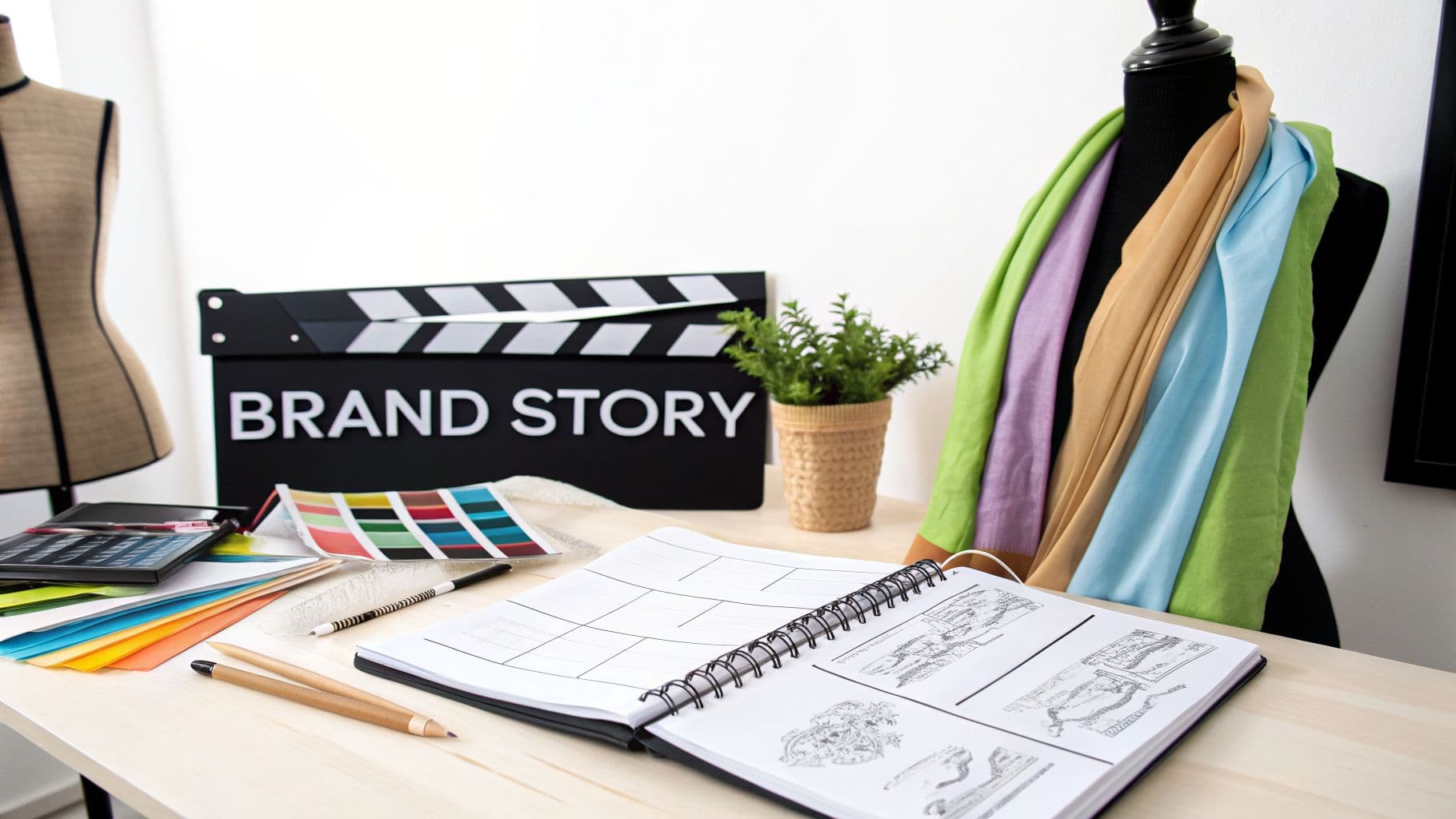
A creative workspace featuring a 'BRAND STORY' clapperboard, fashion design tools, and colorful fabrics.
Imagine you're a film director. Every single element on set—from the lighting right down to the wardrobe—is painstakingly chosen to create a specific mood and move the story forward without a single word of dialogue.
That’s exactly what you do with your clothing line. Your collection is the wardrobe for your brand’s narrative. The choices you make are your directorial decisions, shaping how customers see and connect with your story.
This isn’t just theory; it's the practical bedrock of a successful fashion brand. A rugged, heavy-duty work jacket cut from waxed canvas instantly signals durability and heritage. A minimalist linen dress in a neutral palette whispers of effortless sophistication and a commitment to natural materials. These aren't just products. They're tangible expressions of your brand's core identity.
To really nail this, it helps to have a solid grasp of general Branding Strategies For Businesses. This knowledge is what helps you align your physical products with a powerful, cohesive presence in the market.
The Power of Deliberate Design
Every design choice you make adds to your brand’s voice. Your power to shape a customer's perception comes down to a few key elements that must work in harmony to send a clear, unified message.
- Fabric and Texture: The feel of a garment is a potent non-verbal cue. Is it soft cashmere, crisp cotton, or smooth silk? The texture alone can imply luxury, comfort, or rugged practicality.
- Color Palette: Colors hit us on a deep psychological level. A muted, earthy palette suggests sustainability and calm. Bold, vibrant colors project energy and confidence.
- Silhouette and Fit: The shape of your clothing defines its personality. Is it structured and architectural, or is it relaxed and flowing? This choice says everything about the lifestyle you’re selling.
Your apparel is the most intimate touchpoint a customer has with your brand. It’s the one piece of your identity they can literally wear, making it a powerful vehicle for building loyalty and recognition.
Bridging Physical Products and Digital Experience
This guide is all about translating that powerful physical language into a consistent and magnetic digital experience. From your product photography to your social media feed, every visual you create should echo the story your garments tell. Getting that alignment right is what elevates a simple clothing line into an unforgettable brand.
As you grow, understanding where apparel and technology meet becomes critical. Smart brands are already figuring out how a fashion tech company can give them the tools to maintain visual consistency and scale their creative vision without burning out.
Ultimately, the goal is simple: the feeling a customer gets from browsing your website should be the exact same one they get when they finally hold your product in their hands.
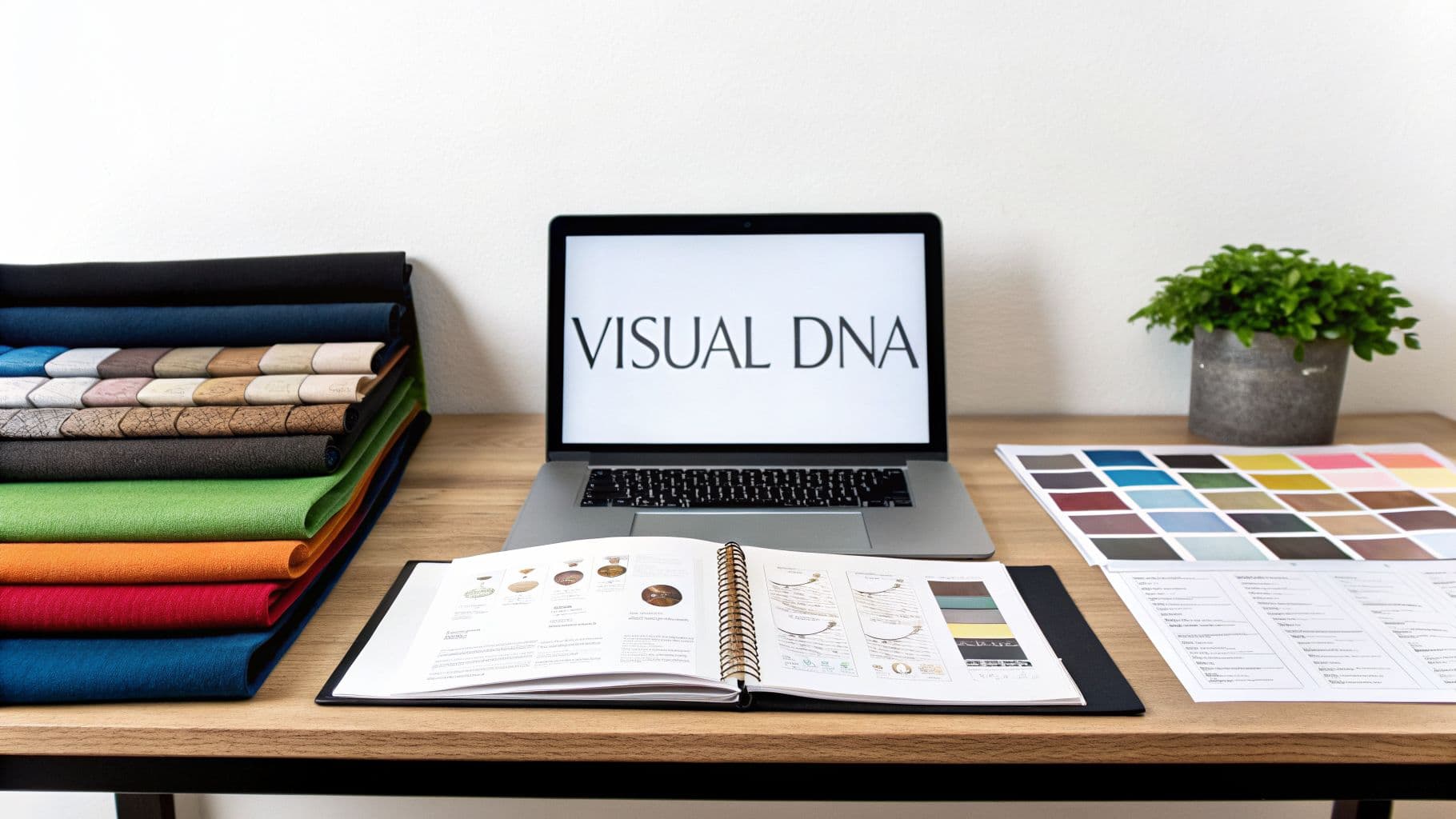
Developing Your Brand’s Visual DNA
A creative workspace with fabric swatches, a laptop displaying 'VISUAL DNA', a design book, color palette, and plant.
Long before the first product shot is ever taken, the smartest brands build a visual rulebook—what we call their Visual DNA. This isn't just about picking a logo and a few colors. It’s the detailed blueprint that defines your entire aesthetic, making sure every piece of clothing and every Instagram post speaks the exact same language.
Think of it like a film director’s signature style. You know a Wes Anderson movie when you see one because of the symmetry, the color palettes, and the specific mood. Your Visual DNA does the same for your brand, guiding every creative choice.
This is your brand’s true north. It’s the difference between creating memorable clothing and just adding to the noise. Get this right, and every detail—from a tiny button to a massive billboard—feels unmistakably you.
Defining Your Core Aesthetic Elements
First things first: you have to break down your aesthetic into real, tangible pieces. Vague words like "modern" or "classic" won't cut it. You need to get granular. This level of clarity is what makes consistency possible, especially when you start using AI tools to create imagery.
Start by cataloging the physical traits that make your clothes your clothes. These are the building blocks, and you need to document them like a scientist.
- Signature Silhouettes: Are you all about structured, architectural shapes, or do you lean into soft, flowing lines? Pin down the core fits that are unique to your collections.
- Texture Library: Put together a library—digital or physical—of your go-to materials. Are you defined by the feel of raw denim, delicate lace, technical performance fabrics, or buttery-soft organic cotton?
- Hardware and Finishes: The little things are the big things. Specify the exact hardware you use, whether it’s matte black zippers, antique brass buttons, or polished silver clasps. These small choices have a huge impact.
Once you’ve put these product-specific rules on paper, you have a solid foundation. This rulebook becomes your most valuable player, ensuring that every new design and marketing asset stays true to the identity you’ve worked so hard to build.
Building Your Visual Style Guide
With your core aesthetic locked in, it's time to build a comprehensive visual style guide. This document goes beyond the products themselves to dictate how your brand shows up in the world, especially in your photography and digital content.
A great style guide means anyone—a freelance photographer, a new marketing hire, or an AI platform like WearView—can create content that perfectly nails your vision. It takes the guesswork out of the equation and guarantees a consistent customer experience at every single touchpoint.
Your visual style guide isn't just a document; it's a strategic asset that turns your brand identity into a repeatable, scalable process. It's the operations manual for your entire visual brand.
Think of this guide as a living document, but it needs to start with clear, non-negotiable rules for your imagery.
Key Components of a Fashion Style Guide
To make your guide actually work, you need to break it down into specific, easy-to-digest sections. These rules will govern every visual you create, building a powerful and unified brand presence.
- Model Posing and Expression: First, set the mood. Do you want models to be dynamic and full of energy, or calm and statuesque? Include a mood board of approved poses and expressions that capture your brand’s personality.
- Lighting Setups: Light completely shapes how people see your product. Decide on your signature lighting. Is it the hard, direct light of a high-fashion shoot, or the soft, diffused light that gives an approachable, natural feel?
- Backgrounds and Environments: Consistency here is critical. Mandate specific background colors, textures, or even types of locations (e.g., minimalist studio, gritty urban streets, sun-drenched natural landscapes).
- Prop and Styling Rules: Make a list. Outline which props are on-brand and which are forbidden. This prevents random, off-brand elements from creeping into your shots and diluting your message.
By documenting these rules, you forge an unbreakable link between your clothing and branding. This ensures that every image, whether it comes from a week-long photoshoot or is generated by AI in seconds, tells your brand's story with absolute consistency.
Translating Brand Identity into Product Photography
You’ve done the hard work. Your brand vision is sharp, and you've mapped out your visual DNA. Now comes the moment of truth: translating that blueprint into your most powerful digital asset—product photography. This is where abstract ideas about clothing and branding become real, creating the images that stop the scroll and build a loyal following.
Every single choice you make behind the lens (or, these days, behind the screen) is a branding decision. The lighting, the model's expression, the backdrop—these aren't just technical details. They're the language you use to communicate your brand's personality and promise. The mission is to build an efficient, repeatable workflow that tells the same compelling story with every shot.
Choosing Your Photographic Style
Think of your photography style as your brand's visual tone of voice. It has to be a perfect match for your brand archetype. A luxury brand wouldn’t use slang in its ad copy, so it shouldn't be using casual, shot-on-an-iPhone-in-the-park photos either. Find your lane and own it.
- Minimalist: This is all about clean lines, neutral backdrops, and simple, direct lighting. It screams sophistication and puts all the focus on the product's quality. Brands built on modernism and clarity use this to let the craftsmanship do the talking.
- Lifestyle: This style drops your products into the real world. It tells a story about the life your customer is living—or wants to live. It’s about forging an emotional connection by showing the clothes in action, making them feel both relatable and aspirational.
- High-Fashion: Think dramatic lighting, artistic poses, and conceptual styling. This approach isn't for the everyday; it's for positioning your brand as exclusive and avant-garde. It’s less about selling a t-shirt and more about selling a powerful artistic statement.
The Power of a Repeatable Workflow
In e-commerce, consistency is everything. A jumbled, inconsistent visual feed is one of the fastest ways to confuse customers and kill brand trust. A repeatable workflow is your best defense, ensuring every product image feels like it belongs to the same cohesive brand family, no matter when it was shot.
This is exactly where modern tools have changed the game. Instead of wrestling with the chaos of traditional photoshoots—different models, shifting light, new locations—AI-powered platforms can lock in your visual rules and apply them automatically. In a market growing this fast, it's becoming essential.
The global fashion industry has exploded, rocketing from $439 billion in 2018 to a projected $1.84 trillion by 2025. In this digital-first arena, high-quality, consistent product imagery isn't a nice-to-have; it's a critical competitive weapon.
AI tools like WearView let you generate perfectly consistent models and backgrounds, slashing the high costs and unpredictability from the process. This keeps your clothing and branding in lockstep, always. For a deeper dive, our complete guide to modern clothing product photography breaks down more advanced techniques.
Here’s a glimpse of how an AI platform gives brands the power to generate diverse, on-brand model imagery in seconds.
This interface shows just how simple it is to select different AI-generated models, letting you maintain a consistent look or even cater to different markets with just a few clicks. It’s a scalable, efficient system for creating on-brand visuals without the usual headaches.
AI's Role in Perfecting Your Vision
Let’s be honest: traditional photoshoots are a nightmare to control. A model might be having an off day, the weather can ruin an outdoor shoot, or the lighting in a new studio doesn't quite match your last session. These tiny inconsistencies pile up, slowly chipping away at your brand's visual integrity.
AI-powered image generation solves this problem by giving you total control. You can define your ideal lighting setup once and lock it in. You can choose a consistent AI model who becomes the familiar face of your brand. You can apply the exact same background to every single product.
This kind of precision means your newest arrivals get the same professional, on-brand treatment as your bestsellers. It shifts your product photography from a series of stressful, one-off creative projects into a streamlined, strategic operation that strengthens your brand with every image you create.
Nailing Visual Consistency Across Every Channel
Your brand isn’t just a product page. It lives and breathes across a whole universe of digital touchpoints—your website’s homepage, that carefully curated Instagram grid, the ads you’re running, and even your listings on third-party marketplaces. For your clothing and branding to truly connect, every single visual needs to be telling the same story.
Think of your visual identity like an accent. If your website speaks in a clean, minimalist tone but your social media is shouting with chaotic energy, your customers will get whiplash. That kind of inconsistency kills brand trust and makes you instantly forgettable. The goal? A customer should be able to spot your brand from a single image, even without a logo in sight.
Getting to that level of cohesion takes more than just good intentions. It demands a practical, repeatable workflow—a system that makes sure every asset, no matter where it’s going, is a perfect match for your brand’s core visual DNA.
Building an Adaptable Asset Library
The dream is to have a library of on-brand assets you can remix for any channel. This means having a core set of images and visual elements that are flexible enough to become a website banner, a vertical video clip, or a crisp product shot for a marketplace.
The old-school way of doing this involves scheduling separate photoshoots for every single need. That approach isn't just expensive and slow; it's a breeding ground for inconsistency. A different photographer, a new model, or even a slight change in lighting can create tiny visual disconnects that chip away at your brand’s message.
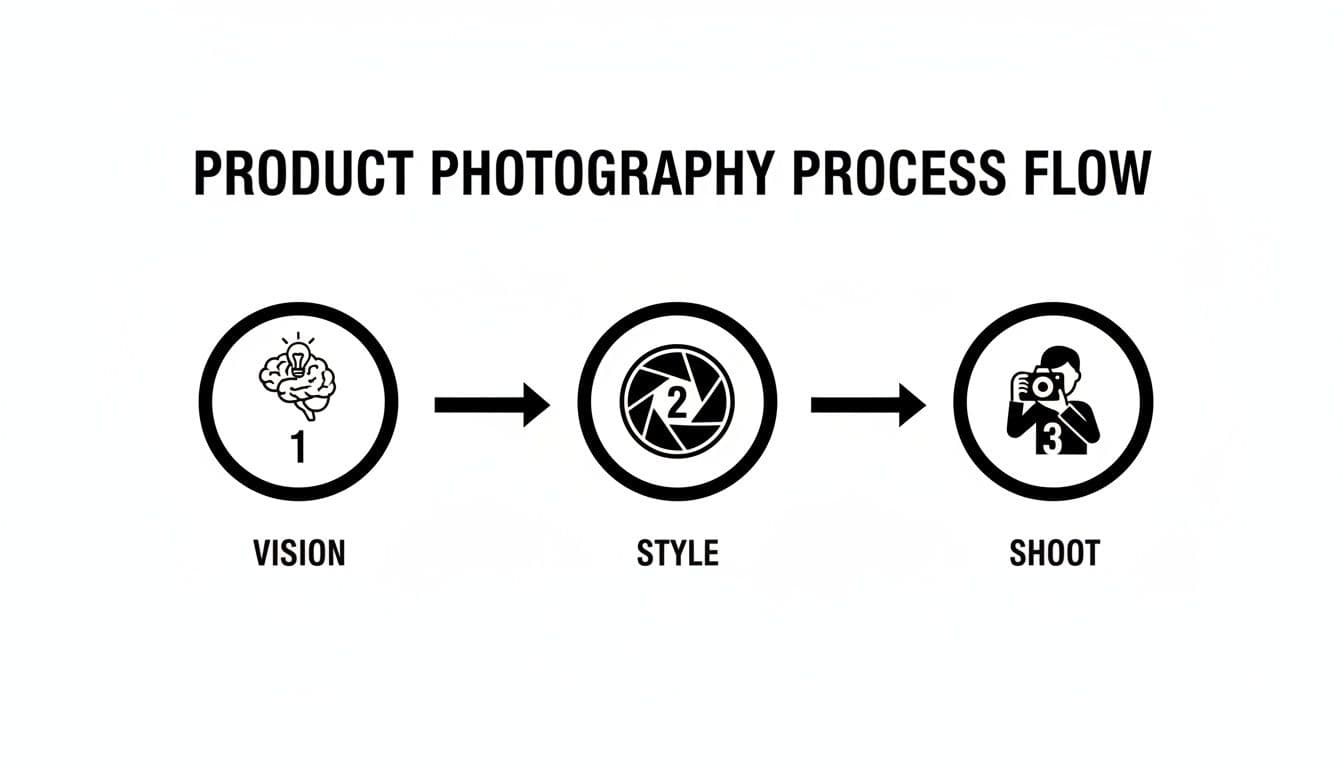
This chart breaks down the foundational steps of a cohesive photography process, starting with a clear vision and ending with the final, styled shot.
A visual flow chart illustrating the three steps of product photography: Vision, Style, and Shoot.
It’s a simple but powerful reminder: without a structured process that flows from vision to execution, you're pretty much guaranteed to end up with visual chaos.
The Power of a Consistent AI Model
One of the biggest hurdles in staying consistent is the human element. When you use different models for every campaign, it’s harder for customers to form a familiar connection with your brand. This is where AI-powered tools completely change the game. They let you use a consistent AI model—a familiar "face" for your brand that shows up everywhere.
Using the same AI-generated model across your website, ads, and social channels builds a powerful sense of familiarity and reliability. It’s the digital equivalent of having a consistent brand ambassador, strengthening your identity with every impression.
This flips the script on content creation. Instead of a series of one-off projects, you have a unified system. You set the rules once—the model, the lighting, the background—and the AI applies them perfectly every single time. A new collection launch will have the exact same visual vibe as your evergreen bestsellers, reinforcing the powerful link between your clothing and branding.
Comparing Content Workflows
The real difference between the old way and the new AI-powered way becomes crystal clear when you look at the resources required. A modern workflow gives you a massive advantage in speed, cost, and brand integrity.
Take a look at how a traditional photoshoot stacks up against an AI-powered platform.
Visual Content Workflow Traditional vs AI-Powered
| Stage | Traditional Photoshoot Workflow | AI-Powered Workflow |
|---|---|---|
| Pre-Production | Weeks of scouting locations, booking models, stylists, and photographers. | Define your visual rules (model, background, lighting) inside the platform in a few minutes. |
| Production | A full-day shoot, at the mercy of weather, model availability, and human error. | Upload your garment photos and generate hundreds of on-brand images in seconds. |
| Post-Production | Days or even weeks of editing, color correcting, and retouching to try and match everything up. | Images are generated already matching your brand guidelines, requiring little to no editing. |
| Cost | High. Expenses for crew, location, equipment, and editing can easily run into thousands of dollars. | Low. Usually a simple subscription fee that gives you access to unlimited image generation. |
| Consistency | Variable. Small changes in lighting or personnel from shoot to shoot can cause visual drift over time. | Perfect. Every single image sticks to the exact pre-defined brand rules you set. |
At the end of the day, moving to an AI-powered system isn't just about saving a bit of time or money. It’s a strategic move to protect your brand's most valuable asset: its consistent, recognizable identity, no matter where your customers find you.
Using AI to Scale Your Branding Efforts
Moving from a strategic blueprint to real-world execution is where most fashion brands hit a wall. You’ve defined your visual DNA, but how do you apply those rules across hundreds of products and dozens of campaigns without everything spiraling out of control?
This is where AI stops being a buzzword and becomes your most reliable operational partner.
Instead of manually policing every single photoshoot, you can now embed your visual guidelines directly into an AI platform. It’s a practical fix for the massive headache of scaling a consistent brand identity. This ensures every piece of content—from the model you choose to the background she’s in—sticks to the rules you’ve laid out.
Automating On-Brand Visuals
Imagine having a brand guardian that works 24/7, making sure every image meets your exact specs. That’s essentially what modern AI photography platforms do. You feed the system your style guide—approved poses, lighting setups, model aesthetics—and it can generate a limitless stream of on-brand visuals automatically.
This is a huge departure from traditional photoshoots, where consistency depends on human memory and interpretation, which naturally varies from one day to the next. AI eliminates that guesswork, delivering a perfectly cohesive look every single time. It’s how you make your clothing and branding truly inseparable at scale.
Platforms like WearView can take a simple flat-lay photo of a T-shirt and turn it into a fully realized, on-model image that looks like it came straight from your brand bible. The whole process is fast, requires zero technical skill, and spits out assets ready for any e-commerce site or social media feed.
Generating Dynamic Content for Social Media
It’s not just about static images, either. AI is finally making dynamic content creation accessible. Producing on-brand video for platforms like TikTok and Instagram Reels has always been an expensive, time-sucking ordeal.
Now, AI video generators are flipping the script. They let brands create animated looks and short-form content using the product images they already have. These tools can animate a still photo to show how a dress drapes and moves, or they can stitch together engaging visual sequences that actually stop the scroll. You can finally keep up with a high-volume content calendar without the high costs of video production.
AI isn't here to replace creativity; it’s here to automate repetition. By handing over the tedious job of enforcing brand guidelines, you free up your creative team to focus on what really matters: big-picture strategy and innovation.
Reaching Global Audiences with Localized Imagery
One of the most powerful things AI can do for fashion is help you speak to diverse global audiences without breaking the bank. If you have international ambitions, you know that creating culturally relevant and inclusive campaigns is non-negotiable. But the logistics and costs of organizing photoshoots in different countries are often a total non-starter.
AI completely changes the game. It lets you generate model imagery that reflects local demographics and cultural nuances with just a few clicks. You can create entire campaigns featuring models that resonate in Tokyo, Berlin, or São Paulo—all without leaving your office. In a global marketplace, that's a massive competitive advantage.
The numbers don't lie. A recent apparel market analysis showed that the Asia Pacific region alone accounts for 41.03% of the global market. To grab a piece of that pie, you need scalable, region-specific visuals. It's not a luxury; it's a necessity. AI’s ability to generate localized imagery on the fly makes this possible, as you can see in this detailed apparel market analysis from Fortune Business Insights.
This tech lets you test new markets with tailored ad creative before making a huge investment. Generate a variety of on-brand, localized images, run A/B tests to see what performs best, and do it all without the financial gamble of an international photoshoot. For a deeper dive into what's out there, check out our guide on the 12 best AI tools for fashion brands.
Measuring the Impact of Your Visual Branding
A killer visual strategy is way more than an aesthetic-driven project; it's a direct engine for business growth. But how do you actually prove it? When you start measuring the impact of your visuals, you connect your creative choices directly to the bottom line. Suddenly, clothing and branding stops looking like a cost center and starts looking like a smart investment.
It’s easy to get tunnel vision and focus only on sales. The real return on investment (ROI) from strong visual branding, however, shows up in more subtle—but incredibly powerful—metrics. These are the numbers that reveal how your consistent, high-quality imagery is building a healthier, more profitable business from the ground up.
The goal here is to trade in those "gut feelings" for hard data that proves the value of your work.
Key Metrics to Track Your Visual ROI
To get the full picture, you need to see how your visuals are nudging customer behavior at every single stage of their journey. Great branding doesn't just catch eyes; it builds confidence, smooths out the buying process, and fosters real loyalty.
Here are the key performance indicators (KPIs) that tell the true story:
- Conversion Rate: This is your most direct proof. Run a simple A/B test pitting your old, inconsistent photos against new, on-brand visuals from a tool like WearView. A steady lift in the percentage of visitors who buy is solid evidence your branding is hitting the mark.
- Add-to-Cart Rate: This one is all about intent. Are more people dropping items into their cart after you’ve overhauled your product visuals? This shows your new imagery is making your products more desirable—period.
- Product Return Rate: High-quality, accurate, and consistent visuals set crystal-clear expectations. When the product that shows up at their door perfectly matches what they saw online, returns plummet. That saves you a fortune in reverse logistics and restocking fees.
When your visual branding is strong, customers don't just buy a product; they buy into your brand's promise. This trust is measurable, showing up as higher conversion rates and fewer product returns.
Beyond the Shopping Cart
The impact of your visual identity doesn't stop at your product pages. Strong branding creates a ripple effect across your entire marketing world, building momentum and making everything you do more effective.
If you really want to dig deep and assess the return on your visual branding, using tools like brand lift studies can offer insights that go far beyond standard e-commerce metrics.
You should also keep a close eye on these channel-specific numbers:
- Social Media Engagement: Look at the likes, shares, and comments on posts featuring your new, on-brand visuals. An increase tells you the content is resonating more deeply with your audience.
- Ad Performance (Click-Through Rate): When your ad creative is a perfect visual match for your landing pages, it creates a seamless, trustworthy experience. This almost always leads to a higher click-through rate (CTR) and a lower cost-per-click (CPC).
By keeping track of these KPIs, you can build a data-backed case for investing in the tools and processes that keep your clothing and branding cohesive. You’ll be able to prove that a powerful visual identity isn’t just about looking good—it’s about building a more resilient and profitable brand.
Your Questions About Clothing and Branding, Answered
When you're in the trenches building a fashion brand, questions about how your clothes connect to your bigger identity are always top of mind. As new tech reshapes e-commerce, those questions get even more specific. Here are some of the most common ones we hear from brands on the rise.
Can a Small Startup Really Build a Strong Brand on a Tiny Budget?
Absolutely. A huge budget isn't the key—relentless consistency is.
It all starts with defining your brand’s visual DNA. What's your color palette? Which one or two fonts feel like you? What’s the specific mood of your photography? Nail that down first, because it’s the foundation for everything else.
From there, you can use smart AI-powered tools to create an endless stream of high-quality, consistent model imagery without the crippling cost of traditional photoshoots. It's about working smarter, not richer, to build a professional, cohesive brand presence right from day one.
Will Using AI Models Make My Brand Feel Fake or Inauthentic?
This is a big one, but the fear is usually misplaced. Authenticity isn't about how an image was made; it comes from staying true to your brand's core values.
Modern AI platforms let you generate unique models that are the perfect embodiment of your ideal customer. Think about it: by using the same custom AI model across different campaigns, you’re actually building familiarity and trust. The real killer of authenticity is inconsistent or off-brand visuals—the exact problem AI is built to solve.
The single most crucial link between your clothing and your brand is visual consistency. A customer should be able to recognize your brand from an image alone, even without a logo in sight. This is what turns a product into an experience.
What’s the Most Important Element Connecting Clothing to Branding?
While your designs and the quality of your materials are obviously vital, visual consistency is the glue that holds your entire brand together. It's the one thing that truly separates forgettable products from an unforgettable brand.
You get there when your clothing design, model presentation, lighting, and backgrounds all start telling the same story. When every single visual touchpoint is perfectly aligned, you build powerful brand recognition that transforms a simple shopping trip into a real connection.
Ready to scale your visual branding with perfect consistency? WearView replaces expensive photoshoots with instant, on-brand model imagery. Generate studio-quality visuals in seconds.

WearView Team
WearView Content & Research Team
WearView Team is a group of fashion technology specialists focused on AI fashion models, virtual try-on, and AI product photography for e-commerce brands. We publish in-depth guides, case studies, and practical insights to help fashion businesses improve conversion rates and scale faster using AI.