March 8, 2026•24 min read
How to start a clothing brand online: A 2026 Starter Guide
How to start a clothing brand online in 2026: follow a practical roadmap from niche discovery to marketing your first collection.
How to start a clothing brand online: A 2026 Starter Guide
So, you have a killer idea for a clothing brand. That's the fun part. The real work is turning that spark into a business that actually makes money. It really comes down to three things: finding a niche that isn't already oversaturated, figuring out how to get your products made reliably, and building a brand that people genuinely connect with.
Your Blueprint for Launching a Successful Online Brand

A bright creative workspace with a laptop displaying a 'Launch Roadmap', design materials, and a plant.
The path from a sketch on a napkin to a thriving online store is exciting, but it’s also littered with potential missteps. I've seen it time and again—incredible designs fall flat because the founder didn't have a solid game plan. Success is about so much more than just creativity; it's about making smart, strategic decisions right from the start.
Think of this section as your high-level roadmap. We’ll cover the major milestones, from validating your initial concept and choosing a manufacturing partner to setting up your store and planning your big launch. Getting a bird's-eye view of the entire process now will give you the context you need before we dive into the nitty-gritty details of each step.
If you're new to the world of e-commerce, it’s worth bookmarking this practical guide on how to start an online store. It offers a great foundation on the day-to-day operational side of things.
The most successful new brands don't try to appeal to everyone. They start by identifying an underserved audience and create products specifically for them, building a loyal community from the ground up.
To help you map out your journey, we've put together a table outlining the essential phases of launching your clothing brand. More importantly, it highlights the common pitfalls that trip up new entrepreneurs at each stage. Think of it as a cheat sheet to help you anticipate challenges before they become major problems.
Online Clothing Brand Startup Phases and Common Pitfalls
| Phase | Key Activities | Common Pitfall to Avoid |
|---|---|---|
| 1. Foundation | Niche selection, market research, business plan development. | Trying to sell to everyone instead of a specific target audience. |
| 2. Production | Choosing a model (POD, private label), sourcing suppliers, product sampling. | Underestimating production lead times and costs. |
| 3. Branding | Creating a name, logo, visual identity, and brand voice. | Having an inconsistent brand message across different platforms. |
| 4. E-commerce Setup | Selecting a platform (e.g., Shopify), store design, product photography. | Neglecting mobile-friendliness and a complicated checkout process. |
| 5. Launch & Marketing | Building pre-launch hype, running social media ads, influencer outreach. | Launching without a marketing plan and hoping customers will just show up. |
By understanding these stages and their associated risks, you can organize your efforts, focus on what really matters, and give your brand the best possible shot at success.
Finding Your Niche and Designing Your First Collection
Every successful clothing brand I’ve seen started with a sharp, focused idea. The classic rookie mistake is trying to be everything to everyone. You can't. The brands that break through are the ones that find an overlooked group of people and build something just for them.
This all starts with some real-world market research. Don't just scroll Instagram for trends. You need to become a fly on the wall in the online communities where your future customers are already talking—think Reddit threads, niche Facebook groups, and specific forums. See what your competitors are doing right, but pay even closer attention to what they’re getting wrong or ignoring completely. That's where you'll find your opening.
Uncovering Your Perfect Niche
Finding your niche isn't just a marketing exercise; it's the bedrock of your entire company. It dictates your designs, your brand voice, and every ad you'll ever run. So, instead of a vague idea like "women's activewear," get specific. Think "eco-friendly, high-performance activewear for new moms." See the difference?
To really nail this down, start asking some honest questions:
- Who are these people, really? Go beyond basic demographics. What do they value? What does their weekend look like? Are they urban professionals obsessed with sustainable materials, or rugged adventurers who need gear that won't quit?
- What problem are you actually solving? Look for the gaps. I've seen brands pop up because there was no stylish adaptive clothing, or because it was impossible to find high-quality basics for taller body types. Your brand should be a solution.
- What are you genuinely passionate about? Building a brand is a grind. Your own excitement for the mission will get you through the tough days and make your connection with customers feel real, not manufactured.
Once you have a hunch, you need to validate it before you spend a dime. Start conversations in those forums you found, run a few simple polls on social media, or even just buy a coffee for five people who fit your ideal customer profile. This early feedback is pure gold and can stop you from building something nobody wants.
Designing a Cohesive First Collection
With a validated niche, the fun part begins: designing the actual clothes. This is where your brand’s soul starts to take physical form. Your goal isn't to create a dozen different items, but to build a small, focused collection that tells a story and makes your target customer feel understood.
A solid design process isn't just about random inspiration; it's structured.
First, create a mood board. This is your visual North Star. Pull together images, colors, textures, and even words that capture the brand's vibe. This board will keep every design choice you make on-brand and consistent.
Next, get serious about your fabrics and materials. How a garment feels is just as important as how it looks. The materials you choose need to align with your brand’s promise, whether that's luxury, durability, or sustainability. For an eco-conscious brand, that might mean sourcing certified organic cotton.
Finally, you develop the actual designs. Whether you're sketching yourself or working with a freelancer, keep it simple for your first drop. Focus on 3-5 core items that merchandise well together and represent the heart of your brand.
The quality of your design is one of the most important factors for how your clothing will look in reality. Before you commit to a full production run, always create mockups and order samples to test everything from fit to fabric feel.
The last step before production is translating your vision into a language a factory can execute perfectly. This is done with a tech pack. Think of it as a detailed blueprint for each garment, containing everything from sketches and precise measurements to fabric specs, stitching types, and trim details. If you're new to this, looking at a good tech pack example will give you a clear roadmap. A thorough tech pack is non-negotiable—it's what ensures you get accurate quotes and avoids costly mistakes down the line.
Sourcing Production and Setting Profitable Prices
This is where your brand truly comes to life. Moving from a design on your screen to a real, tangible product in your hands is a huge milestone. But honestly, it’s also where a lot of new founders hit a wall. Let’s break down the world of manufacturing and pricing so you can build a business that actually lasts.
Your first big decision is how you're going to get your clothes made. This choice will ripple through your entire business, affecting your startup costs, profit margins, and how much creative control you really have. There’s no single right answer here—the best model for you comes down to your budget, your appetite for risk, and the kind of brand you want to build.
Choosing Your Production Model
For new brands, this usually boils down to three main paths: print-on-demand, private label, or full cut-and-sew manufacturing. Each has its own distinct pros and cons.
Print-on-Demand (POD): This is the easiest entry point, hands down. You create a design, upload it to a POD partner like Printful or Printify, and they handle everything—printing, packing, and shipping—as orders come in. You don't touch a single piece of inventory, which means your upfront cost is virtually zero. The trade-off? Thinner profit margins and less control over the quality of the base garments or shipping speeds.
Private Label: Think of this as the happy medium. You find a manufacturer that produces quality, unbranded "blanks" (t-shirts, hoodies, etc.) and then you add your own branding, like a custom neck tag or a beautifully embroidered logo. This gives you more control than POD and is much faster than making products from scratch. The main hurdle is finding a great manufacturer and being able to meet their minimum order quantities (MOQs).
Cut-and-Sew: This is the big league. You control everything from the ground up, from creating custom patterns and sourcing raw fabrics to managing the entire production run. This path gives you complete creative freedom and the highest potential profit margins. But it’s not for the faint of heart—it demands serious capital, industry connections, and the skill to manage a very complex supply chain.
This decision tree helps visualize how your path is shaped from the very beginning. It's a great reminder of how your niche (or lack thereof) directly feeds into your design and production strategy.
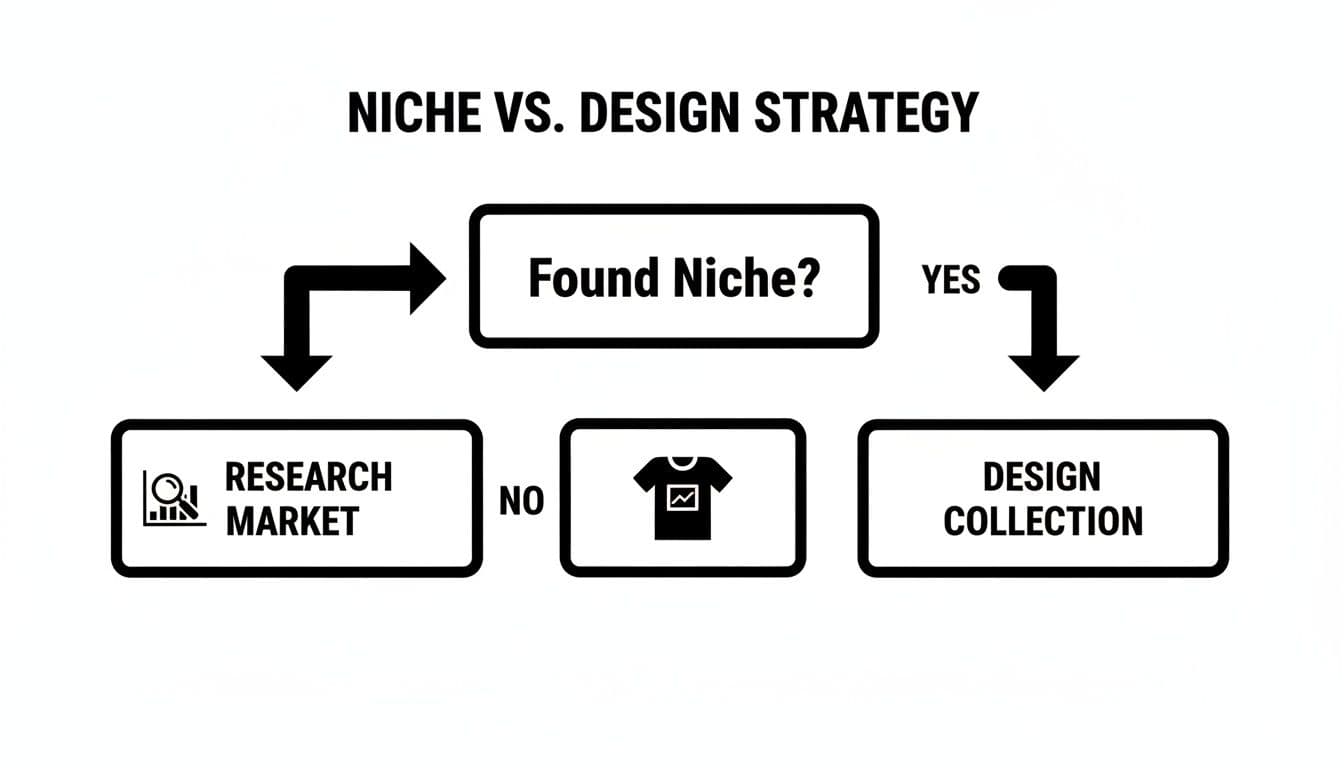
A flowchart illustrates design strategy: research market if no niche is found, otherwise design collection.
As the flowchart shows, if you haven't landed on a specific audience yet, your first step should always be market research. That research will then guide your design and production decisions.
Vetting Suppliers and Negotiating Terms
Once you've picked a production model, the hunt for the right partner begins. Don't just pick the first name you find in a directory—this is a relationship you need to get right. Always, always order samples first. You need to see, touch, and wear the product to judge its quality, fit, and feel before you even think about placing a bulk order.
Pay attention to communication. If a potential supplier is slow to respond, vague about pricing, or hesitant to send samples, consider those major red flags. A good partner is transparent and eager to work with you. A term you'll hear constantly is minimum order quantity (MOQ), which is the smallest order a factory will produce. High MOQs can be a real roadblock for new brands.
Don't be afraid to negotiate. If a supplier’s MOQ is 500 units but you can only afford 200, ask if they’ll do a smaller run for a slightly higher price per piece. It’s a smart way to test the market without betting the farm on an unproven product.
Pricing Your Products for Profitability
Getting production sorted is only half the battle; you also need a smart pricing strategy. The number one mistake I see founders make is underpricing their products. It feels safer at first, but it makes building a sustainable business nearly impossible.
The bedrock of good pricing is knowing your Cost of Goods Sold (COGS). This is simply the total direct cost to produce one single item.
How to calculate your COGS:
- Material Costs: The price of the blank garment, fabric, thread, and any custom trims.
- Production Costs: What you pay for labor, whether it’s for printing, sewing, or adding labels.
- Inbound Shipping: The cost to ship the finished goods from your manufacturer to your warehouse or fulfillment center.
Once you know your COGS, setting your retail price becomes much clearer. A great starting point for the fashion industry is the keystone pricing model. It's simple: double your COGS to get your wholesale price, then double your wholesale price to get your retail price. This gives you a 4x markup on your initial cost.
For example, if the COGS for one of your t-shirts is $10, your wholesale price would be $20, and you'd set the final retail price at $40. This 4x markup ensures you have enough margin to cover all your other business expenses—marketing, website fees, packaging—and still have healthy profit left over.
Building Your Brand and Creating Unforgettable Product Visuals
Flat lay showing a camera, tablet displaying product images, jeans, and eyeglasses on a green mat.
Let's get one thing straight: in the crowded world of online fashion, your products don't just sell themselves. Before anyone ever clicks "add to cart," they're buying into your story, your vibe, and the promise you’re making. That connection is everything. It's the core of your brand identity and your single greatest asset.
Your brand is so much more than a logo. It's the whole experience—the name, the colors, and the specific voice you use on your website, in your emails, and across social media. When it's done right, a strong brand feels consistent and authentic, making people feel like they’ve discovered something special.
Nailing Your Brand Identity
First things first, you need to build the foundation. These core elements will be your North Star for every creative decision you make, ensuring you look professional and cohesive from the get-go.
It all starts with a name. You need something that hints at your niche but is also easy for people to remember and find online. Try to pick a name that's unique enough to stand out but clear enough that people instantly get what you're about.
From there, you’ll build out your visual identity. This typically includes:
- Logo Design: This is the face of your brand. Aim for something simple, scalable, and memorable. A great logo looks just as sharp as a tiny social media profile pic as it does splashed across your website header.
- Color Palette: Choose a set of primary and secondary colors that create the right mood. If you’re selling sustainable, earthy basics, you might lean into muted greens and browns. A bold streetwear line, on the other hand, could go for high-contrast, vibrant colors.
- Typography: Pick one or two fonts that match your brand’s personality—usually one for headlines and another for body text. Keeping your fonts consistent is an easy way to look polished and put-together.
Finally, think about your brand voice. Are you witty and a bit sarcastic? Or are you more inspirational and sophisticated? Whatever you choose, that voice needs to show up everywhere you talk to your audience, from product descriptions to Instagram captions.
Why Product Visuals Make or Break E-commerce Sales
With your brand foundation in place, it’s time to focus on your most critical sales tool: your product photography. In e-commerce, your customers can't touch the fabric or try on the clothes, so your photos have to do all the work. They are your virtual fitting room and your silent salesperson.
Not long ago, this meant shelling out for expensive photoshoots with models, photographers, and studio time. It was a slow, costly process that was a major barrier for new brands. But today, AI-powered photography has totally flipped the script, giving startups the power to create incredible, studio-quality visuals for a fraction of the cost and time.
This is a huge unlock for new brands. Instead of dropping thousands on a single photoshoot, you can generate a nearly endless library of on-model images from just one simple photo of your garment. You can get to market faster, test which looks convert best, and visually compete with the big players.
We all know cart abandonment is a huge problem in fashion. In fact, 30-40% of all online clothing purchases are returned, often because the item just didn't look like it did in the photos. This is where AI visuals are making a real impact. By generating diverse, realistic model shots, brands can close the gap between what a customer sees online and what arrives at their door. Some brands have reported production costs dropping by up to 90%, all while seeing a real lift in ad performance.
Using AI for Studio-Quality On-Model Photos
The whole process is surprisingly simple. You just need a clean photo of your garment—you can lay it flat on the floor, put it on a hanger, or use a mannequin. This is where a tool like an AI Ghost Mannequin Generator comes in handy, as it helps you create a perfect 3D-like product shot without needing a live model.
Once you have that image, you upload it to an AI photography platform. The technology then lets you work your magic:
- Generate Diverse Models: Instantly put your clothing on an array of AI-generated models that actually reflect your customer base. This kind of inclusivity helps more shoppers see themselves in your brand.
- Control Poses and Backgrounds: You can pick from tons of different poses and drop your models into various scenes, from clean studio backdrops to lifestyle settings, all without leaving your desk.
- Create Unlimited Visuals: Need content? Generate hundreds of unique, photorealistic images for your product pages, social media, and ad campaigns. This gives you a massive library of assets to test and see what truly resonates with your audience and drives sales.
This modern approach doesn't just save you a ton of time and money. It gives you the creative freedom to build a compelling visual brand that turns casual browsers into loyal customers.
Setting Up Your Store and Your Marketing Machine

A laptop showing an online store interface next to a smartphone, with “OPEN YOUR STORE” text.
Now for the exciting part: building your digital home. With your designs finalized and brand visuals ready to go, it’s time to create the space where all the magic happens. Your online store is so much more than a catalog; it's your virtual storefront, checkout counter, and the primary stage for your brand's story. It has to be perfect.
The first big choice you'll make is your e-commerce platform. For most new brands, I strongly recommend user-friendly builders that don't require a computer science degree. There's a reason platforms like Shopify are so popular—they handle the heavy technical lifting, freeing you up to focus on what you do best: building your brand.
Your Essential Store Setup Checklist
Once you've picked a platform, the real work begins. A beautiful website that’s a pain to navigate is a dead end for sales. Your goal should be a frictionless experience, from the moment someone lands on your homepage to the final "thank you" after their purchase.
These are the non-negotiables for a store that actually converts browsers into buyers:
- Compelling Product Descriptions: This is your digital sales pitch. Don't just list specs. Tell a story about the piece, describe the feel of the fabric against the skin, and give customers ideas on how to style it.
- A Mobile-First Experience: A huge chunk of your customers—likely the majority—will be shopping on their phones. Your site absolutely must look amazing and work flawlessly on a small screen. Test it constantly.
- Simple, Secure Checkout: A complicated checkout is the number one reason for abandoned carts. Keep it clean, offer multiple payment options, and always include a guest checkout. Make it as easy as possible to give you money.
- Stunning Visuals: This is where you bring your brand to life. Use those incredible AI-generated images we talked about to fill your product pages. To really push things over the edge, consider tools that provide a virtual try on experience. This tech is a game-changer for reducing customer hesitation.
The opportunity here is massive. The online fashion market is projected to skyrocket to over $860 billion by 2026, a clear signal that a digital-first strategy is the right move. As social commerce barrels toward becoming a trillion-dollar industry, your digital presence isn't just an asset; it's the entire foundation of your business.
Architecting Your 2026 Launch Strategy
With your store polished and ready, you need a plan to get people there. Hitting "publish" and hoping for the best is a surefire way to launch to the sound of crickets. A modern launch is all about building a groundswell of excitement before you even open your doors.
Your future customers are scrolling TikTok and Instagram right now, looking for their next favorite brand. You need to meet them there. Start dropping hints, teasing your designs, and sharing your brand’s origin story weeks before your official launch to build a waitlist of people eager to buy.
The real goal of a pre-launch campaign isn't just making noise. It's to build your email and SMS list. This list is your most valuable marketing asset—a direct line to a group of people who have already raised their hands and said, "I'm in."
Igniting Your Marketing Engine
Once your store is live and you've got that pre-launch buzz, it’s time to pour fuel on the fire. Your ongoing marketing will be a strategic mix of paid ads, organic content, and community building, all working in concert to find new customers and turn them into fans.
If you want to see what this looks like in practice, studying the winning strategies of successful boutiques on Instagram is a great starting point. Seeing how others have mastered the platform can spark a ton of ideas for your own approach.
Here are the core channels to focus on for your marketing machine:
- Social Media Shopping: Make it ridiculously easy for people to shop directly from their feeds. Enable Instagram and TikTok Shopping so a customer can go from discovery to checkout in just a couple of taps.
- Targeted Ad Campaigns: Don't just "boost" a post and hope for the best. Start with a small, focused budget and run ad campaigns targeting a very specific audience that mirrors your ideal customer. Use your best AI visuals and test different headlines to see what works.
- Influencer Marketing: Find and partner with micro-influencers whose followers are a perfect match for your brand. A genuine recommendation from a creator their audience trusts can build more credibility than a big-budget ad ever could.
- Email & SMS Marketing: This is your relationship-building channel. Use that pre-launch list to announce your grand opening, maybe offer a small welcome discount, and continue to share valuable content. This direct connection is what drives repeat purchases and builds a loyal community around your brand.
Launching Your Brand and Managing Daily Operations
All the planning, designing, and late nights have led to this. Your products are ready, your brand has a soul, and your marketing is set to go. It’s launch time. But as exciting as this moment is, it's just the starting line. The true measure of a brand is how it handles the day-to-day grind that comes next.
Before you flip the switch and go live, you need a thorough pre-launch check. This isn't just a quick scan; it's a mission-critical run-through to squash any potential launch-day disasters. You should personally walk through your entire website, place a test order, and try to break the checkout process. Double-check that all your scheduled social posts and emails are ready to fire and that every single link works as it should.
Mastering Order Fulfillment
And then it happens—the first sale notification pops up. Congratulations! Now, the focus instantly shifts to fulfillment. How you get that product into your customer’s hands is a massive part of their experience with your brand. In the beginning, you’ll probably be like most founders: packing orders on your living room floor. This gives you total control and keeps costs down.
Eventually, if things go well, packing orders yourself will become your biggest bottleneck. That's the sign it’s time to look into a third-party logistics (3PL) partner. These companies handle your warehousing, picking, packing, and shipping, which frees you up to actually focus on marketing, design, and growing the business instead of getting buried in boxes and tape.
The unboxing experience is your final, and arguably best, opportunity to leave a lasting impression. Think about adding a handwritten thank-you note or wrapping items in custom tissue paper. These small, thoughtful details are what turn a simple purchase into a memorable moment people share.
Great customer service isn't a bonus; it’s the foundation of a brand that people genuinely love and return to. Your reputation will be built on how you handle questions, manage returns, and respond to feedback—especially the negative kind.
Managing Inventory and Customer Service
Running a profitable clothing brand is impossible without sharp inventory management. You have to know exactly what you have, where it is, and when you need to reorder. Cash flow depends on it. Your very first batch of sales data is gold here.
Use that initial data to make smarter decisions for your next production run. Pay close attention to your early bestsellers, of course, but also look at which items are getting a lot of clicks or adds-to-cart, even if they aren't selling through yet. This intel helps you avoid sinking money into overstocking duds while ensuring your hero products are always ready for your customers.
Here are the key operational areas you'll need to get a handle on right after launch:
- Order Fulfillment: Start with self-fulfillment for control and cost savings, but have a plan to migrate to a 3PL provider as your order volume grows.
- Customer Service: Create a clear, friendly, and efficient process for handling every customer interaction. A fast, empathetic response can transform an unhappy customer into a lifelong fan.
- Inventory Management: Lean on the analytics in your e-commerce platform to keep a close eye on stock levels. Reordering popular pieces before they sell out is key to maximizing revenue.
Common Questions We Hear From Founders
As you map out your journey, a few key questions always seem to pop up. Let's tackle some of the most common hurdles and myths about starting an online clothing brand.
How Much Cash Do I Actually Need to Start?
The honest answer? It varies wildly. You could technically get a print-on-demand shop running for a few hundred dollars, or you could sink tens of thousands into a full cut-and-sew collection. But for a realistic, lean launch, you should aim for a starting budget of around $2,000 to $5,000.
What does that get you? It's enough to cover your first batch of samples, get a solid e-commerce site built, and fund your initial marketing pushes. The trick is to be smart with your spending. For instance, using tools to generate on-model photos instead of booking a pricey photoshoot can stretch that budget significantly. If you're building the stack from scratch, our breakdown of the best apps to start a clothing brand covers what each tier actually costs per month. The goal is to start small, prove people want what you're selling, and then pour the profits right back into the business.
Do I Have to Be a Fashion Designer?
Absolutely not. This is one of the biggest misconceptions that holds people back. Some of the most successful brand founders are curators and tastemakers, not classically trained designers.
Your job as the founder isn't necessarily to sketch patterns or operate a sewing machine. It's to steer the ship—to define the brand's vision, voice, and business strategy.
You can easily hire freelance designers for specific collections or work with private label manufacturers who offer fantastic, pre-designed styles you can customize. You can even build a powerful brand by simply sourcing existing products that fit your unique point of view.
How Can I Get Professional Product Photos Without a Huge Budget?
In the past, this was a massive barrier. Not anymore. This is where modern tools give scrappy new brands a serious competitive edge. AI photography platforms have completely changed the game. You can now take a simple picture of your garment—even just laid flat on the floor or on a hanger—and have AI generate thousands of professional, on-model images in minutes.
The advantages here are huge for a new brand:
- Drastic Cost Reduction: You sidestep the enormous costs of booking models, photographers, and studios. We're talking thousands of dollars saved right off the bat.
- Unbelievable Speed: Instead of waiting weeks for a photoshoot and edits, you can get your products online almost instantly.
- A Mountain of Content: You're not just getting a few hero shots. You get a massive library of visuals for your product pages, social media feeds, and ad campaigns.
This technology allows you to show up looking just as polished and professional as the big, established players, right from day one.
Ready to create stunning, studio-quality product visuals without the photoshoot? With WearView, you can transform simple garment photos into thousands of on-model images instantly. Explore how WearView can elevate your brand and save you thousands.
WearView Team
WearView Content & Research Team
WearView Team is a group of fashion technology specialists focused on AI fashion models, virtual try-on, and AI product photography for e-commerce brands. We publish in-depth guides, case studies, and practical insights to help fashion businesses improve conversion rates and scale faster using AI.