
Best CLO3D Alternatives for Fashion Designers (2026)
CLO3D is the industry standard for 3D garment design. It lets designers build patterns, simulate fabric drape, fit clothes on adjustable avatars, and validate samples virtually before cutting a single yard. For pattern makers, technical designers, and brands running full 3D development workflows, it remains the benchmark.
But many designers search for CLO3D alternatives for two very different reasons. Some want another full 3D design tool, often because of cost, learning curve, or specific workflow needs. Others have already finished their design and now need on-model marketing visuals for Shopify, Etsy, lookbooks, or Instagram, which CLO3D was not built to produce.
This guide covers both paths. We compare four real CLO3D alternatives for 3D design (Browzwear, Style3D, Marvelous Designer, Optitex) and include WearView for the marketing-visual side of the workflow, so designers can see which tool fits each stage of the process.
Best CLO3D alternatives: a brief overview
- WearView: best for turning finished designs into on-model marketing visuals. It complements 3D design tools rather than replacing them. WearView turns finished garments (flat-lay, packshot, or sample photos) into on-model marketing images in about 15 seconds. Best for designers who already have a design and need product visuals fast. From $29/month.
- Browzwear: best for enterprise 3D garment development at scale. Direct CLO3D competitor focused on enterprise 3D garment development. VStitcher is the flagship: physics-based simulation, AI-assisted fit, and Stylezone for browser-based team review. Custom enterprise pricing with self-serve plans available.
- Style3D: best for integrated AI + 3D fashion design workflow. Integrated 3D + AI fashion design platform from China. Combines Style3D Studio (fabric simulation), Style3D AI (inspiration and rendering), and Style3D Cloud (asset management). Strong AI rendering for marketing-ready visuals. Custom pricing.
- Marvelous Designer: best for cloth simulation, creative draping, and crossover work. The cloth simulation favorite for fashion designers, 3D artists, and the game and film industry. Strong on draping, folds, and creative pattern work, weaker on production-grade pattern grading. Personal subscription from around $39.99/month with a 30-day free trial.
- Optitex: best for pattern making and apparel manufacturing workflows. Established 2D/3D CAD CAM used by manufacturers and global brands (Nike, Adidas, M&S, ASOS). Deep pattern making, grading, marker, and CutPlan tools. Heavier toward production and manufacturing than creative design. Custom pricing.
| Tool | Key strength | Starting price | Best for |
|---|---|---|---|
| WearView | On-model marketing visuals from finished designs | From $29/mo | best for turning finished designs into on-model marketing visuals |
| Browzwear | Enterprise 3D garment development | Custom | best for enterprise 3D garment development at scale |
| Style3D | AI + 3D fashion design in one platform | Custom | best for integrated AI + 3D fashion design workflow |
| Marvelous Designer | Cloth simulation and creative draping | From ~$39.99/mo | best for cloth simulation, creative draping, and crossover work |
| Optitex | Pattern making and production workflows | Custom | best for pattern making and apparel manufacturing workflows |
What is CLO3D?
CLO3D is a 3D fashion design software that lets designers create real garments in real time on a virtual avatar. The workflow starts with a 2D pattern, then simulates fabric, fit, and silhouette so designers can validate a design without sewing a physical sample. Features include the Avatar Editor for body shape, fabric and trim libraries, grading across size runs, and animated runway-style presentation. CLO is widely used by fashion designers, technical designers, pattern makers, and academic programs, and it offers a 14-day free trial. Subscription tiers cover Student, Individual, Enterprise, and Academic, with Individual offering monthly and yearly billing and Enterprise and Academic gated behind a sales call. Strength: it remains the industry reference for 3D garment construction. Limitation: the learning curve is steep, the renders look like 3D garments on a digital avatar rather than photo-real marketing imagery, and the software is not designed to output the kind of on-model content that brands publish on Shopify, Etsy, or Instagram.
How CLO3D compares to the top alternatives
| Feature | WearView | Browzwear | Style3D | Marvelous Designer | Optitex |
|---|---|---|---|---|---|
| 3D garment design | No | Yes | Yes | Yes | Yes |
| Pattern making (2D) | No | Yes | Yes | Limited | Yes |
| Fabric physics simulation | No | Yes | Yes | Yes | Limited |
| Avatar customization & fit | No | Yes | Yes | Yes | Yes |
| Size grading | No | Yes | Yes | Limited | Yes |
| AI on-model photos | Yes | No | Partial | No | No |
| Virtual try-on (shoppers) | Yes | No | No | No | No |
| Consistent AI models | Yes | No | No | No | No |
| Pose control | Yes | No | Limited | Limited | No |
| AI fashion video | Yes | No | Yes | No | No |
| Cloud collaboration | Yes | Yes | Yes | No | Yes |
| Free trial | No | Demo only | Demo only | 30 days | Demo only |
| Starting price | $29/mo | Custom | Custom | From ~$39.99/mo | Custom |
1. WearView: best for turning finished designs into on-model marketing visuals
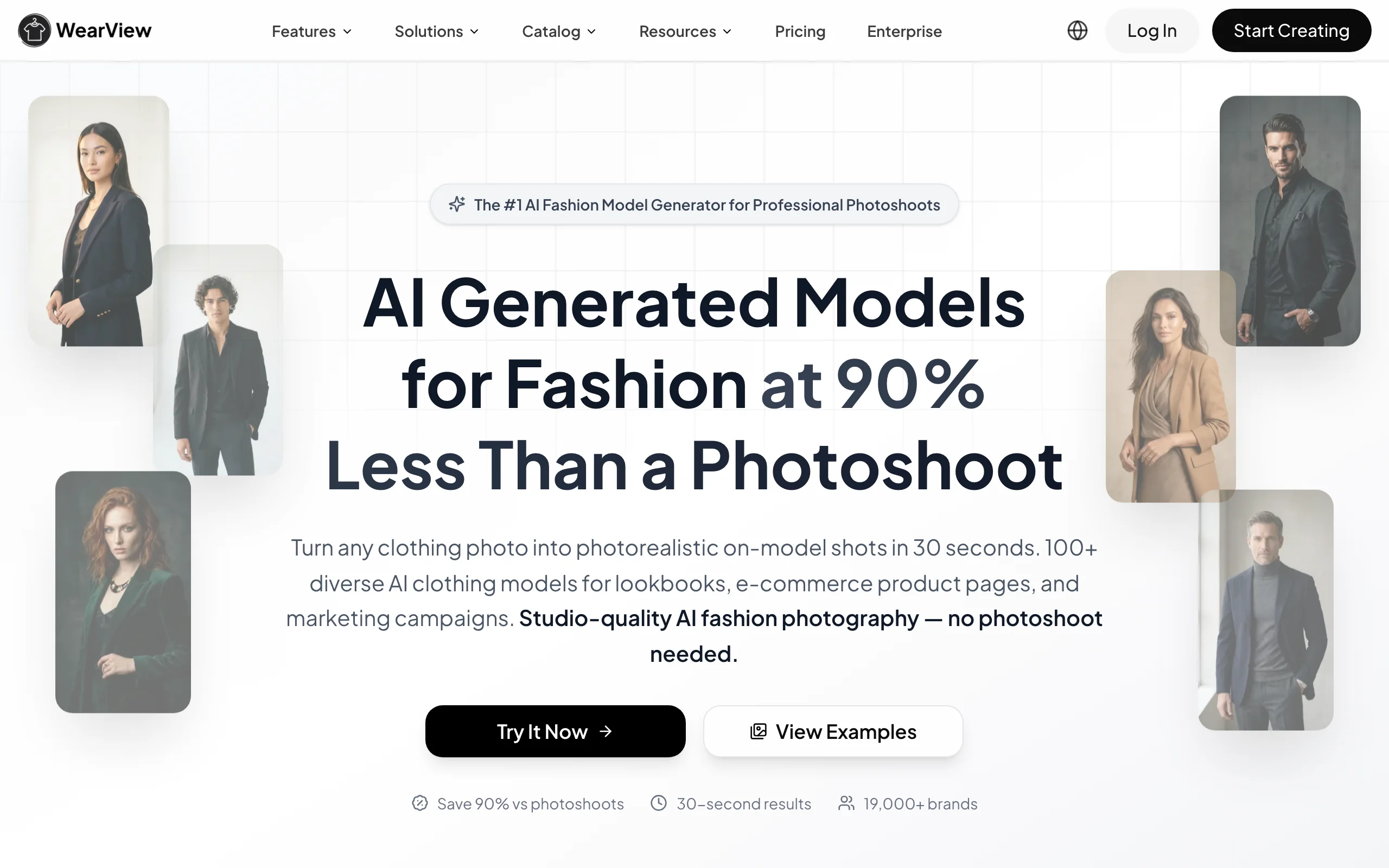
WearView is not a 3D garment design tool and does not replace CLO3D for pattern making, fit simulation, or virtual sampling. It covers the next step in the workflow: once your design or first sample exists as a flat-lay, packshot, or ghost mannequin photo, WearView generates on-model marketing imagery in about 15 seconds. Designers upload the garment photo, pick a model from a diverse roster across ethnicities, body types, and ages, describe the background, and the platform produces studio-grade visuals ready for Shopify, Etsy, lookbooks, and social. The wider toolkit includes virtual try-on, AI model creation from text prompts, consistent model identity across a collection, pose control via reference images, ghost mannequin generation, AI model swap, and AI fashion video, all on one subscription on wearview.co.
Key features
- On-model photo generation from flat-lay, packshot, or ghost mannequin images in about 15 seconds
- AI model creation from text prompts plus consistent model identity across an entire collection
- Pose control via reference images, useful for editorial-style lookbook shots
- Ghost mannequin generation from a single flat-lay (no second photo or compositing)
- AI fashion video at 720p and 1080p with HD, 2K, and 4K still output
- Full commercial usage rights on every paid plan and up to 15 team seats on Advanced
Best use cases
- Indie designers and small brands using CLO3D for design but needing fast, repeatable on-model marketing photos for their store
- Design studios and agencies that finish a collection in 3D and want on-model visuals without booking a photographer, models, or studio
- Designers launching on Etsy, Shopify, or Instagram who already have packshots or flat-lays and want them on a real-looking model in minutes
Pricing
- Lite: $29/month (50 credits)
- Pro: $49/month (200 credits)
- Advanced: $99/month (500 credits), annual billing saves up to $198/year
Pros
- Fills the gap CLO3D was not built for: photo-real on-model marketing visuals
- No 3D learning curve, the workflow is upload, choose, describe, generate
- Bundles eight fashion AI tools (try-on, product-to-model, video, ghost mannequin, model swap, pose control, model creation, consistent models) under one plan
- 4K studio-grade output with full commercial usage rights
Cons
- Not a substitute for 3D pattern design, fabric simulation, or fit testing, designers still need CLO3D or an alternative for that step
- No free tier or free credits
2. Browzwear: best for enterprise 3D garment development at scale
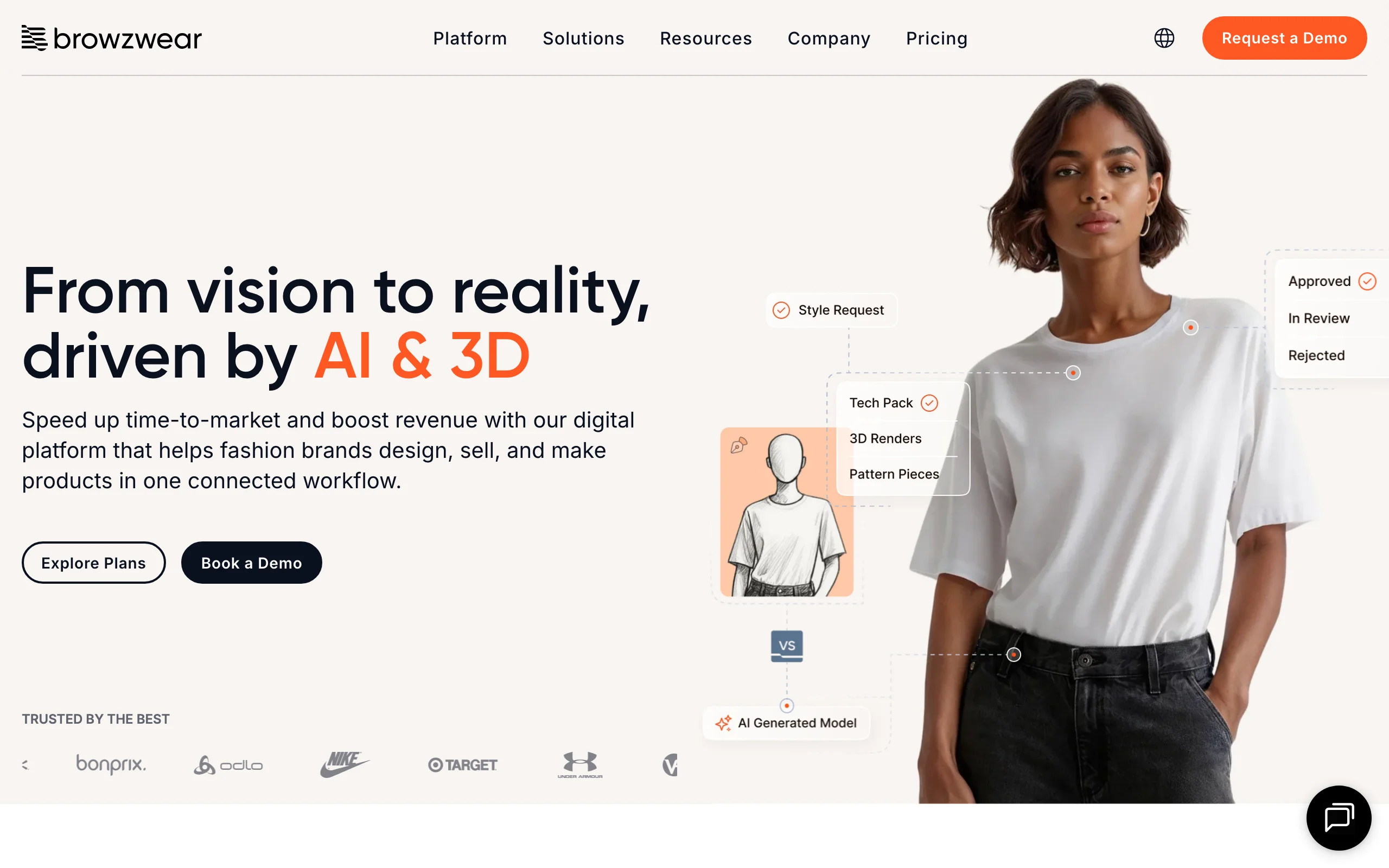
Browzwear is the closest direct competitor to CLO3D. The product family centers on VStitcher, a physics-based 3D design and development tool with AI-driven fit intelligence and full size grading, used by brands that need first-time-right samples and want to cut physical prototype rounds. The platform extends with Stylezone, a browser-based collaboration layer for merchandisers and buyers, Lotta for validated block-based range development, and Fabric Analyzer for digitizing real fabric properties. Brand-reported outcomes include around 95 percent first-time-right samples and 80 percent fewer physical samples. Pricing is enterprise-led with self-serve plans available, so expect a sales conversation rather than a public price tag.
Key features
- VStitcher: physics-based 3D garment design with AI fit intelligence and size grading
- Stylezone: browser-based 3D review for merchandisers, buyers, and brand teams
- Lotta: validated block workflow for fast range development and consistent fit
- Fabric Analyzer: measures physical fabric properties for accurate digital simulation
- Open Platform for integration with PLM, ERP, and factory systems
Best use cases
- Mid-size and enterprise apparel brands aiming to cut physical sampling rounds and time-to-market
- Cross-functional teams (design, technical, merch, sourcing) needing one 3D platform with strong collaboration
- Brands integrating 3D into existing PLM and ERP stacks rather than treating it as a standalone design tool
Pricing
- Self-serve plans available for independent creators (custom pricing)
- Enterprise plans for brands, manufacturers, and education (custom pricing, contact sales)
Pros
- Strong AI-assisted fit intelligence and physics simulation for accurate samples
- Browser-based collaboration via Stylezone makes 3D reviews accessible to non-designers
- Validated block workflow in Lotta speeds up seasonal range development
Cons
- No public pricing, evaluation usually requires a sales call
- Outputs are 3D renders and tech assets, not photo-real on-model marketing visuals
- Learning curve is similar to CLO3D, plan for ramp-up time
3. Style3D: best for integrated AI + 3D fashion design workflow
Style3D is a fast-growing digital fashion platform from China that bundles 3D design, fabric simulation, AI rendering, and cloud asset management into one stack. Style3D Studio handles 3D fabric simulation and virtual sampling. Style3D AI generates design inspiration and AI-rendered marketing imagery, which is unusual at this level in the 3D design category and closer to what brands publish on their stores. Style3D Fabric manages material properties, and Style3D Cloud handles real-time style tracking and shared asset libraries. The platform skews B2B and is widely used across manufacturers, suppliers, and brand partners globally, with pricing handled through sales.
Key features
- Style3D Studio for 3D fabric simulation and virtual sampling
- Style3D AI for design inspiration and AI-rendered marketing imagery
- Style3D Fabric for physically accurate material properties
- Style3D Cloud for real-time tracking and cloud-based asset libraries
- High-definition rendered runway animations for collection presentations
Best use cases
- Brands that want 3D garment design and AI-rendered marketing visuals from the same vendor
- Manufacturers and suppliers collaborating with multiple brand partners in a shared 3D pipeline
- Design teams open to a newer platform with a strong AI-rendering angle versus CLO3D
Pricing
- Custom pricing for studios, brands, and manufacturers, contact sales
- Education and enterprise tiers available on request
Pros
- AI rendering pipeline is more mature than most 3D-only competitors
- Cloud-first architecture makes sharing and review easier than CLO3D's desktop workflow
- Integrated suite covers design, fabric, AI, and asset management in one platform
Cons
- No public pricing, hard to compare against CLO3D Individual without a sales call
- AI-rendered visuals are not the same as photo-real on-model imagery from real-looking models
- English-language documentation and support trail the core Chinese-language product
4. Marvelous Designer: best for cloth simulation, creative draping, and crossover work
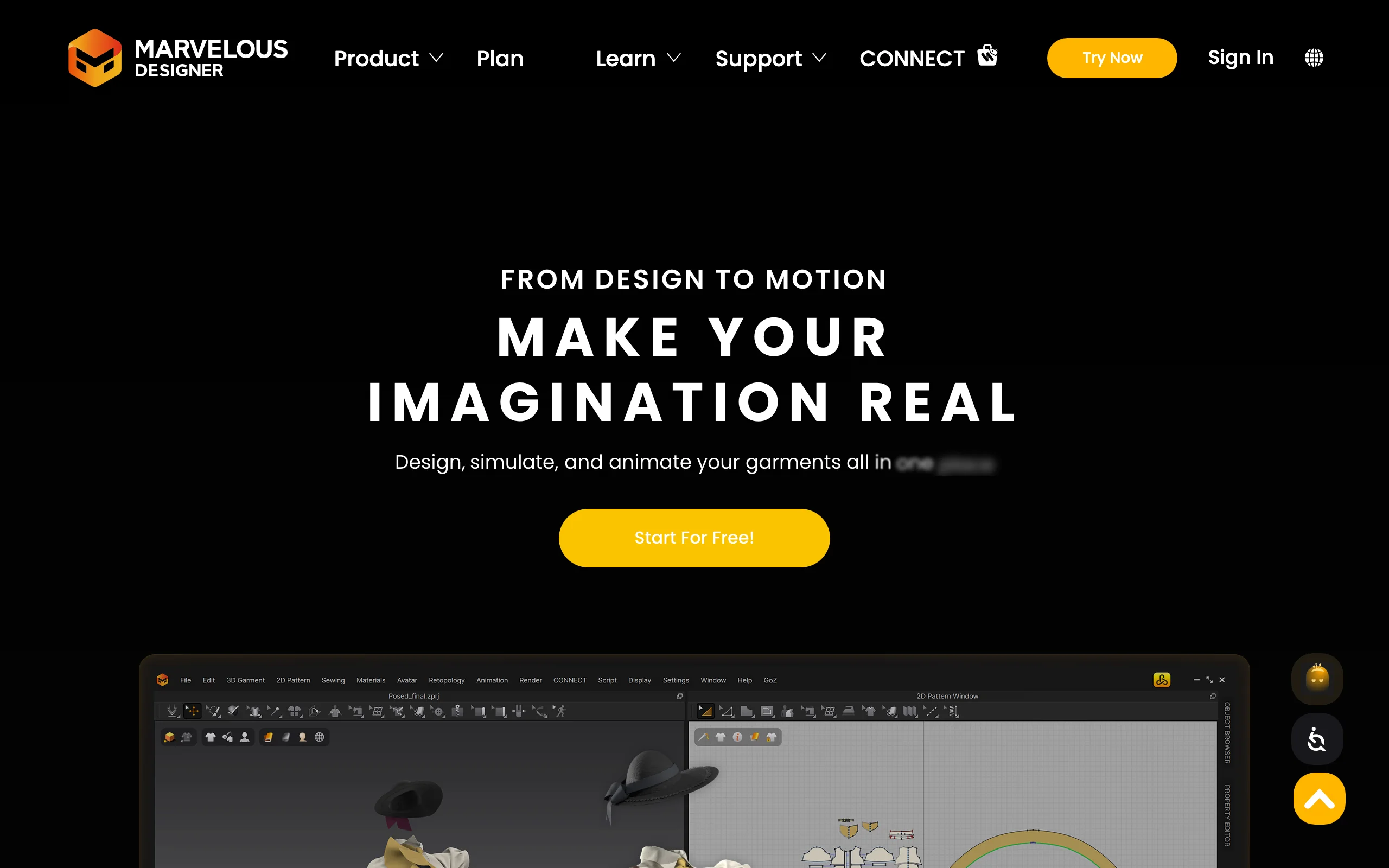
Marvelous Designer shares a foundation with CLO3D and is a long-standing favorite among fashion designers, 3D artists, and the game and film industry. The strength is cloth simulation: realistic drape, folds, layering, and quick exploration of complex shapes that would take far longer in traditional CAD. Where it falls short is the production side of fashion. Pattern grading, technical pack output, and apparel-specific workflows are lighter than CLO3D, Browzwear, or Optitex. Pricing is transparent at the personal tier, around $39.99/month with annual and perpetual options, and a 30-day free trial is offered, which is longer than CLO3D's 14 days.
Key features
- Industry-grade cloth simulation for drape, folds, and complex draping
- Strong avatar posing and animation support for creative scenes
- Used across fashion, games, and film, with broad export to other 3D tools
- Personal, Enterprise, and Educational tiers with monthly, annual, and perpetual options
- 30-day free trial, longer than the 14-day CLO3D trial
Best use cases
- Designers who care more about creative draping and silhouette exploration than production tech packs
- Costume designers, 3D artists, and game/film studios needing realistic cloth on characters
- Solo designers who want a long free trial before committing to a CLO3D-tier subscription
Pricing
- Personal monthly: from around $39.99/month
- Personal annual and perpetual options available (verify current rates)
- Enterprise and Educational tiers via contact sales, 30-day free trial
Pros
- Best-in-class cloth simulation across both fashion and adjacent industries
- Transparent personal pricing and a 30-day free trial to evaluate
- Smaller learning curve than CLO3D for purely creative draping work
Cons
- Weaker pattern grading and production-ready tech pack output than CLO3D, Browzwear, or Optitex
- Cloud collaboration is lighter than the dedicated review tools in competing platforms
- Renders are still 3D, not photo-real on-model marketing imagery
5. Optitex: best for pattern making and apparel manufacturing workflows
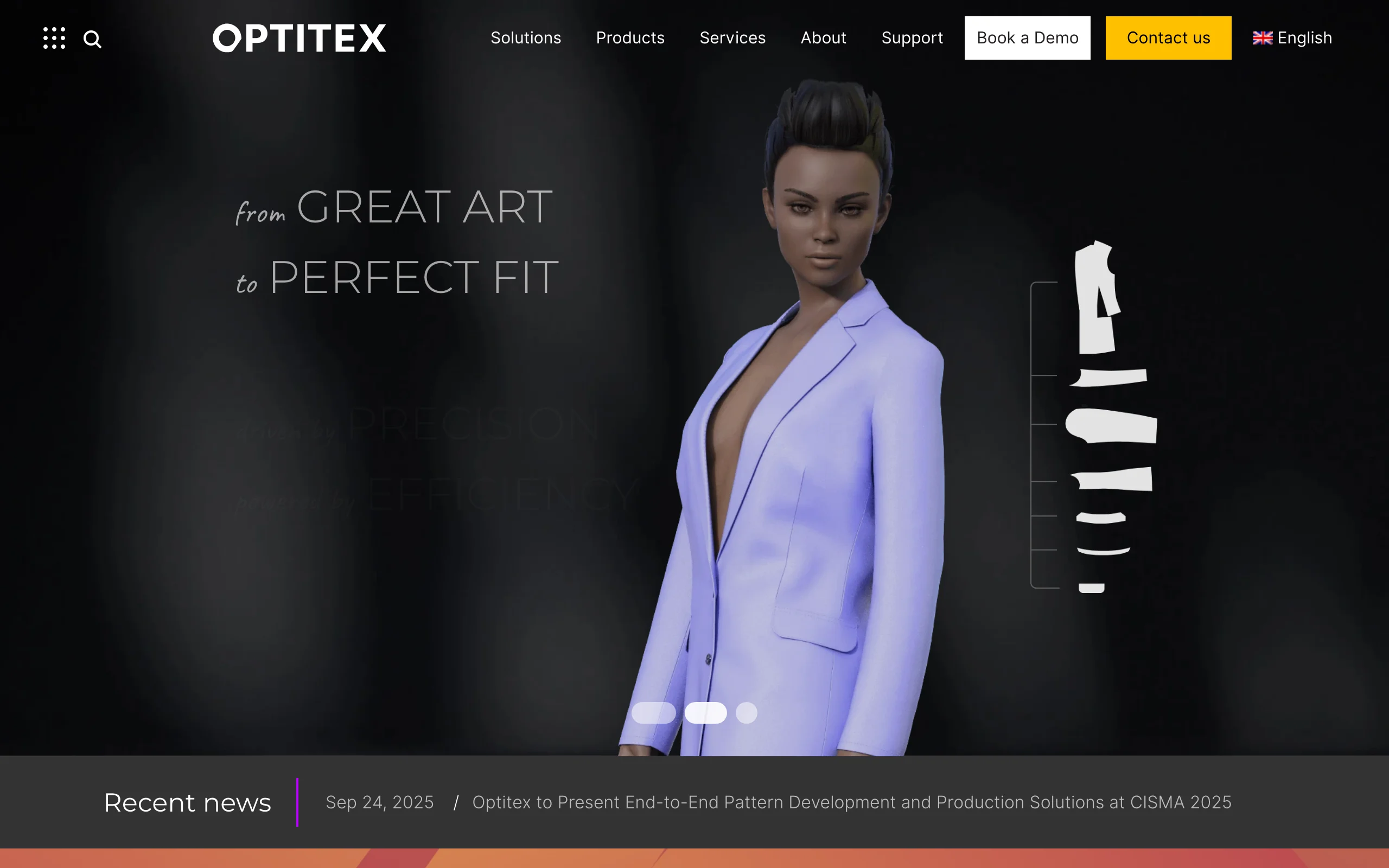
Optitex is a long-standing 2D/3D CAD CAM suite used by major brands and manufacturers (Nike, Adidas, M&S, ASOS) plus automotive and furniture upholstery makers. The center of gravity is production: 2D/3D pattern design, functional grading for production-ready digital patterns, the Marker module for layout optimization, CutPlan for automated nesting, and O/Cloud for cloud-based collaboration. The 3D experience covers design and fit, but the suite leans more toward manufacturing efficiency and material costing than the creative-first feel of CLO3D or Marvelous Designer. Pricing is enterprise-led with no public rate card.
Key features
- 2D/3D pattern design with functional grading for production-ready patterns
- Marker and CutPlan for layout optimization and automated nesting
- O/Cloud for cloud-based pattern and asset collaboration
- 3D Design for Illustrator plug-in for designers in the Adobe workflow
- Fabric management, Print & Cut, and integrations across the production stack
Best use cases
- Brands and manufacturers that need a single tool spanning design, grading, marker, and production
- Companies operating across apparel, automotive, and upholstery, where one CAD vendor across categories matters
- Teams that prioritize material efficiency and costing during early design
Pricing
- Enterprise pricing only, no public tiers
- Education plans available on request
Pros
- Deep production-side tooling (grading, marker, CutPlan) beyond what CLO3D ships out of the box
- Used by global brands and manufacturers, ecosystem maturity is strong
- Adobe Illustrator plug-in fits designers already in that workflow
Cons
- Heavier learning curve and slower iteration than CLO3D for purely creative design
- No public pricing, contracts assume an enterprise commitment
- Renders and 3D output are functional rather than marketing-ready
Which CLO3D alternative is right for you?
If you already have a design and need marketing visuals fast
WearView is the right pick. It does not replace CLO3D for pattern work, but once you have a flat-lay, packshot, or ghost mannequin photo, it produces on-model imagery for Shopify, Etsy, lookbooks, and Instagram in about 15 seconds, starting at $29/month. See the [product-to-model](/product-to-model) and [virtual try-on](/virtual-try-on) workflows.
If you want a direct CLO3D replacement for enterprise 3D development
Browzwear (VStitcher) is the closest like-for-like, with AI-assisted fit, full grading, and browser-based review via Stylezone. Expect a sales conversation rather than a self-serve sign-up. Style3D is a strong second option if AI rendering matters to your team.
If your focus is creative draping or you need 3D for non-apparel work
Marvelous Designer is the better fit. Cloth simulation is its strength, the 30-day free trial gives real evaluation time, and personal pricing is transparent. The trade-off is weaker production-grade pattern grading than CLO3D, Browzwear, or Optitex.
If you need pattern making, grading, and manufacturing in one tool
Optitex is the most production-focused option, with functional grading, Marker, and CutPlan for nesting and material costing. It is heavier than CLO3D for purely creative work but pulls ahead on the manufacturing side.
FAQ
What is CLO3D?
CLO3D is a 3D fashion design software that lets designers build patterns, simulate fabric, and fit garments on a virtual avatar before sewing a physical sample. It is widely used by fashion designers, pattern makers, technical designers, and academic programs. A 14-day free trial is available, with paid Student, Individual, Enterprise, and Academic tiers.
How much does CLO3D cost?
CLO3D offers four tiers: Student, Individual, Enterprise, and Academic. The Individual plan is the standard option for freelance designers, hobbyists, and one-person businesses, billed monthly or yearly. Enterprise and Academic require a sales conversation. Pricing changes regularly, so check the official CLO3D plans page for current rates before committing.
What is the best alternative to CLO3D for designers?
It depends on what you need next. For another full 3D design tool, Browzwear (VStitcher) is the closest direct competitor, Style3D is the strongest AI-forward option, and Marvelous Designer is the favorite for creative draping. For the marketing-visual step that CLO3D was not built for, WearView turns finished designs into on-model imagery in seconds from $29/month.
Can WearView replace CLO3D?
No. WearView is not a 3D garment design tool. It does not do pattern making, fabric simulation, or fit testing. It picks up after CLO3D in the workflow: once you have a finished design, sample photo, or flat-lay, WearView generates on-model marketing visuals for your store, lookbook, or social. Most designers use the two together rather than swap one for the other. See our best AI fashion model generators guide for context.
CLO3D vs Marvelous Designer: which is better?
They share a common origin and feel similar at first. CLO3D leans further toward production: stronger pattern grading, tech pack output, and fashion-specific workflows. Marvelous Designer leans toward creative cloth simulation and crosses over into game and film work. For commercial apparel design, CLO3D is usually the better fit. For creative draping and adjacent industries, Marvelous Designer is the closer match.
CLO3D vs Browzwear: which is better for brands?
Browzwear (VStitcher) is the closest direct competitor to CLO3D. Both cover physics-based 3D garment design, fit, and grading. Browzwear has a slightly heavier focus on AI-assisted fit and integrated browser-based collaboration via Stylezone. CLO3D is more designer-first with a richer creative interface. The right pick comes down to whether your team is design-led (CLO3D) or development and merch-led (Browzwear).
Do I need 3D design experience to use WearView?
No. WearView works from 2D inputs: a flat-lay photo, a packshot, a ghost mannequin shot, or a text prompt for a fresh AI model. There is no 3D learning curve, no pattern work, and no fabric simulation. Designers who use CLO3D for the design step often use WearView purely for the visual-output step, which is faster than booking a model and a shoot. Browse the feature pages for the full toolkit.
Last updated: May 2026
Compare more AI fashion tools
See how WearView compares against other AI fashion photography platforms.

Claid.ai alternatives
Compare the best Claid.ai alternatives for AI fashion photography in 2026. Side-by-side feature table, pricing, pros and cons.
Photoroom alternatives
Compare the best Photoroom alternatives for AI fashion photography in 2026. Side-by-side feature table, pricing, pros and cons, and recommendations.
Botika alternatives
Compare the best Botika alternatives for AI fashion photography in 2026. Side-by-side feature table, pricing, pros and cons.
Fashn.ai alternatives
Compare the best Fashn.ai alternatives for fashion brands. Pose control, ghost mannequin, pricing, and features side by side to pick the right fit.

Modelia.ai alternatives
Compare the best Modelia.ai alternatives for fashion brands. Feature table, pricing, and fashion-brand workspace vs general AI image toolkit.
Pixelz alternatives
Compare the best Pixelz alternatives for fashion brands. AI-first tools that skip the photoshoot, with feature, pricing, and turnaround details.
Ready to Transform Your Fashion Photography?
Join 19,000+ fashion brands using AI generated models for fashion lookbooks, e-commerce product pages, and campaign visuals. Professional AI fashion photography — all from a single garment photo.
Save up to 90% on photo costs · Cancel anytime • Results in 30 seconds