
Circle Skirt Calculator
Calculate fabric requirements for full, half, three-quarter, and quarter circle skirts. Get your waist radius, fabric length, and yardage instantly.
Last updated: January 09, 2026
1. Preferred Unit of Measure
Your Circle Skirt Deserves a Model
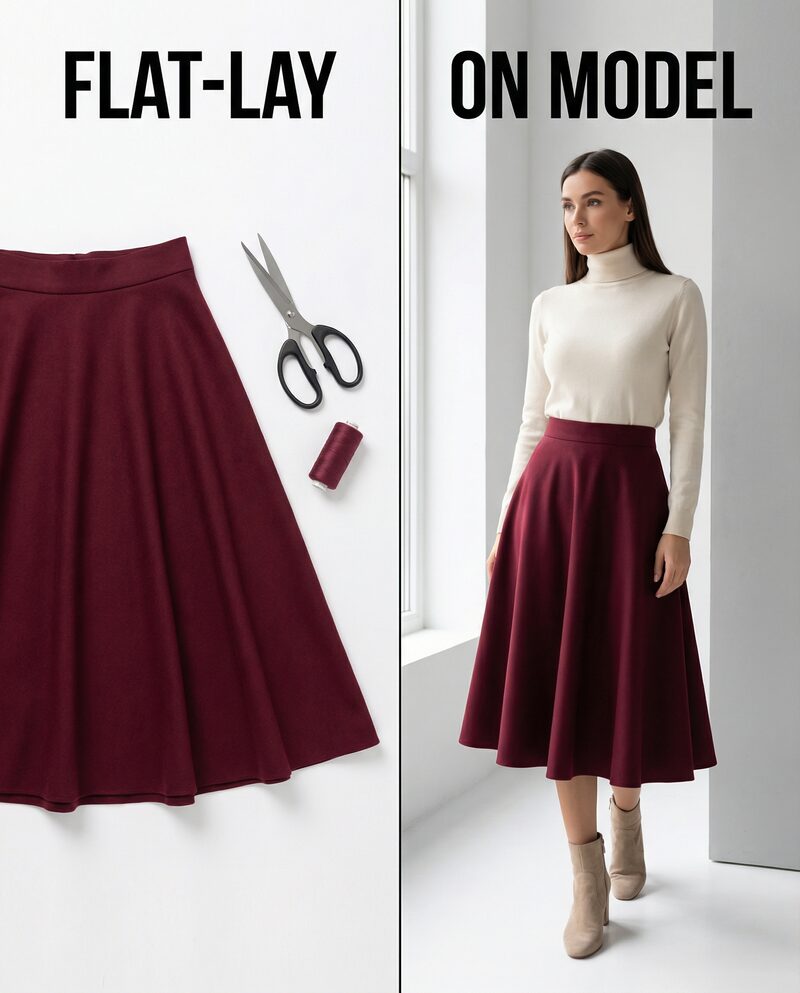
Finished sewing? Skip the expensive photoshoots. See your handmade circle skirt on professional AI models in seconds — perfect for your Etsy shop, Instagram, or portfolio.
Types of Circle Skirts
Circle skirts come in four main types, each offering a different level of fullness and requiring different amounts of fabric. Here's what makes each one unique:
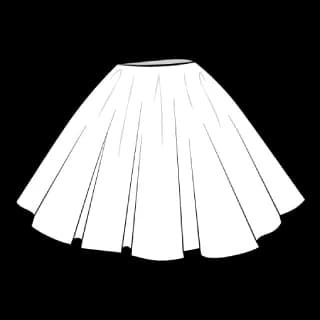
Full Circle (360°)
Maximum fullness
The most dramatic option with beautiful flow and movement. Uses the most fabric but creates a stunning, voluminous silhouette. Perfect for formal occasions, dancing, or when you want maximum twirl factor.
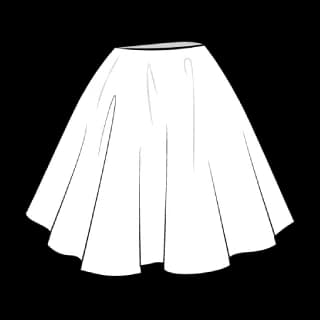
Three-Quarter Circle (270°)
Great balance
A great middle ground between full and half circle. Offers lovely movement while using less fabric. Popular for vintage-inspired styles and everyday wear when you want fullness without excess volume.
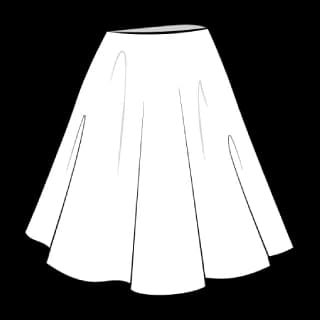
Half Circle (180°)
Moderate fullness
The most practical and versatile choice. Provides gentle fullness that's flattering on most body types. Great for work, casual wear, or anytime you want some movement without too much volume.
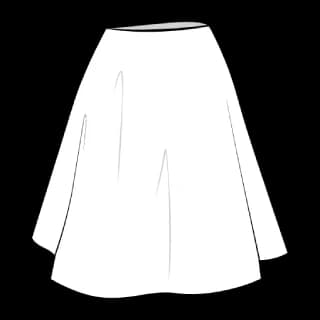
Quarter Circle (90°)
A-line silhouette
Creates a classic A-line shape with minimal fullness. Uses the least fabric and is the most fitted option. Perfect for a sleek, professional look or when you want structure rather than flow.
How to Make a Circle Skirt
A circle skirt is a flowing skirt that, when spread out flat, creates the shape of a circle (or part of one). It's one of the easiest skirts to make and perfect for sewers of all skill levels. The beautiful drape and movement make it a timeless wardrobe staple.
Choose Your Style
Decide on the type of circle skirt you want: full circle (360°) for maximum flow, three-quarter (270°) for good movement with less fabric, half circle (180°) for moderate fullness, or quarter circle (90°) for a fitted A-line look.
Measure Your Waist
Wrap a measuring tape around your natural waist – that's the narrowest part of your torso, usually above your belly button and below your rib cage. Stand relaxed and don't suck in your stomach for an accurate measurement.
Decide on Length
Choose your desired skirt length: mini (14-16 inches / 35-40 cm), midi (26-28 inches / 66-71 cm), or maxi (38-40 inches / 96-102 cm). Measure from your waist to where you want the hem to fall.
Use the Calculator
Enter your measurements into our circle skirt calculator above. It will give you the waist radius (the inner circle), fabric width needed, and total fabric length to buy – all with seam allowances already included!
Cut Your Fabric
Fold your fabric appropriately for your circle type. Use a string and chalk (or a compass for smaller skirts) to draw two arcs: one at the waist radius for the waistline opening, and one at the total radius (waist radius + skirt length) for the hem.
Sew and Finish
Sew any seams needed (back seam or side seams). Add a waistband, elastic waist, or facing. Finally, hem the bottom edge. For a professional finish, let the skirt hang for 24 hours before hemming – bias-cut edges can stretch!
Circle Skirt Formulas
While our calculator does all the math for you, here are the formulas if you're curious about how circle skirt measurements work. The key is understanding the relationship between your waist circumference and the waist radius.
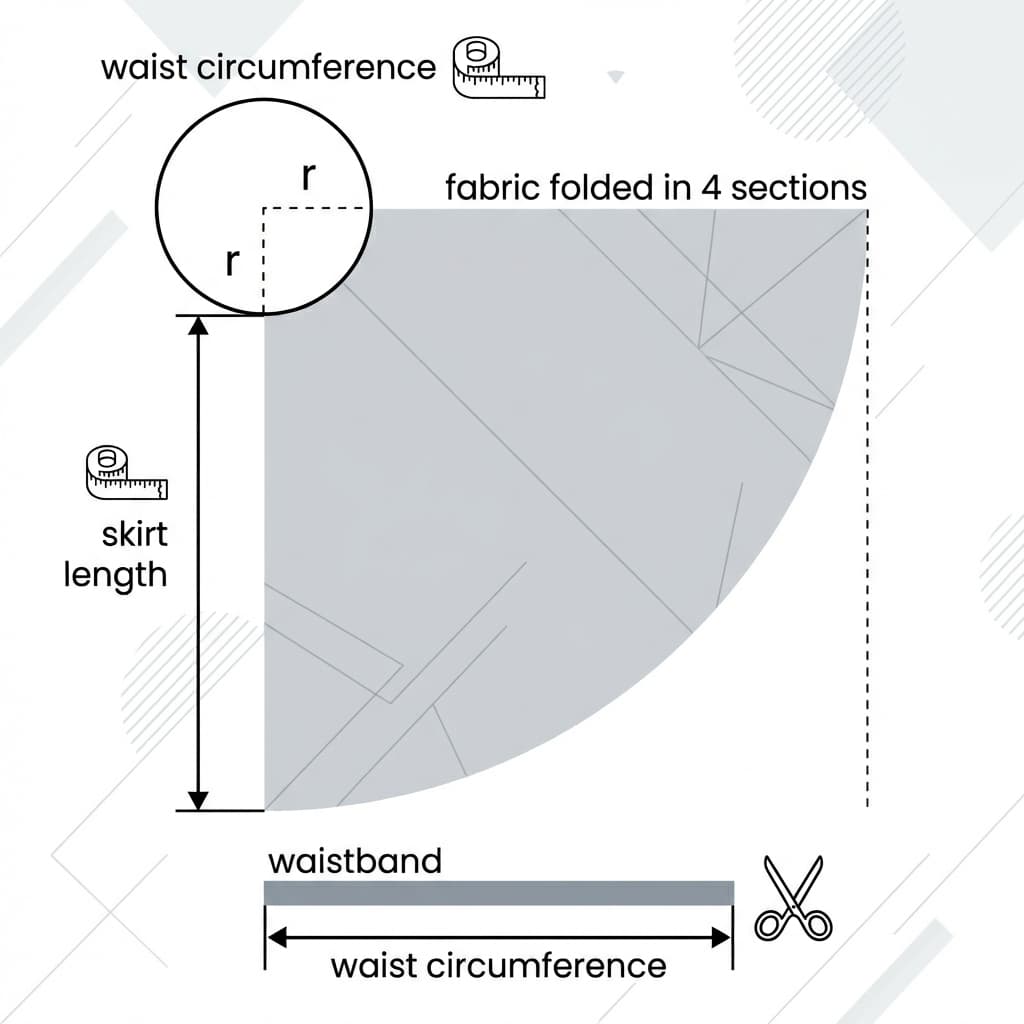
Understanding the Pattern
The diagram shows how a circle skirt pattern works. The inner circle (radius r) is cut out for your waist opening. The outer edge is your hem. The distance between them is your skirt length. When fabric is folded in 4 sections and cut, you get a full circle when unfolded.
Waist Radius Formula
The waist radius determines the size of the center opening that fits around your waist:
The "- 2" accounts for seam allowance (2 cm or approximately 0.8 inches). π (pi) equals approximately 3.14159.
Fabric Length Formula
The total fabric length you need is:
The "+ 2" at the end is for the hem allowance.
Circle Skirt Calculator Example
Let's walk through a real example together. While you can always use our calculator above, understanding the math helps you troubleshoot and make adjustments on the fly.
Example: Three-Quarter Circle Midi Skirt
Choose the skirt type
We'll make a three-quarter circle (270°) skirt – it has beautiful movement without using too much fabric.
Measure your waist
Let's say your waist measurement is 75 cm.
Decide on the length
We want a midi length of 60 cm (about 24 inches).
Calculate the waist radius
Using the three-quarter circle formula:
Calculate fabric length
Add the waist radius, skirt length, and hem allowance:
Result Summary:
- • Waist Radius: 14.52 cm
- • Fabric Length: 1.53 meters
- • Fabric Width: 153.04 cm (fits on 150cm wide fabric)
Skip the math! Enter your measurements in the calculator above and get instant results.
Making Circle Skirts with Panels
When to use panels: If your circle skirt pattern is too large to fit on standard fabric widths (45"/60" or 110cm/150cm), don't worry! You can create the same beautiful skirt using multiple panels sewn together.
Panel construction isn't just a workaround – it's actually how many professional garments are made. Panels can improve drape, allow for creative design elements, and make efficient use of fabric.
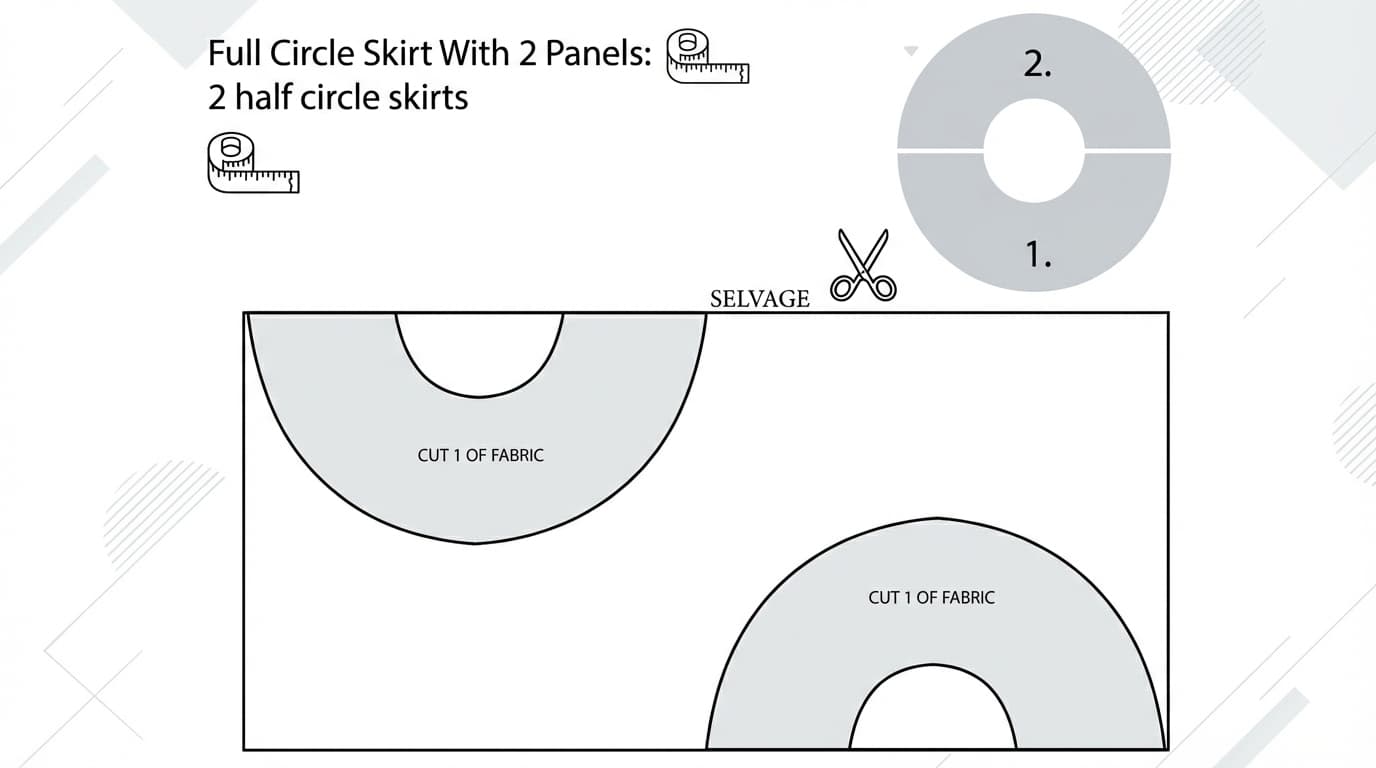
Two-Panel Method (2 Seams)
Use the calculator to draft a half-circle skirt pattern (using half your waist measurement). Cut two identical pieces on open (unfolded) fabric.
How to cut: Open your fabric completely (no folds). Place each half-circle pattern piece on the unfolded fabric and cut.
This creates:
- Two side seams (4 raw edges)
- Perfect for adding side seam pockets
- Great for directional fabrics
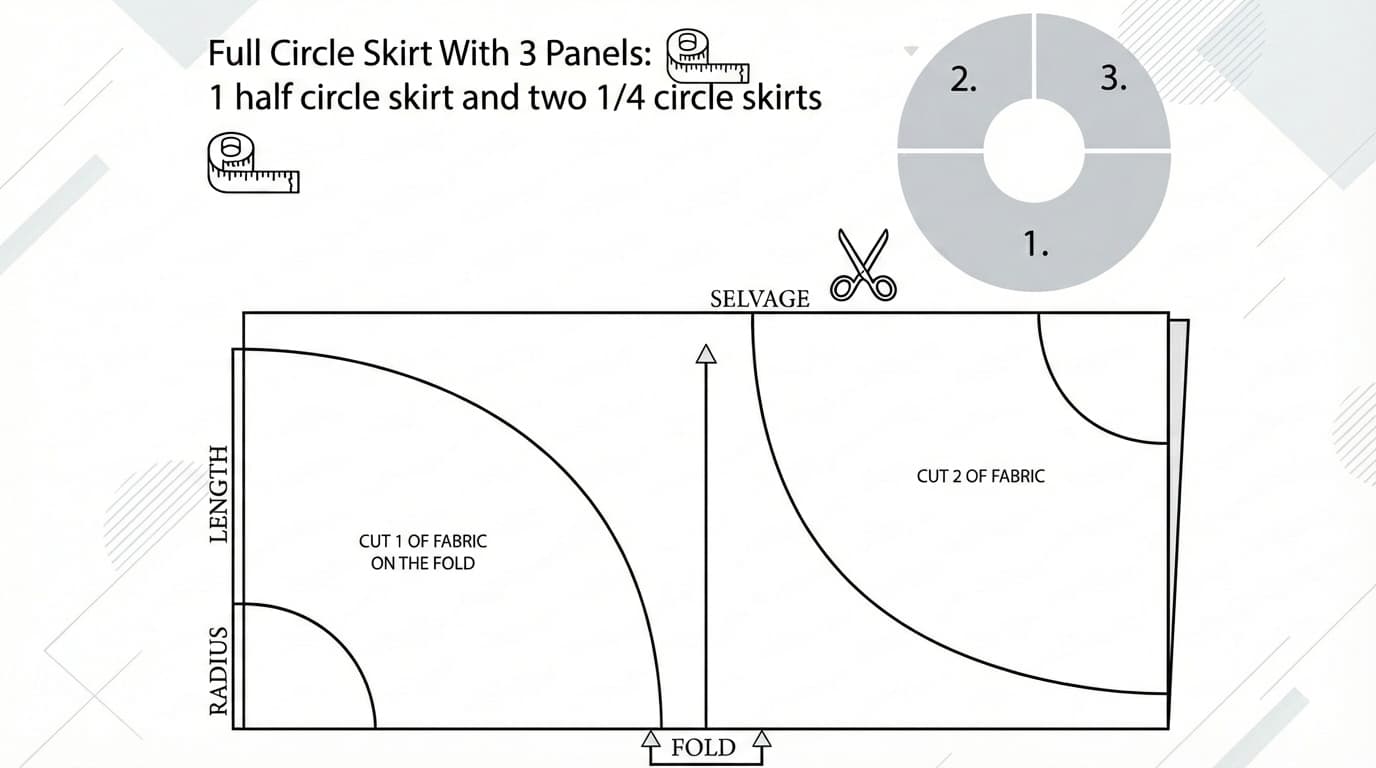
Three-Panel Method (3 Seams)
Combine one half-circle and two quarter-circle patterns. This method is the most fabric-efficient for larger skirts.
How to cut: Fold fabric once from selvage to selvage. Place the half-circle with one edge on the fold. Cut the quarter-circles from the remaining open fabric.
This creates:
- Two side seams + one center back seam (6 raw edges)
- Back seam perfect for an invisible zipper
- Great for color blocking or mixed fabrics
Pro Tips for Panel Construction
- •Match your fabric pattern at the seams for a seamless look
- •Add pockets in the side seams – it's much easier than in a seamless skirt!
- •Use French seams or serge the edges for a professional finish inside
- •Press seams well before hemming for the best results
Frequently Asked Questions
Ready to Sell Your Handmade Skirts?
You've got the pattern. Now get the photos. Upload your finished circle skirt and see it on a professional AI model — perfect for Etsy listings, Instagram shops, or your portfolio.
Cancel anytime • Results in seconds